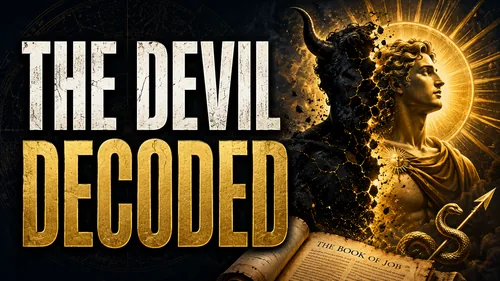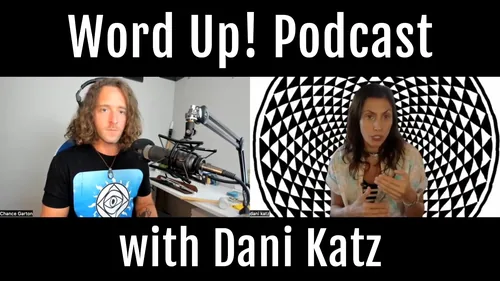
Does Christianity NEED the Devil? Chance Garton & Dawn Lester









What does the Devil represent in astrotheology? Is there a secret to the serpent of Genesis that tells a Gnostic story? "The Devil is the grand ally of priests. No Devil, no priests." These words were written by Godfrey Higgins in the 19th century, and truer have never been spoken.
In this episode, I join Dawn Lester on her podcast Dawn of Discernment to talk about a nice variety of topics, always circling around to the scripture in the stars, and how to be open to new interpretations of things without getting carried away into new dogmas.
 Plus+InnerVerse Plus+
 InnerVerse Plus+
Hear every full episode
Every extended episode, the complete Plus+ archive, premium video and a private podcast feed for your app.
Cancel any time.

Get tuned with Chance
Tuning forks find where energy is stuck in the field around your body and bring it back into flow. Sessions over Zoom, recorded for you to keep.
30 Minute Consultations
Have something to look at, or looking for guidance? We can consult oracular tools, read your chart, or just talk through whatever you choose.
In this episode
Core themes
Reading the Sky as Scripture
Chance describes astrotheology as the scripture in the stars, borrowing Marty Leeds's phrase, and argues the sky itself is a text rather than a place where myths were stored for safekeeping. Multilingual priests and poets read stories out of constellations and star names, leaning heavily on wordplay and punning. His favorite example is Samson, whose name he ties to Shemesh, the sun, and whose jawbone miracle John McHugh traced to a single patch of sky. Chance says astrotheology does not debunk Christianity but shows it is bigger than taught, and that faith strengthened by knowledge is a hardier faith.
Why Religion Keeps a Devil Around
Dawn opens the devil discussion by quoting Reverend Robert Taylor: if there be no devil there be no saviour. Chance traces the idea back to original sin, which he calls the worst priest jive ever implanted in mankind, and cites Godfrey Higgins calling the devil the grand ally of priests. He compares it to governments inventing boogeymen overseas. Turning to language, he reads diabolos as Lord God or Lord of the Day rather than slanderer, notes Taylor's view of the devil as the sign opposite the sun, and finds father, lord and savior roots in Abaddon, Apollyon and Saturn.
The Serpent and the Morning Star
Chance argues the Genesis serpent was not originally meant to be the devil. Irenaeus wrote against the Ophites, a sect named for ophis, the Greek serpent, a sound Chance hears inside Sophia, wisdom. The Hebrew word for the serpent can mean subtle or naked, which he reads as sexual symbolism: without that spark, Adam and Eve would sit unchanged in the garden forever, which he equates with death. He also points to Moses raising a brazen serpent that heals, the cloven tongues in Acts, and Jesus calling himself the bright and morning star, the same Venus named Lucifer.
Good and Bad in Everything
Chance reads the riddle of Epicurus: if God is willing but unable to prevent evil, able but unwilling, or neither, what follows? Dawn answers with duality, describing this realm as experiential, a place where hard experiences let people grow and balance means harmony rather than cancellation. Chance tells her she just answered Epicurus, arguing that what seems evil leads to growth, the way winter clears room for new life, while granting that real malevolence exists. He sees the full spectrum of good and bad in everyone, and says accepting that stops him from idolizing or demonizing people.
Discernment Without Dogma
Chance and Dawn both warn against turning inspiration into dogma. Chance offers firmament as permanent mind as a personal revelation that can start a trail of research but should never be enforced on anyone, a habit he says runs rampant in Trust Me Bro truther podcasts. He says a contrarian idea is not right just because it opposes the mainstream, and explains why hosting guests is a dance. Dawn, whose show is named for discernment, describes holding two ideas without adopting either. In tuning sessions Chance sees the cost of rigid belief, like a client whose ankle carried contradictory lessons from the book of Job.
Quotes
“But astrotheology doesn't debunk Christianity. It helps you understand what Christianity is.”
“The stars are not the controllers of humanity. They're the visible aspect of God's mind.”
“There is absolutely no original sin, flaw, or imperfection in a baby. That is nonsense.”
“Sometimes they can be difficult experiences because we don't seem to grow in complacency.”
“When you accept that, it really helps you stop idolizing people and it helps you stop fearing people or demonizing people.”
“So what the serpent really does in Genesis is it saves humanity.”
“Just because something is contrary to the mainstream and you think the mainstream is wrong doesn't mean the thing that is contrary to it is automatically right.”
“It's a step on the path of uncovering what is true rather than necessarily the capital T truth.”
“I can sometimes tell somebody was raised Catholic by the guilt in their energy field.”
“The body's always kind of trying to help us by giving us messages.”
Dawn Lester is co-author (with David Parker) of What Really Makes You Ill?, which challenges conventional germ-theory explanations of disease; on InnerVerse she discussed alternative theories of illness and the consciousness dimensions of a healing crisis.
See all Dawn episodes→Kyle and Serena Denton are community herbalists creating wild-crafted and organic plant medicines out of Milwaukee since 2015. I have used their teas and tinctures on an almost daily basis for years now. Kyle is a great friend of InnerVerse and has appeared on the channel more times than I can count. These products work, not in the allopathic "pharma-medicine" way, but in a terrain-support, consciousness bolstering plant-teacher sort of way.