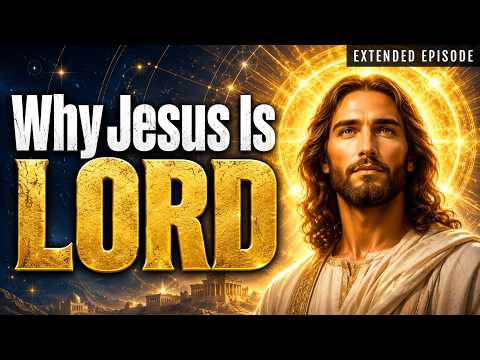
The Surprising Reasons Why Jesus Is Called Lord, Revealed









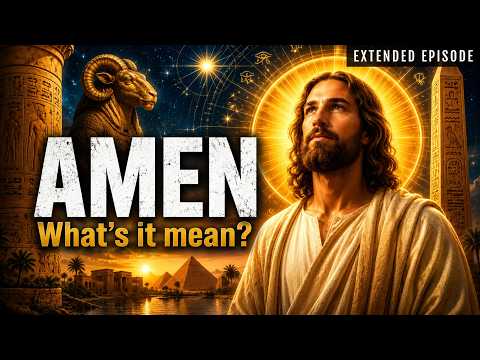
Inner Whirled Episode 12 tackles one of the best kept secrets of the Bible: just why do translators call God and Jesus "LORD?" The answers may surprise you (or not), as Dylan and I reveal the evidence behind an ancient feudal system of governance far more ancient than the origins of the Catholic church. The many names of the Sun of God will never mystify you again after you take the journey with us through this epic, nearly four hours long expose on the curious mystery of Jehovah, the Kurios.
In Inner Whirled 12, Chance and co-host Dylan Saccoccio walk through the etymology of "Lord" and follow the word back through layers of translation history, ancient priesthood traditions, and the symbolism the ancients encoded in sacred names.
 Plus+Full episode · 3h 45m
 InnerVerse Plus+
Hear the full 3h 45m episode
137 more minutes of this conversation, plus the complete Plus+ archive, premium video and a private podcast feed for your app.
Cancel any time.

Get tuned with Chance
Tuning forks find where energy is stuck in the field around your body and bring it back into flow. Sessions over Zoom, recorded for you to keep.
30 Minute Consultations
Have something to look at, or looking for guidance? We can consult oracular tools, read your chart, or just talk through whatever you choose.
In this episode
Core themes
Kyrios: A Title Rather Than a Name
Dylan Saccoccio argues that Kyrios or Kyros, the Greek word rendered as Lord for Jesus, is an epithet drawn from the historical record rather than a personal name. Working through Robert Taylor's chapter on the Lord, he cites Plutarch's Artaxerxes, where the Persians call the sun Kyros, and Ctesias, the ancient historian of Persia, who reports that Cyrus the Mede received that name from the sun. Chance Garton adds that Isaiah 45 gives the Persian Cyrus the very titles later applied to Christ, and that Psalm 110 reads, in English translation, the Lord said unto my Lord.
Translation as a Deliberate Disguise
The hosts read Taylor's claim that the greatest crime committed against the peace of society was translating the sacred records into the vulgar tongues of Christendom, alongside Dr. Markland's letter to Boyer marvelling at the oversights learned men have made in the New Testament. Saccoccio turns to Godfrey Higgins and his Anacalypsis, which contends that translators disguised the many names of God, Yod He Vav He, Adonai, Elohim, Shaddai, by rendering them all as Lord. Garton notes that flattening those names into one word destroys the context and, on Higgins' reading, leaves the reader plainly deceived.
Terms of Art and the Uses of Dead Languages
Garton zeroes in on terms of art, the technical jargon of lawyers, doctors and insurers, and argues that the scriptures use the words Lord and apostles the same way, as professional vocabulary already understood before the texts appeared. He lists precedents for ruling classes holding dead languages: Sumerian read by Akkadian and Babylonian astronomer priests in the old Babylonian period of 2000 to 1600 BC, Hebrew unspoken until its late nineteenth century revival, Sanskrit kept by the Brahmin caste, Latin by the Catholic church. Saccoccio adds that the hospital, the courtroom and the church are arms of one priesthood.
Why Taylor Says the Gospels Came After the Faith
Taylor's argument, read out at length, is that the gospels are not the rule of what the faith should be but exhibitions only of what it was, that they derive their authority from the church and not the church from them, and that a text using terms like Lord and apostles so casually cannot predate their universal acceptance. Saccoccio pushes it further, claiming no manuscript of the gospels is extant before the sixth century AD, that Dead Sea Scroll claims work retroactively, and that Greek words such as Christianus carry Latin terminations betraying a Latin mindset.
Loaf Ward, Corn and a European Source
Garton traces the mainstream etymology of Lord to the Old English hlaford, from hlaf, loaf, and weard, keeper, making the Lord the loaf ward, the priest who hands out the communion bread. Drawing on Saccoccio's book A God's Acre, he links bled and corn to chronos, Bel, Ceres or Keres the grain queen, and the neglected female form, lady. Saccoccio contends that Sanskrit, Celtic and Latin all descend from Etruscan, placing the system in Europe rather than India, and notes Farsi beside the Latin far for corn, the river Karun, and Thoth as the Gallic Teutatis.
Quotes
“Rather than Christianity being a sequel to Judaism, they're more like parallel manifestations of the same system.”
“You have to remember that the New Testament is Latin and they've just translated into Greek and said they translated it from Hebrew.”
“When it comes to reading scriptures, it really does require the type of almost legalistic interpretation that you would approach a legal document with, not just my feelings interpretation.”
“Other scholars or researchers have made the case that there is no such thing as Christianity. There is and only has ever been the church.”
“So the Hlaford or loaf ward, the keeper of the loaf, who's that? That's the priest, the one who gives the communion bread.”
“And why would there be more than one savior is because they reused this idea over and over again, and there's a system to it of periodical reincarnations of this savior.”
“Remember that the Persians were the last culture to get the use of the letters. So even what we look at the Persian letters today, they're a derivative of Arabic.”
“As the great Michael Tsarion used to say, symbolic literacy is psychic self-defense and there's really no truer words than that.”
Dylan Saccoccio is the author of the Spirit Whirled series, The Real Universal Empire, and the Tale of Onora. After chasing language back as far as possible, he now explores other avenues to prove cultural diffusion of the ancient universal empire of priests, navigators, masons, and merchants. Find his latest of many hundreds of articles on Substack.
See all Dylan episodes→Kyle and Serena Denton are community herbalists creating wild-crafted and organic plant medicines out of Milwaukee since 2015. I have used their teas and tinctures on an almost daily basis for years now. Kyle is a great friend of InnerVerse and has appeared on the channel more times than I can count. These products work, not in the allopathic "pharma-medicine" way, but in a terrain-support, consciousness bolstering plant-teacher sort of way.