Tartaria and the 1893 World's Fair: Debunking the Conspiracy Claims with Historical Records










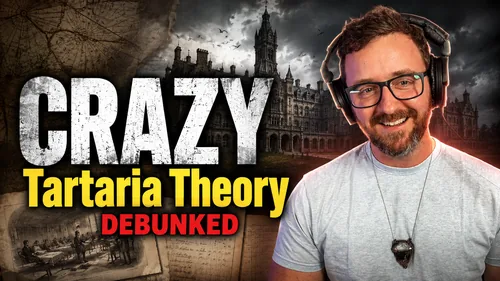
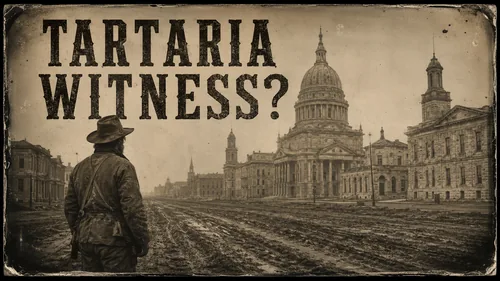
The 1893 Chicago World's Fair is a cornerstone of the Tartaria and mudflood theory: the claim that its Greco-Roman buildings were dug out of a buried advanced civilization and passed off as new. I believed it believed it for years, until I looked at the historical records and 700 archival photos.
Chance and Dylan dig into the 1893 Chicago World's Columbian Exposition, the cornerstone of the Tartaria and mudflood theory that an advanced lost civilization built the "White City" and that elites faked its construction. Using C.D. Arnold's 700-photo construction archive, period engineering journals, and a frame-by-frame forensic analysis of the so-called impossible photos, this Inner Whirled investigation walks through how the fair was really built with staff plaster, timber, and 40,000 workers, why the "no blueprints" and "no materials" claims collapse on contact with the archive, and what this means for Tartaria.
 Plus+Full episode · 2h 47m
 InnerVerse Plus+
Hear the full 2h 47m episode
55 more minutes of this conversation, plus the complete Plus+ archive, premium video and a private podcast feed for your app. Members also get the full research notes for this episode.
Cancel any time.

Get tuned with Chance
Tuning forks find where energy is stuck in the field around your body and bring it back into flow. Sessions over Zoom, recorded for you to keep.
30 Minute Consultations
Have something to look at, or looking for guidance? We can consult oracular tools, read your chart, or just talk through whatever you choose.
In this episode
Core themes
The Buried Empire Claim Stack
Chance Garton opened by laying out the theory from memory: an advanced civilization called Tartaria built Greco Roman architecture worldwide, a cataclysm brought mud floods that buried it, and survivors holding suppressed technology dug the cities back out and staged the world's fairs to pass them off as new construction. Anyone who remembered the old world was silenced or sent to asylums. Dylan Saccoccio pushed back on the name itself, noting that Tartaria is a Greco Roman word meaning the land of Tartaros, which is hell, darkness and abyss, and that the empire on those old maps only dates to roughly the 1300s.
Mud Floods and Raised Streets
The half sunken windows and buried first floors that theorists photograph drew two ordinary explanations. Chance Garton pointed to the Chicago historical record showing that cities deliberately hauled in dirt and raised street level for planning and drainage, which left existing ground floors sitting partly below grade. Dylan Saccoccio added that pasture animals defecate, the scat turns into soil, and centuries of that buildup slowly swallows standing stones, a process writers were already describing in the 1700s and 1800s. He also cited flood residue from hurricanes where he grew up and the sediment banked around the Easter Island statues.
A Foam Vatican City
Dylan Saccoccio said the impossible build argument never landed for him because he had watched the trick performed. In 2008 he spent a month on the set of Angels and Demons, a scale Vatican City where the statues men carried around were foam rather than stone, the same way war movie extras run with light props instead of thirty pound weapons. He grew up near the trade too, since his father worked with a sculptor named Arthur whose statues still stand near the Newport Bridge in Rhode Island. The craft is in building the mold, he said, after which you pour and sand.
The Book That Refutes Itself
Rather than argue with a whole genre, Chance Garton picked one representative work, Howdy Makowski's Exposing the Expositions, a book he once found compelling and whose author gave him his highest viewed interviews. It offers three scenarios, including the wordplay that founded means found dead, and leans on an anonymous contractor friend who guessed the site would need ten to fifteen years. In chapter three it states that no blueprints survive, yet its own bibliography lists Handy's plans and diagrams of the exhibit buildings. Chance called the retreat from extreme claims back to they are lying to us a motte and bailey.
Staff, Steel, and Electric Light
Chance Garton walked the record aloud: Chicago chosen in 1890, Olmsted reshaping swampy Jackson Park, Charles Dudley Arnold shooting some 700 construction photographs from 1891, a dedication in 1892, opening in May 1893 and demolition in 1894. Roughly 40,000 workers built out a 690 acre site fed by temporary rail spurs off the Illinois Central. Walls were timber and steel sheathed in staff, a French plaster of gypsum, alumina, glycerin and dextrine, 30,000 tons of it, airbrushed under Francis D. Millet and lit by thousands of bulbs. Scientific American, Engineering News and even a dental register logged the daily carloads.
Quotes
“I actually used to be convinced of this very dramatic, very Hollywood thriller kind of conspiracy theory, but now I'm really not so sure about this.”
“Everything you're looking at is foam that Chance is showing. Nothing of that is cement of the sort.”
“The real work comes from making the mold and that's where the artisanry is. And then you just pour the cement or whatever material you want into the mold.”
“Yeah, they're really saying founded means found dead. They're making that claim.”
“So he says there's no blueprints for any fair building. And in his own bibliography, he puts a book of plans and blueprints.”
“Where in America were these granite, marble, limestone, whatever it is, where were they quarried?”
“If you're not going to provide a name of somebody, you do not get to admit that as evidence.”
“Now that I've really looked at the real historical record, I'm even more in awe than I was about a cover up just about the ability and work ethic of our not too distant ancestors.”
Dylan Saccoccio is the author of the Spirit Whirled series, The Real Universal Empire, and the Tale of Onora. After chasing language back as far as possible, he now explores other avenues to prove cultural diffusion of the ancient universal empire of priests, navigators, masons, and merchants. Find his latest of many hundreds of articles on Substack.
See all Dylan episodes→Kyle and Serena Denton are community herbalists creating wild-crafted and organic plant medicines out of Milwaukee since 2015. I have used their teas and tinctures on an almost daily basis for years now. Kyle is a great friend of InnerVerse and has appeared on the channel more times than I can count. These products work, not in the allopathic "pharma-medicine" way, but in a terrain-support, consciousness bolstering plant-teacher sort of way.