John McHugh | The Royal Star of Bethlehem: Lost Celestial Origins of the Christmas Story









Archeo-Astronomer & linguistic code-breaker John McHugh returns to InnerVerse for our yearly Christmas special! Tune in to learn about the Celestial Code of Scripture that underlies all miracle stories of religion and mythology, and how the miraculous "Star of Bethlehem" of Jesus' nativity in the book of Matthew may be the Royal Star Regulus, in the Leo Constellation. Wordplay within sacred writings reveals the "secrets of the gods," and with the information in this episode, you'll be privy to the archaic astral cipher, to better understand the basis for divine revelation.
 Plus+InnerVerse Plus+
 InnerVerse Plus+
Hear every full episode
Every extended episode, the complete Plus+ archive, premium video and a private podcast feed for your app.
Cancel any time.

Get tuned with Chance
Tuning forks find where energy is stuck in the field around your body and bring it back into flow. Sessions over Zoom, recorded for you to keep.
30 Minute Consultations
Have something to look at, or looking for guidance? We can consult oracular tools, read your chart, or just talk through whatever you choose.
In this episode
Core themes
Two Nativity Stories That Refuse to Fit Together
John McHugh traces his research back to seventh grade, when a nun named Sister Regina had him read the birth stories in Matthew and Luke one after the other. Matthew has astrologers, a moving star, treasures and a house. Luke has a census, a caravanserai, swaddling clothes, a manger, shepherds and a heavenly army. Neither mentions the other. Leaning on Raymond E. Brown and William F. Albright, McHugh argues the two accounts are irreconcilable, were appended last to both gospels around the mid 80s AD, and rest on no corroborating eyewitness at all.
Why Nobody Else Wrote Down the Christmas Star
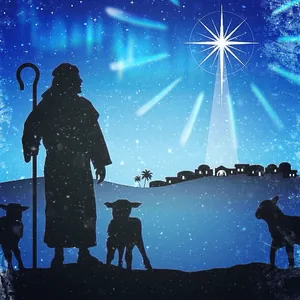
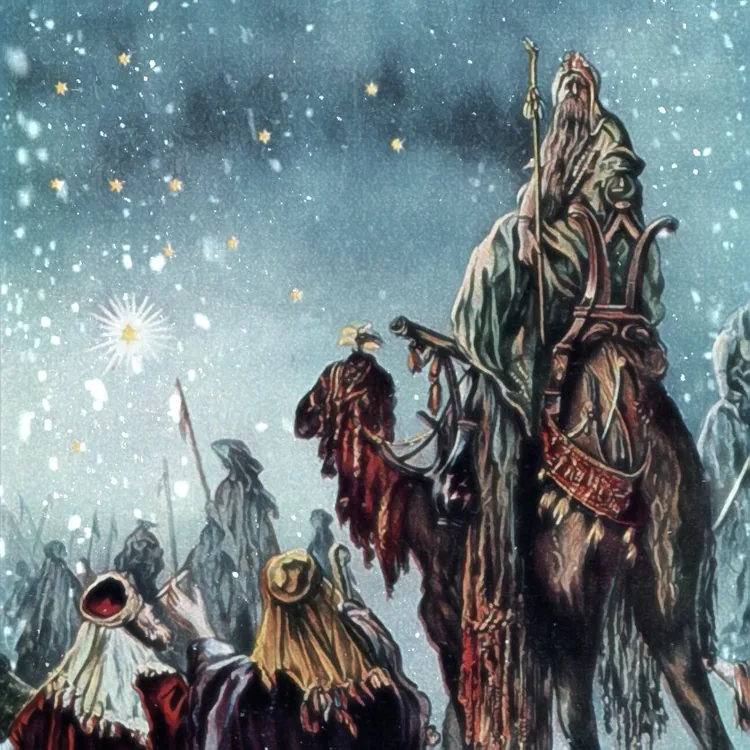
Chance Garton and McHugh pick apart the star's behavior. Babylonian astrologers see it in the east, travel roughly 900 miles to Jerusalem over about three months, consult Herod, then watch the star hang a left, move six miles to Bethlehem and park over one house like a drone with a spotlight. They argue that in an era when calendars were kept by court astronomers using ephemerides, such an object could not have been missed. Yet no Canaanite, Greek or Roman source records it. McHugh also notes Matthew skips his usual fulfillment formula here, which he uses when he means business.
Lamashi and the Art of Reading the Sky
The heart of the episode is Lamashi, or constellation writing, paired with the Greek idea of catasterism, the belief that pictures in the stars proved events had truly happened on earth. Babylonian scholars called the sky heavenly writing and treated themselves as its readers. Because cuneiform carries roughly 600 signs, each with layers of Sumerian logograms and homophones, a single sign like mul could mean star, writing, arrow, god, field or feeling elated. Quoting A. R. George and Scott Noegel, McHugh explains that finding a pun in a divine name counted as revelation, not comedy.
Regulus, the Manger and the Pregnant Virgin
McHugh places the whole nativity in one patch of sky spanning Virgo, Leo and Cancer. Babylonian tablets call Regulus Sharu, a word that reads as both king and infant, which is why the Latin name means little king. Virgo's original title Absin means furrow, but alternate readings give virgin and, he suggests, bitter sea, the same Mar Yam behind Miriam or Mary. The western stars of Virgo carry Eru, to be pregnant. M44 in Cancer is Praesepe, the manger. Pregnant virgin, infant king and feeding trough sit together, and McHugh says Matthew and Luke read that tableau as history.
Wordplay Behind Every Detail of the Story
McHugh walks through the puns line by line. Leo's title labu also means to wrap up, and Regulus can be read shar, a fine regal cloth, giving she wrapped him in cloth. Bootes as Uthul yields shepherd, its northwestern stars yield flock, Orion gives shepherd and angel of the Lord, and Libra's Sumerian spelling yields army of heaven. Spica's wheat produces frankincense, Absin's bitter produces myrrh, and Regulus produces house, gold and treasures. Chance Garton links the same tableau to Adonis, born of a mother turned into a myrrh tree, and to Dionysus, Manu and Bacchus.
Quotes
“I'm I'm not trying to be self aggrandizing here, but I'm pretty sure I can tell you what the star Bethlehem was and where to find it in the night sky.”
“So learning these things in a deeper level with that healthy level of skepticism as well on the mythological aspect, on the historical aspect. I think it brings us closer to truth because really, and really, the greatest religion is truth.”
“It leads them to Herod in Jerusalem, and then it hangs a left and goes another six miles and positions itself over the house of baby Jesus.”
“So if you found a pun, if you found what we would call a synonym, a homonym or double entendre, you would assume that was a form of a revelation directly from the gods to you.”
“And the idea that I've come to internalize is that the Big Bang or the birth of the sun through the cosmic egg is not a point on a chronological timeline somewhere in a linear past, but it's actually an eternal happening at all moments.”
“And also, John, for everybody out there, what you're talking about is super important because it means most, if not all, of what has been taken on faith as ancient history, is very likely derived from asterisms and constellations and then recorded as such.”
“And then remember, the western part of this virgin constellation is pregnant. So you end up with a pregnant virgin whose name can literally be translated as bitter sea.”
“But the one you're looking for is that one, which is Regulus and it's in Leo. That's very likely the star of Bethlehem.”
John McHugh is a scholar of Middle Eastern and Native American archaeoastronomy and author of The Celestial Code of Scripture, which traces celestial and linguistic origins of biblical miracle stories; he has appeared on InnerVerse multiple times (Star of Bethlehem, Rock Art, Pegasus/Ark, Celestial Code).
See all John episodes→Kyle and Serena Denton are community herbalists creating wild-crafted and organic plant medicines out of Milwaukee since 2015. I have used their teas and tinctures on an almost daily basis for years now. Kyle is a great friend of InnerVerse and has appeared on the channel more times than I can count. These products work, not in the allopathic "pharma-medicine" way, but in a terrain-support, consciousness bolstering plant-teacher sort of way.