
Leo Herbs: St John's Wort, Motherwort, Angelica, Sunflower, Hawthorn | Astro Herbalism









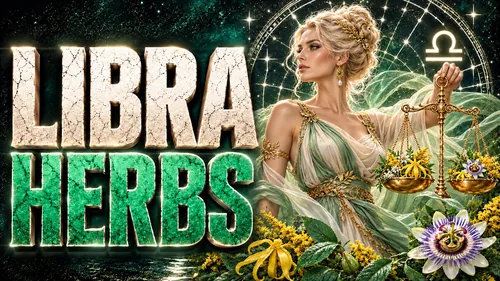
Leo season herbs and the plants that represent the lion and the heart's light. Kyle Denton (Tippecanoe Herbs), Mario Garza (Symbolic Studies), Michelle Lundquist, and Slick Dissident joined Chance Garton for the Leo installment of Astro Herbalism, covering St John's Wort, Motherwort, Angelica, Sunflower, Hawthorn and Lion's Tail through the doctrine of signatures.
In this remastered episode (originally from 2023), audio has been improved and unnecessary tangents removed, turning a rough livestream into a concise master-class on Leo in the Zodiac, the Strength card in Tarot, the Heart, healthy boundaries, and the plants that exemplify all these archetypal energies.
 Plus+InnerVerse Plus+
 InnerVerse Plus+
Hear every full episode
Every extended episode, the complete Plus+ archive, premium video and a private podcast feed for your app.
Cancel any time.

Get tuned with Chance
Tuning forks find where energy is stuck in the field around your body and bring it back into flow. Sessions over Zoom, recorded for you to keep.
30 Minute Consultations
Have something to look at, or looking for guidance? We can consult oracular tools, read your chart, or just talk through whatever you choose.
In this episode
Core themes
Taming the Lion Within
The episode opens by setting Leo beside the tarot's Strength card, where the panel notes that the so called king of the jungle looks oddly submissive, tail tucked, gentled by a woman they read as Virgo, the sign that follows. They talk through the sun as Leo's only ruler, the fifth house of creativity and pleasure, the Freemasonic lion's paw pressed over the heart, and Crowley's renaming of the card as Lust. Underneath runs a question about force versus surrender, and whether working with plants should bend the body to a desired outcome or make room for its own rhythm.
St. John's Wort and Held Light
The first herb is described as blooming on the summer solstice like a clock, which ties it to the feast of St. John and to his decapitated head. They unpack the botanical name Hypericum perforatum as meaning above the icon, point out the tiny holes in the leaves and the scarlet oil pressed from fresh flowers, and share a biophoton experiment in which a stressed leaf appears to leak light. Folklore follows: bundles hung over doorways and religious pictures, leaping through bonfires, and a Celtic name meaning terrestrial sun, carried so wanderers were not led astray by fairies.
Motherwort's Prickly Comfort
Motherwort, Leonurus cardiaca, arrives as the lion hearted plant of the mint family, described as offering the comfort only a mother can, even for people whose own mothers could not. They point to stacked seed pods that trace a rhythm like a heartbeat trace, and to spikes that keep visitors respectful. It is fiercely bitter, and they discuss how that bitterness yanks attention back into the present moment. Chance Garton speaks openly about losing a pregnancy and how he and his wife sat with that grief. Folklore includes rinsing family laundry with it and tucking a packet beside cherished photographs.
Angelica, Messenger and Spellbreaker
Angelica gets the most mythic treatment of the night. The panel retells the much copied legend of the plant appearing during the Black Death as the staff of Archangel Michael, then questions what the plague actually was. They linger on its towering stalk, the crowning head that pushes out of the stem like a birth, the purple stem, faint glimmers of light along the leaflets, and the hollow tube sometimes cut into a flute, which they read as a signature of travel between realms. Northern lore names it bear root, dug up by bears leaving their winter caves.
Shield Flowers and Fairy Trees
The final stretch moves outward into sun and thorn. Sunflower is admired as a face ringed by a lion's mane, the fourth sister planted alongside corn, squash and beans, and the Aztec shield flower whose golden discs honored a sun god; Greek myth adds Clytie, turned into a flower over Apollo. Hawthorn is discussed as the archetypal heart plant, flowering to mark Beltane, red with fruit by September, guarded by enormous thorns that model generosity with boundaries. Lion's tail closes the set, an African plant called wild dagga, shaggy and orange, twisting itself toward more sun.
Quotes
“Leo is ruled by the sun. So he is symbolically the sun. S O N and S U N.”
“When an organism is under stress, it leaks its light. It's losing its light. That applies to human beings, too.”
“She's the primordial mother. Whether or not your mother gave you those nurturing, warm feelings, this plant will.”
“Every tuning feels like a puzzle, and the pattern recognition part of it is what makes it so fun for me and why I think I'm so drawn to it as a practice.”
“When you come down at the neck of the analemma, that cutting of the X at the bottom, that's the day that he lost his head.”
“I think of the lion and its power and its pride being both its blessing and its curse.”
“Angelica is a great pacifier of psychosis, and I think it is probably the best spellbreaker plant.”
“A mother can be so soft and warm and welcoming, but if you do something to upset her, she's going to snap and she'll show you her teeth.”
“Just take a moment right now to feel the gratitude for the organ, the living conscious entity that is your heart.”
“The anagram that I pulled out of Hawthorne is 'who in heart.' It's the Christ. Christ has thorns around the heart.”
“When I see sunflowers, I see strength and I see boldness. And I see heartiness.”
“Come and take my fruit. Take as much as you want, but don't take advantage of it. You got to be careful, because if you don't, I'm going to stab you.”
“If there was any reality to aliens, it seems to be more aligned with demonic activity than little green men from Mars.”
Gabriel, known on air as Slick Dissident, co-hosts InnerVerse's Vibe Rant show and is a longtime recurring guest on the podcast. He teaches occult symbolism and tarot on his YouTube channel, ranging across the Major Arcana, the esoteric Enneagram, mythology and archetype, mystic linguistics, and the symbolism hidden in popular film. He is best known for Tarot-tories, his own system mapping the 22 Major Arcana and zodiac archetypes onto the geography of the United States.
See all Gabe episodes→Kyle and Serena Denton are community herbalists creating wild-crafted and organic plant medicines out of Milwaukee since 2015. I have used their teas and tinctures on an almost daily basis for years now. Kyle is a great friend of InnerVerse and has appeared on the channel more times than I can count. These products work, not in the allopathic "pharma-medicine" way, but in a terrain-support, consciousness bolstering plant-teacher sort of way.