The Sun, Kronos & The Devil In the White City, 1893 (Loki S2 Ep 3 pt. 1) | Marvelous DeMystifiers 27









The next episode of Loki is incredibly dense and detailed with its numerical-linguistic encodings, this time focused on the Sun and the Star cards of the major arcana. The third episode of season 2, called "1893," leads us to Chicago's World Fair Exposition, one of the most significant events in the shaping of our modern historical mythos for America. The riddles are one hundred placent amazing, so don't miss out on this decode, even if you've not seen other episodes or watched the Loki TV Series.
 Plus+InnerVerse Plus+
 InnerVerse Plus+
Hear every full episode
Every extended episode, the complete Plus+ archive, premium video and a private podcast feed for your app.
Cancel any time.
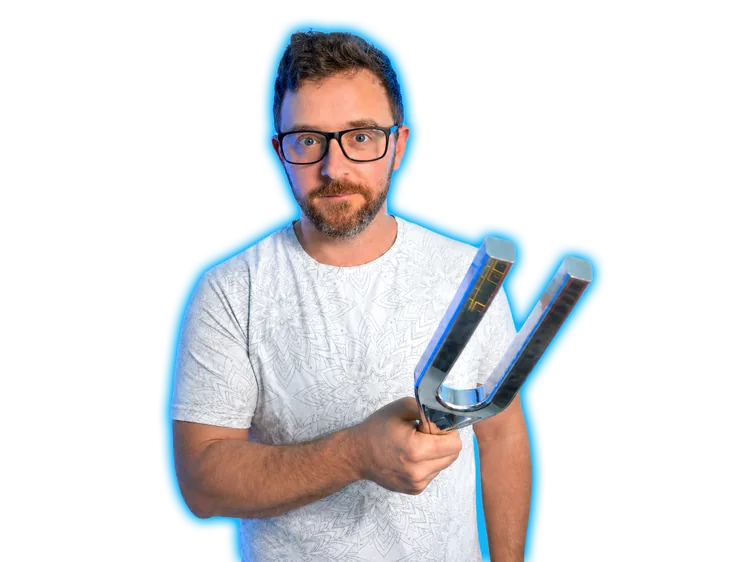
Get tuned with Chance
Tuning forks find where energy is stuck in the field around your body and bring it back into flow. Sessions over Zoom, recorded for you to keep.
30 Minute Consultations
Have something to look at, or looking for guidance? We can consult oracular tools, read your chart, or just talk through whatever you choose.
In this episode
Core themes
Sun and Star Cards Frame the Episode
Chance Garton explained that he pairs two Major Arcana cards with each episode, and that he first guessed the Hierophant before settling on the Sun alongside the Star. He described the Sun card as carrying the Hebrew letter resh and the Star card the letter hey, and tied both to the idea of beginnings, breath and creative power. Gabe added that the number 93 stood out right away, noting that the Greek words for will and love share that value. Chance framed the episode as a spring equinox story about a cycle starting over.
Gematria Around 1893 and the Number 216
Chance Garton multiplied the digits of 1893 to get 216, which he linked to six times six times six and the magic square of the Sun. He said 1868 multiplies out to 384 and that 216 plus 384 gives 600, which he connected to an old idea of messiah cycles every 600 years. He also pointed to planks the characters walked past that he said carried the Hebrew value 600. Gabe linked 216 to the Analemma and to tax day, and Chance credited Gabe's earlier work on it. Both presented this as their reading.
Fisher King, Balder and Kang
Chance Garton compared He Who Remains to the Fisher King, a wounded guardian whose castle sits in mist, and said Loki played the fool who asks the question. He described the throughput multiplier as resembling a grail. When Loki mocked the Norse diorama, Chance retold the myth of Balder and the mistletoe spear and called it the same dying and returning king story. He also tied the name Balder to the bell of the Liberty Bell. Chance called the Balder and Liberty Bell link fun etymology.
The World's Fair and the Sacred Timeline
Chance Garton said the World's Fair was the natural place for a show about managing the story of history, and he noted textbooks of American history were first spread there. He questioned how large buildings could be built and removed so quickly but said he was not qualified to make a definitive statement. Gabe described the crane as a stage symbol of the god machine. Chance read the Liberty Bell inscription, tied to Leviticus 25 and the jubilee, as a sign of springtime and free will. Chance and Gabe also discussed voting booths and the Ivy League.
Victor Timely as Chronos and Victim
Chance Garton read the name Victor Timely as containing the word victim, and described him as a spring equinox figure matching the sacrificial ram, set against the scapegoat of the winter solstice. He said the word Chronos has a Greek gematria value of 510, the same value he found for the spelling of resh. Gabe argued that Mobius was meeting the shadow of his own past self, which Gabe called the rhetorician Phaedrus. Gabe also tied the Star card to the leap year, Pluto in Aquarius and a Capoeira pose.
Quotes
“I like to peg two cards of the Major Arcana to each episode, it seems to really work out for me, and this time around I first thought it was gonna be the Hierophant because they were searching for this guy who's like you know the Pope of their TVA and all that, but I was wrong, it's the Sun.”
“Definitely the 93 stands out right away, that's the agape, and it's also will and love in Greek have an isopsephic value of 93. It's a big thing to the Thelemic order, and that's one of the foundations of the particular deck that we go through, but it was a sacred number before those orders came into it, those guys are latecomers to what 93 is really all about.”
“Once you realize that the number of the beast or whatever is not talking about like the devil incarnate per se, other than that the Sun is the devil in wintertime when it kills off all the vegetation, it's actually a mystical number. It's about the formation of life, it's the cube of carbon, there's nothing really evil about it.”
“It turns out February 29th, we're about 10 days away from the day of the offering. This is going to be the 366th day of the year and it's the extra day, and it's like the opposite of a day out of time. Other cultures remove a day, well for us we add an extra day in, and whether you accept that rhythm or not it's up to you.”
“There could not be a more significant and powerful image for sort of symbolizing everything in this episode. The first camera shot we open on this weather vane, first of all you can see based on the directions that are there that there's a wind blowing, and it's the west wind that's called Zephyr or Zephyrus.”
“Essentially the Fisher King is wounded by his own spear, allegorically. The wounding by his own spear is how the future version of Kang or He Who Remains is killed, by a wound that he suffers from Sylvie, who in a way is his own weapon because he created all the conditions for her to exist and laid the path out for Loki and Sylvie to find him.”
“Should we save Victor Timely? I mean, we need him to save us, but does that mean we just got our free will back, right? We just got free will because the old king is dead so we can do what we want, but are we trying to put in a new king and set it all up exactly like it was before and give up our free will?”
“The crane is the god machine. Whenever the end of the movie or the culminating situation needs to be explained, they just bring some strange contraption down, do some theatrical light flashing, and everybody says oh, ah, and then it doesn't even matter if plot actually resolves itself, it's the ooh in the ah that is where the sleight of hand takes place.”
“They are cheering for the outcome, for the allegory of the hero to rise or the savior to succeed. So I think maybe that's the same thing going on here, all of this play craft is a type of prayer initiation, but it may have taken a dark turn where we're praying for other things besides just the turning of the sun.”
“It's heralding a new dawn or a new age of liberty like springtime does, these characters who now theoretically have free will. Liberty will, if B and W swap, free bell, free will, liberty free will bell, you see it's the same, it's the same word free will in Liberty Bell, and that's because the death of the old year or the original He Who Remains has removed the constraints.”
“This may be one of my favorite things about the whole weave, is that I found out that Chronos in Greek, kappa rho omicron nu omicron sigma, equals in Greek gematria 510. Chronos is the Sun, it totally is.”
“The scapegoat is the goat that they send away, it's Capricorn, the winter solstice is the scapegoat, that's the devil, it's the bad guy, it's the low point of the sun, and the spring equinox is when you sacrifice the ram, the Aries, the lamb, the victim. So the two goats, you know, like it literally is, and this character perfectly captures both of those ideas.”
“In Zen and the Art of Motorcycle Maintenance, the old persona who was zapped out of existence was named Phaedrus, and Phaedrus is the rhetorician. So Mobius is in denial of his number one self, and here on this moment he's going to see the shadow of that self he is in denial of, and that is a rhetorician, somebody up on a stage who's a fast talker.”
Gabriel, known on air as Slick Dissident, co-hosts InnerVerse's Vibe Rant show and is a longtime recurring guest on the podcast. He teaches occult symbolism and tarot on his YouTube channel, ranging across the Major Arcana, the esoteric Enneagram, mythology and archetype, mystic linguistics, and the symbolism hidden in popular film. He is best known for Tarot-tories, his own system mapping the 22 Major Arcana and zodiac archetypes onto the geography of the United States.
See all Gabe episodes→Kyle and Serena Denton are community herbalists creating wild-crafted and organic plant medicines out of Milwaukee since 2015. I have used their teas and tinctures on an almost daily basis for years now. Kyle is a great friend of InnerVerse and has appeared on the channel more times than I can count. These products work, not in the allopathic "pharma-medicine" way, but in a terrain-support, consciousness bolstering plant-teacher sort of way.