The Seven Musical Modes Are Planetary, Zodiac, and Alchemical Keys | shaOne & Slick Dissident









Sean Clark (sha0ne), UK musician and lifelong improviser, maps the seven musical modes onto planets, alchemical metals, zodiac signs, and the enneagram, with live guitar demonstrations, and makes the case that imaginal listening is innate to every human being.
Covers the seven musical modes as occult keys to emotion, planets, and zodiac, imaginal listening as the practice of connecting genius to sound, the Socrates daemon music story, the mode-mood-doom etymological thread, Santos Bonacci's sine wave zodiac mapped onto the 12 chromatic tones, Ionian as solar/Aries home base, Dorian as the lunar/Scorpionic gateway to mystery, the Slick Dissident enneagram overlay on the modal system, and a palindrome discovery in the Dorian mode teased for part two.
 Plus+Full episode · 4h 20m
 InnerVerse Plus+
Hear the full 4h 20m episode
148 more minutes of this conversation, plus the complete Plus+ archive, premium video and a private podcast feed for your app.
Cancel any time.
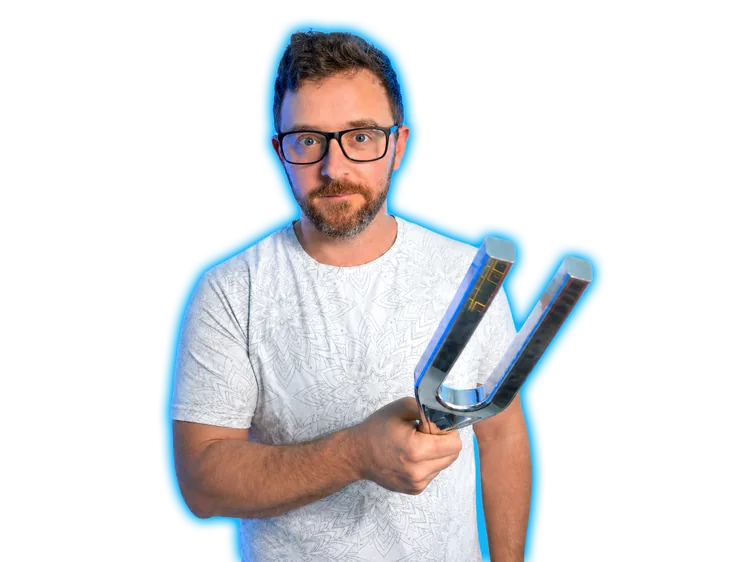
Get tuned with Chance
Tuning forks find where energy is stuck in the field around your body and bring it back into flow. Sessions over Zoom, recorded for you to keep.
30 Minute Consultations
Have something to look at, or looking for guidance? We can consult oracular tools, read your chart, or just talk through whatever you choose.
In this episode
Core themes
Everyone Is a Musical Genius
ShaOne opens with the epiphany that arrived while he was building his slides: everyone is an inherent musical genius, because anyone who has ever responded to music emotionally or imaginatively is already using the gift. He calls his approach imaginal listening, boiled down to listen, feel and imagine, and traces it to his own childhood, gigging within about six months of picking up music at around eleven. Chance frames the show itself around a similar belief, that every person carries some realization no one else alive has had, while ShaOne credits years of cold computer code as the Saturnian teacher that balanced music's warm flow.
Socrates and the Art You Skipped
Gabe maps the conversation onto Plato's Symposium, where seven speakers pass a touchstone around the room, which he likens to the podium, the altar and even the mute button on a live call. Socrates sits in the seventh seat, and Gabe reads his name backwards as Set Arcos, the Archon of Set. In prison before the hemlock, Socrates hears his daimonic spirit say he never figured out music, so he spends his last hours writing dithyrambs. Gabe's lesson is that a plateau is an invitation to find the art you neglected and begin again as a child, and he adds that music minus use leaves the mic.
One String, Twelve Tones
ShaOne calls music the language of the monad, and the monad's other name, the monochord, leads him to the Pythagorean single string as the root of all music theory. Touch a string lightly at its halfway point and it sounds an octave higher, so the harmonics are discovered rather than invented. Inspired by Santos Bonacci's sine wave of the zodiac, ShaOne lays the 12 chromatic tones on a 12 phase wheel, treats the 13th as the spiral into the next octave, and shows each of the seven modes as its own pattern of tones and semitones, which Gabe hears as Set Arcos once more.
The Ionian: Home in the Sun
ShaOne presents the Ionian, the ordinary major scale, as home base: resolved, friendly and free of dissonance, the stuff of melodies children sing at school. Its planet is the sun and its metal gold, with Aries as the main sign and Aquarius as a secondary pull toward adventure, like leaving the Shire, and the group lights up when Aries turns out to be an anagram of shire. Gabe brings in the Sun tarot card, number 19, which reduces to one. Chance tastes the mode as a sweet orange in warm sunlight and ties it to the sacral chakra, while ShaOne sees a golden sun at the crown.
Dorian, Mood and Doom
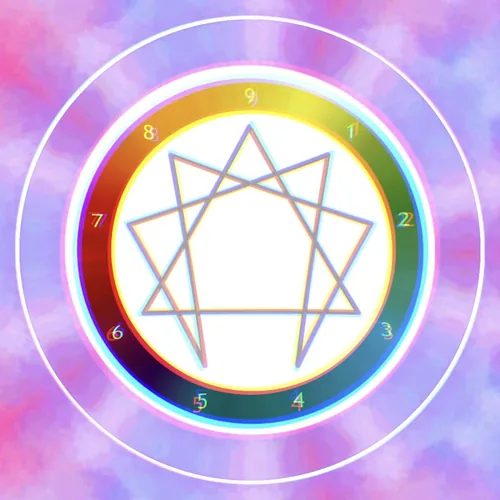
ShaOne plays the Dorian as a minor scale with a raised sixth, the bluesy, Pink Floyd flavored lightest of the dark modes, like Venus appearing before nightfall. He notes that mode is mood, and the group reads mood backwards as doom in its older sense of fate or judgment. Gabe overlays his Enneagram, crossing from one to two over the River Styx as Achilles faces Agamemnon, and hears D Orion in the name. Chance pictures a pine tree, Gabe recounts the 1755 Lisbon disaster and Voltaire's poem ending on hope, and a Hazrat Inayat Khan passage on becoming musical in thought closes part one.
Quotes
“Every single person that you meet knows something or has realized or had an epiphany about something that literally no one else alive has ever realized.”
“I believe we're all inherent musical geniuses. If you can listen and respond, if you've ever responded to music in an emotive, imaginative way, then to me, you already are a musical genius.”
“If you've plateaued, if you've come to a point where you think you know everything, look at your weaknesses. Find the art that you didn't gain mastery over and start over as a child again.”
“This astrology thing is music, but it's presented as geometry and mythology pointing to the energy forms.”
“I'm constantly seeing beautiful examples of how harmonious it is to consider the opposite to also have validity.”
“Conjecture's wonderful. I love it, but it needs the solid basis, and then it can just launch off.”
“The sacral chakra in a coherent state, it carries the signatures of satisfaction and pleasure and also creativity and flow.”
“There's something satisfying about musical resolution which is physical. It's emotional, sure, it's conceptual, but it's just the body's like, "Oh, yeah."”
“The systems, the powers that be, they have learned how to capitalize on disaster.”
“There's something called the smell of zen, which a teacher of mine used to describe whenever you get a true, just boof, experience of how things truly are.”
ShaOne (Sean Clark) is a UK-based musician and music theorist who researches connections between the seven musical modes, planetary bodies, astrology, and alchemy through what he calls 'imaginal listening.'
See all ShaOne episodes→Kyle and Serena Denton are community herbalists creating wild-crafted and organic plant medicines out of Milwaukee since 2015. I have used their teas and tinctures on an almost daily basis for years now. Kyle is a great friend of InnerVerse and has appeared on the channel more times than I can count. These products work, not in the allopathic "pharma-medicine" way, but in a terrain-support, consciousness bolstering plant-teacher sort of way.