
Disputers of Therapeutae Dupery with Dylan Saccoccio & Slick Dissident









Dylan Saccoccio returns to Vibe Rant to examine the possible origins of ecclesiastic forgery and dogmatic dupery, along with the potential cultural pollination of priestly oppression, branching out from what may be the world's first college of academic spiritual sciences, in ancient Alexandria. Did cultural diffusion of religions begin in Etruria, and stagnate in Egypt? Join us and decide for yourself, if the Vatican and its ilk have been deceived by their forefather's forgeries.
 Plus+InnerVerse Plus+
 InnerVerse Plus+
Hear every full episode
Every extended episode, the complete Plus+ archive, premium video and a private podcast feed for your app.
Cancel any time.
Get tuned with Chance
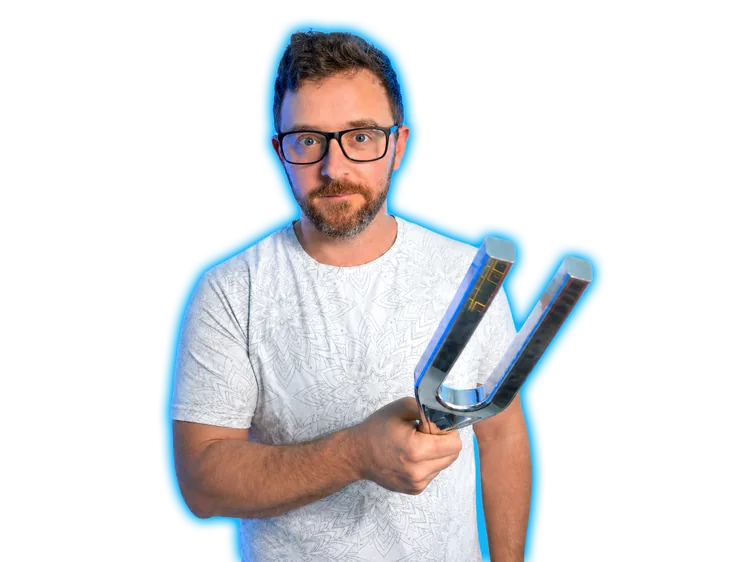
Tuning forks find where energy is stuck in the field around your body and bring it back into flow. Sessions over Zoom, recorded for you to keep.
30 Minute Consultations
Have something to look at, or looking for guidance? We can consult oracular tools, read your chart, or just talk through whatever you choose.
In this episode
Core themes
Eusebius and the Therapeutae Admission
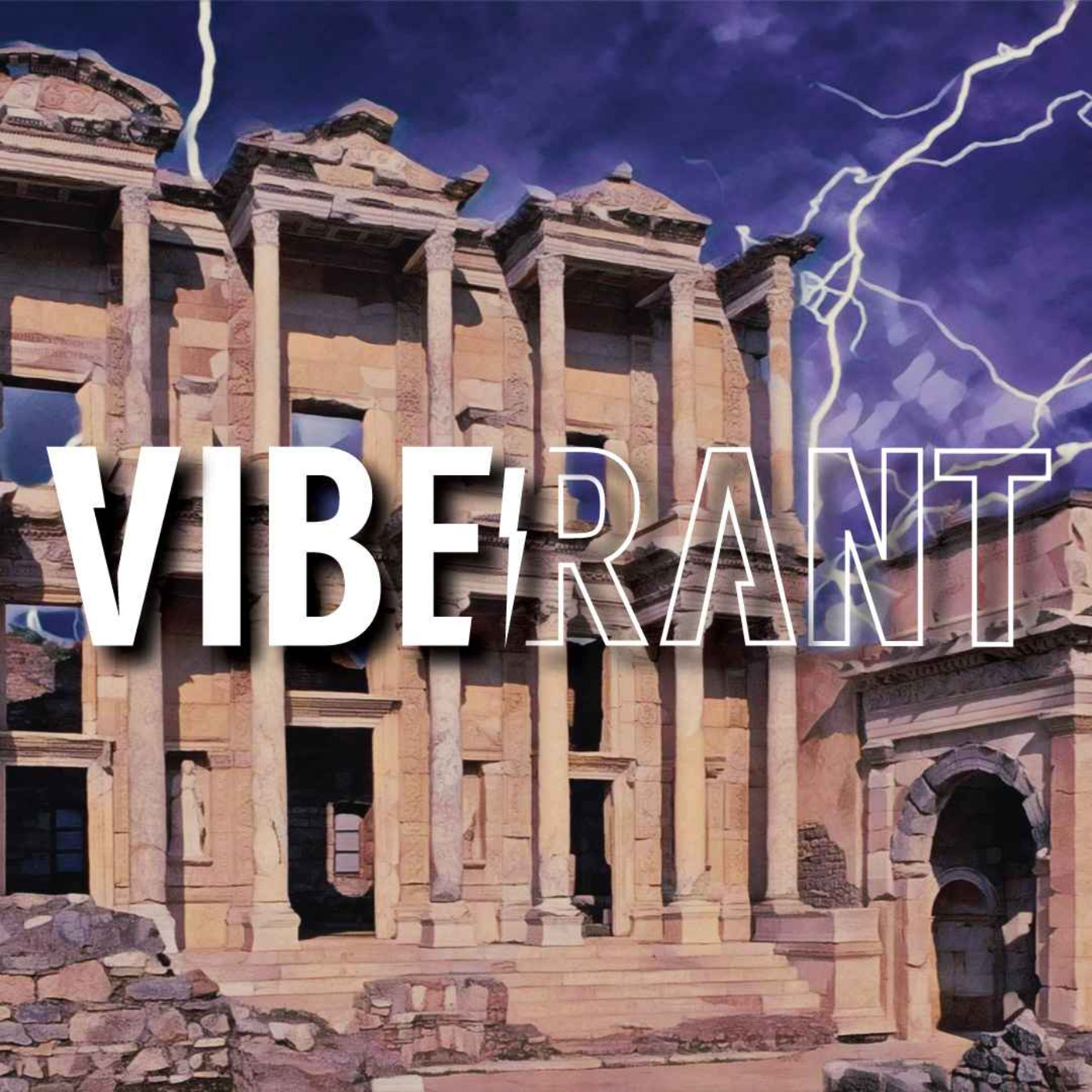
Chance built the evening around a chapter of Dylan's book Terminalia and the writings of the Reverend Robert Taylor. He read Taylor's account of the Therapeutae, or Essenes, as a healing sect described by Philo of Alexandria. Chance then read Eusebius, the father of church history, saying those ancient Therapeutae were Christians and their writings were the gospels and epistles. Chance called that admission a death blow to the historical claims of the church. He also noted that Taylor worked before the Codex Sinaiticus surfaced, and said he lacked the expertise to dispute its fourth century dating, while doubting how old the oldest Bibles really are.
Alexandria's University and Priestly Gatekeeping
Chance read Taylor's charge that the University of Alexandria was where learned monks first banded together to guard knowledge for themselves. Chance argued that its graduates, spread by missionaries and colonies, were a major source of cultural diffusion, though he stressed Alexandria was not the source of the mythology itself. He read Taylor on credentialed apostles versus false apostles and quacks, and compared it to modern credentialing. Dylan added that Taylor found Paul's Greek letter to the Romans absurd, and argued that some of its words could not predate the second century, so the letter may be a fourth century product.
Etruscan Navigators and the Holy Sailors
Dylan argued that the Etruscans were indigenous to Italy and descended from Phoenician navigators, pointing to the name Maro in Virgil's own name as evidence. He said Etruscan is not Indo-European, so Greece cannot be its parent, and that a Phoenician maritime empire hired by the pharaohs explains much cultural diffusion. Dylan also claimed Phoenician letters grew from the needs of trade and served as a lingua franca. Chance promoted the new audiobook of The Holy Sailors, and played a sample of his own narration reading Dylan's argument about an ancient universal empire.
Dupes, Communion, and Weaponized Inclusiveness
Chance read Taylor's claim that a long habit of imposing on others eventually turns the imposters into the dupes of their own deception, the idea behind the chapter title in Dylan's book. Chance also read the passage from Acts about early believers pooling their goods, and said sharing among trusted people is fine but forcing it on a whole collective is where he sees harm. Dylan argued that communion bread and wine symbolize sun-grown grain and grape rather than a cannibal rite, and read Alvin Boyd Kuhn on control schemes hiding behind humanitarian language. Gabe coined the phrase weaponized inclusiveness.
Gabe on Diogenes, Virgo, and Astrotheology
When Chance invited him in, Gabe described the gymnosophists as nude, mendicant wanderers and linked them to Diogenes, who he said lived in a barrel and stole a student from Plato's school. Gabe argued Diogenes corresponds to Virgo, with its themes of sloth and the void that invites inspiration. He claimed Schopenhauer repeats the same pattern, stealing students from Hegel as Diogenes did from Plato, so that philosophers' biographies echo myth. Gabe offered this as a pattern he keeps finding rather than as settled proof, and tied it to his tarot hermit card.
Quotes
“What we're disputing is the forgery of Mosaic history and the concealment of the ecclesiastical control system, how what was a good, true and beautiful philosophy became co-opted by the laziest, dirtiest people of society, to basically leverage their intellect and their education against the people who actually do the physical work and labor of the world.”
“That's the mic drop. There is no descent from Greece. It's not in the language, it's not in the culture.”
“Schopenhauer stole students from Hegel. So Hegel becomes like Plato and Schopenhauer becomes Diogenes. And their biography is literally echoing the myths of these philosophers in a really fascinating way.”
“This is the void, the vacuum, the absence of light that brings in inspiration. You got to get out of your own way.”
“When I'm doing tunings for people all the damn time, I run into this belief of the only way that I can be good is if I'm in suffering. The more I'm suffering, the more good I am. This is what the guilt complex is really all about.”
“As good as his work is, it is important to do the work. Sometimes people make mistakes and they don't realize they've made mistakes, and they don't have the means to fact check themselves. So we're very fortunate that we have these tools at our disposal.”
“I think this is where we see all of the diffusion. I think this is a major source of diffusion. I'm not saying Alexandria in Egypt is the source of the mythology or the system.”
“That is why you will find no evidence, no artifacts, nothing when you need it the most in the first century when this stuff is alleged to exist.”
“Reverend Taylor called the idea of Paul writing an epistle to the Romans in Greek a violence to the imagination. It would be like addressing people in London in Arabic.”
“I don't have any problem with the principle of this. If you and a group of people are on the same spiritual path, or they're your family, or you want to pull resources with people that you trust and care about, great. But when you expand it into the collective and force it upon people, it becomes the evilest shit ever.”
“I just want to coin a term on the fly here: weaponized inclusiveness. Nothing triggers me more nowadays than hearing the phrase, we're all in this together.”
“I finished this by holding and hoisting him up with my staff as a Moses. And I tossed his ass over the fence.”
“If you were to just look at the Chinese system, the Egyptian system, that is not conducive to trade. That development of the letters is what enabled them to create this lingua franca and do business all over the world without speaking each other's languages.”
Dylan Saccoccio is the author of the Spirit Whirled series, The Real Universal Empire, and the Tale of Onora. After chasing language back as far as possible, he now explores other avenues to prove cultural diffusion of the ancient universal empire of priests, navigators, masons, and merchants. Find his latest of many hundreds of articles on Substack.
See all Dylan episodes→Kyle and Serena Denton are community herbalists creating wild-crafted and organic plant medicines out of Milwaukee since 2015. I have used their teas and tinctures on an almost daily basis for years now. Kyle is a great friend of InnerVerse and has appeared on the channel more times than I can count. These products work, not in the allopathic "pharma-medicine" way, but in a terrain-support, consciousness bolstering plant-teacher sort of way.