Becca Tarnas | Re-Enchanting The World And Tales From The Perilous Realm










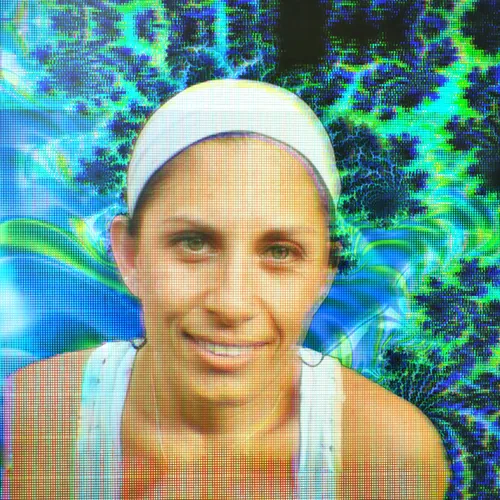
Becca Tarnas returns to talk about the esoteric wisdom in JRR Tolkien's works. These "Fairy Stories" aren't your Mother Goose nursery rhymes; in the Perilous Realm, you'll find mystical enchantment and mortal endangerment in equal measure. Tune in to hear about legends of the hidden folk, the mythic consciousness of our ancestors, and how the love of language, magic of words, and the archetype of the inner child can help you recover the beauty and wonder of life.
 Plus+InnerVerse Plus+
 InnerVerse Plus+
Hear every full episode
Every extended episode, the complete Plus+ archive, premium video and a private podcast feed for your app.
Cancel any time.

Get tuned with Chance
Tuning forks find where energy is stuck in the field around your body and bring it back into flow. Sessions over Zoom, recorded for you to keep.
30 Minute Consultations
Have something to look at, or looking for guidance? We can consult oracular tools, read your chart, or just talk through whatever you choose.
In this episode
Core themes
Why Tolkien Called Fairies Natural
Chance reads from Tolkien's essay On Fairy Stories, where man rather than the fairy is called supernatural, and Becca Tarnas hears a not-so-hidden ecological ethic in it: humans imagine themselves separate from nature, while elves are of the natural world. She points to Iceland, where by her account about 5% of people firmly believe in the hidden folk, 5% firmly deny them and the rest leave room, so roads curve around rocks said to be elf homes. She traces a path from myth to legend to fairy story to fantasy novel, and argues that the imagination itself is a natural feature of the cosmos.
Language as a Kind of Spell
Chance reads Tolkien's rebuttal of Max Müller's view of mythology as a disease of language, and his praise of the adjective as the most potent spell in faerie. Becca explains that Tolkien was a philologist, a lover of the word, who saw words as carrying their meaning rather than as arbitrary labels, and she links spell to spelling and grammar to glamour. Drawing on Owen Barfield's Poetic Diction and Saving the Appearances, she describes how the Latin spiritus once meant spirit, wind and breath at once. Chance asks whether splitting those meanings made it easier to treat the earth as lifeless.
Childlike Wonder and the Inner Child
Chance brings up Tolkien's line that whoever would enter the kingdom of fairy should have the heart of a little child, and asks what is happening to the inner child in the collective psyche. Becca separates childlike from childish, borrowing the beginner's mind of Zen Mind, Beginner's Mind, and argues that many adults have lost their wonder without ever being initiated into adulthood. For her, a true adult protects that inner child as an everyday practice. Chance names the failure adultism and offers the adept as its opposite, pointing to Gandalf, Aragorn, and Frodo, who saves the Shire but not for himself.
Gandalf, Saruman and the Limits of Reason
Becca contrasts Gandalf with Saruman, head of the White Council, who would never sit down with hobbits over ale and pipe weed. She ties humility to humus, the soil, and to being human, and sees that closeness to the earth as the reason Gandalf alone among the Istari succeeds, while Saruman eyes the Shire as country to industrialize and sell off. Chance argues that Saruman's slide began with fear dressed up as logic: once you use evil as a means to good ends, evil has already won. Becca adds that reason matters but needs balancing with imagination, emotion and embodiment, citing Gregory Bateson.
Recovery, Escape and Re-Enchantment
Becca takes up Tolkien's defense of fantasy against the charge of escapism: the escape of the prisoner is not the flight of the deserter, and the world beyond the prison walls is still real. In his essay, she notes, the land of fairy is our world, holding sun, moon, sea and mortal humans when they are enchanted, and she says Tolkien is clear that Middle-earth is our earth. She frames recovery as reclaiming a birthright of enchantment while keeping what the modern split has won, such as individual rights, and sees the early pandemic as a pivotal moment. Chance worries fear could revive old divisions like xenophobia.
Quotes
“We as human beings imagine ourselves to be separate from the natural world. That is not something that an elf or a fairy would ever conceive of. They are of the natural world.”
“If we are in our modern age seeing wind and breath and spirit as being different, doesn't that allow for humanity, or even influence humanity, to see the earth as a nonliving and non-spiritual entity?”
“Grammar itself is a word that comes from glamour, which is a reference to the kind of enchanted quality that language has.”
“If you've tried to use evil as a means that are justified because you think that's for good ends, then you've already been taken over by evil. Evil's already won.”
“To be an adult is to protect that part of ourselves, so we have to be strong in our adult selves to really be able to show up for that inner child.”
“Middle-earth is our earth, not some other planet. It's not some out there, it's right here. You just have to be enchanted to see it. That is what the recovery is.”
“The real meaning of personal responsibility and sovereignty is to treat your body and mind like a little child that you're raising with love and care instead of as a meat robot.”
“Logic is important, rationality is important, reason is so important. What is necessary is to balance them with imagination, with emotion, with embodiment, not to just flip the hierarchy.”
Becca Tarnas is a PhD scholar of philosophy and religion and author of Journey to the Imaginal Realm: A Reader's Guide to J.R.R. Tolkien's The Lord of the Rings, exploring Tolkien's works through archetypal cosmology and depth psychology.
See all Becca episodes→Kyle and Serena Denton are community herbalists creating wild-crafted and organic plant medicines out of Milwaukee since 2015. I have used their teas and tinctures on an almost daily basis for years now. Kyle is a great friend of InnerVerse and has appeared on the channel more times than I can count. These products work, not in the allopathic "pharma-medicine" way, but in a terrain-support, consciousness bolstering plant-teacher sort of way.