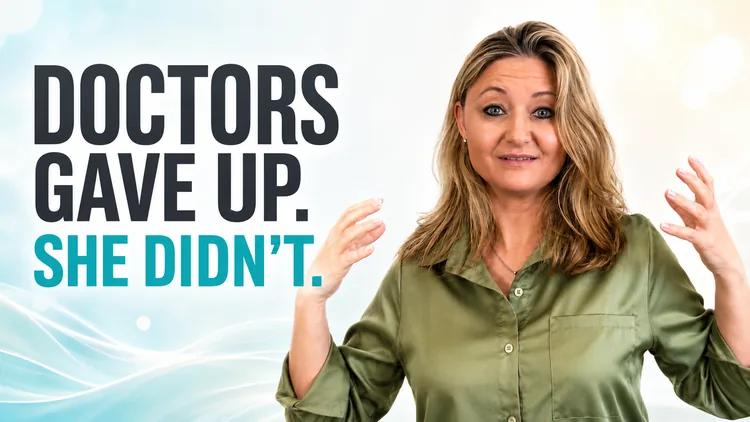
Doctors Said She'd Never Heal. Her Mind Proved Them Wrong. | Brandy Gillmore










Can the mind really heal the body? In this episode of the InnerVerse Podcast, we sit down with Brandy Gillmore, who spent seven years in a wheelchair due to "incurable" chronic pain before discovering the missing link in her recovery. Tune in for Brandy’s journey from network engineering to mind-body healing, exploring the specific subconscious ingredients, like hidden survivors' guilt, that can trap the body in a state of illness even when you’re doing everything else right.
Tune in for Brandy’s journey from network engineering to mind-body healing, exploring the specific subconscious ingredients, like hidden survivors' guilt, that can trap the body in a state of illness even when you’re doing everything else right.
 Plus+Full episode · 1h 44m
 InnerVerse Plus+
Hear the full 1h 44m episode
47 more minutes of this conversation, plus the complete Plus+ archive, premium video and a private podcast feed for your app.
Cancel any time.
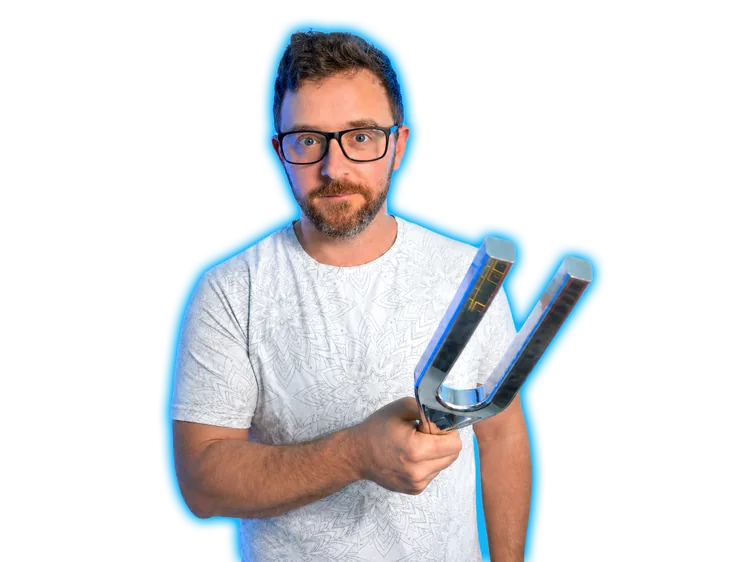
Get tuned with Chance
Tuning forks find where energy is stuck in the field around your body and bring it back into flow. Sessions over Zoom, recorded for you to keep.
30 Minute Consultations
Have something to look at, or looking for guidance? We can consult oracular tools, read your chart, or just talk through whatever you choose.
In this episode
Core themes
Seven Years In A Wheelchair
Gillmore recounts a car accident and then a fall in 2003 that left her with a neurological disorder, extreme pain and years in a wheelchair. She describes trying nerve ablations, infusions and injections, then reaching outward to diets, detoxes, fasts, supplements, meditation, affirmations and binaural beats, and finding that none of it touched what she was living with. What stayed with her, she says, was noticing that her nerves would recover after a procedure while the underlying injury did not, and hearing doctors repeat that there was nothing more they could do for her.
The Study That Sent Her Home
She describes arriving at a medical study at a top hospital certain she was there to get her life back, wheeled in by a friend, set up on a gurney and connected to IVs, only to have the doctor review her chart and tell her she could not take part because they did not expect her to improve. She recounts arguing that this was her life, being treated outside the study anyway, and going home to no change. Lying there afterward, she says, a question about the placebo surfaced in her head and gave her a reason not to quit.
Different Personalities, Different Illnesses
The research that jolted her, Gillmore says, involved people with multiple personality disorder, including a reported case of a woman described as medically blind in some personalities and sighted in others, and cases where one personality carried an illness while another did not. That pushed her question away from whether trauma existed and toward why it seemed to land so unevenly, since she had noticed police and military people who had been through extreme events without becoming ill. Her working frame became ingredients, a specific combination rather than trauma on its own, and belief alone was not enough.
The Guilt Underneath The Trauma
The counterintuitive piece in her own case, Gillmore recounts, was survivors guilt. Working an early morning shift in California, she had been on the phone with colleagues in the trade towers on 9/11, could do nothing as it unfolded, then watched the footage replay for months and carried a suppressed sense that she should have died saving others. She traces the feeling back further, to a moment around age four when another child said they would die for their family and she concluded her own answer made her selfish. Clearing the trauma, she says, did not clear the guilt.
Tuning Forks And Repeating Patterns
Garton sets his own practice alongside hers, describing biofield tuning, where forks are used to find stuck energy around the body and, he says, often prompt spontaneous recall of an old memory. He recounts a visiting relative with decades of back pain and a conversation about losing his father's support, and his own stubborn shoulder injury, after which his first marriage ended and he recognized the story he had been living, that enduring poor treatment made him the good guy. Both talk about symptoms as a kind of check engine light, and Gillmore insists the change was the gift, not the injury.
Quotes
“If you told me that I could heal with my mind, I initially would have thought that it was impossible.”
“There's no physical hard drive in the brain for memory. So where is it?”
“We don't expect you're going to get better from this. You can't be a part of the study.”
“I was like, I don't care about your results. This is my life.”
“And then I was laying there and this voice inside my head said, but what about the placebo?”
“I felt bad for my colleague and I couldn't do anything. And there was this part of me that felt like I should die to go save others.”
“If I can definitely identify you're the bad guy here, that means I must be the good guy.”
“Healing is an expression of your wholeness, not something to fix your brokenness.”
Brandy Gillmore, PhD, is a mind-body healing coach and spiritual teacher who helps clients resolve chronic pain and illness through belief and emotional healing work.
See all Brandy episodes→Kyle and Serena Denton are community herbalists creating wild-crafted and organic plant medicines out of Milwaukee since 2015. I have used their teas and tinctures on an almost daily basis for years now. Kyle is a great friend of InnerVerse and has appeared on the channel more times than I can count. These products work, not in the allopathic "pharma-medicine" way, but in a terrain-support, consciousness bolstering plant-teacher sort of way.