The Priest as Mediator: Decoding Pontifex Maximus, Moses, and Hermes Through Astro-Theology









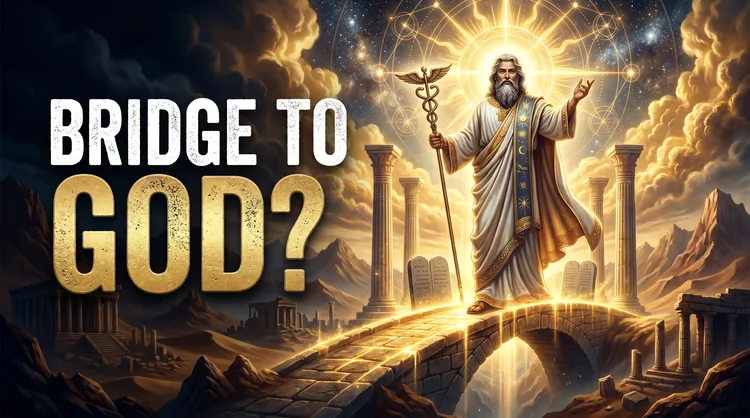
The role of the priest as mediator appears across ancient religions, mythologies, and esoteric traditions. The Pope is called Pontifex Maximus. Moses mediates between Israel and the divine. Hermes mediates between the gods and mortals.
In Inner Whirled 8, Chance and co-host Dylan Saccoccio explore the symbolism of the priesthood through scripture, etymology, and the astronomical context of the ancient world.
 Plus+Full episode · 2h 20m
 InnerVerse Plus+
Hear the full 2h 20m episode
93 more minutes of this conversation, plus the complete Plus+ archive, premium video and a private podcast feed for your app.
Cancel any time.

Get tuned with Chance
Tuning forks find where energy is stuck in the field around your body and bring it back into flow. Sessions over Zoom, recorded for you to keep.
30 Minute Consultations
Have something to look at, or looking for guidance? We can consult oracular tools, read your chart, or just talk through whatever you choose.
In this episode
Core themes
The Priest as Mediator
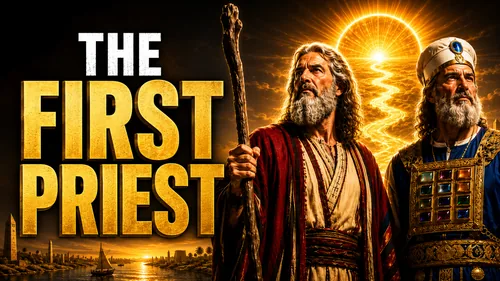
Chance Garton and Dylan Saccoccio build the whole episode around one idea, that the priest is a mediator standing between heaven and earth. They trace the mediator archetype through Mithra wrestling the bull, described as an Iranian deity of covenant, light, oath and justice, and through Hebrews 8, where Moses is called a mediator using the Greek root MES, which also signifies the midday sun. From there the same root runs into Mesembria, Mesopotamia and Hermes, the savior mediator whose name gives us hermeticism. The pontifex maximus, the great bridge builder, is presented as the surviving office of that role.
Beggars on Horseback
Dylan opens with the old expression that if you set a beggar on horseback he will ride to the devil, meaning people unaccustomed to wealth or power tend to be corrupted by it. He tells the story of putting out a fire while thirty people ran, and uses the Witcher as his model of a useful outsider society never quite welcomes. Chance links the word person to parson, a beneficed member of the clergy, and to the benefice, which reframes Pope Boniface and the Pope as the beneficiary in a global trust arrangement.
Robert Taylor and the Astronomical Tabernacle
Much of the free portion works through Reverend Robert Taylor, the clergyman who called communicants theophagists, or God flesh eaters, and mocked the heavenly lamb with hellish sauce. Taylor argues that the blue curtain of the tabernacle with its cherubim was nothing but an orrery, a working picture of the heavens. The priests, in scarlet and gold spangles on a blue ground, personated Mercury, Jupiter, the sun, the moon and the twelve signs. Chance reads the passage aloud, and both hosts treat it as proof that temple ritual was astronomy in costume.
Moses, Moshe, and Mexico
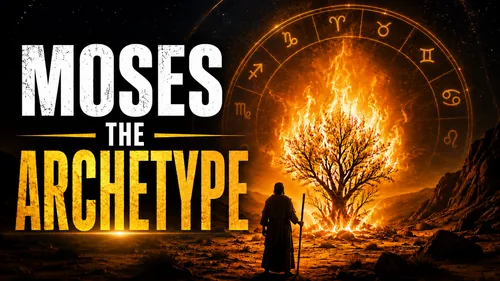
The hosts argue that Moses is not a single historical man but a recurring solar and initiatory title. Moshe was a term for an initiate in Egypt, and being drawn from the waters encodes baptism and rebirth into a brotherhood, the same pattern found in later secret societies. The same consonants give Messiah and Mashiach. Taylor is quoted noting that the Mexicans, who had never heard of Jew or Christian before Cortez and Pizarro, called the founder of their race Mexi or Messi, with Huitzilopochtli, robed in blue like the ephod, as their Jehovah.
Aita, the Etruscan Father
Dylan's proudest claim is philological. Aita, spelled A I T A, is the Basque word for father, priest and author, and it appears on an Etruscan tomb centuries older than the oldest Basque inscription, written right to left like Hebrew. Aita is also Hades, god of the underworld, and Chance connects that to the great father attribute of Osiris style deities, which is why priests call themselves fathers. Dylan says nobody addresses this evidence in public debate, which is why he is withdrawing, and Chance offers ultracrepidarian as the older word for the Dunning Kruger effect.
Quotes
“The best thing on the internet. People that are serious about researching symbolism, mythology, language, philology, all that good juicy stuff. I'm ready to have some fun.”
“there's an expression in the old world a couple hundred years ago when it was pertinent that if you set a beggar on horseback, they'll ride to the devil and you see that with fame, fortune, all these things, when people get a lot of influence, they do bad things with it”
“Mithra is wrestling the bull with a sun, which signifies mediator or one who binds a covenant, contract or oath and Wiki, just to quote them, describes Mithra as an ancient Iranian deity of covenant, light, oath, justice, the sun, contracts and friendship.”
“it bears repeating over and over again that the Disneyfied version of mythology that we have now with these big pantheons and all of their humanized antics is a pretty far stretch from how the original system was conceived and what it was meant to be”
“And so that saved by the waters, saved from the waters, all that symbolism, it's basically encoding baptism and being born again into a new brotherhood. This is even in pretty much almost all secret societies, versions of them, whether it goes down to Gosunostra or anything else, you're being born again to a new brotherhood.”
“And so you needed to learn astrology and astronomy in order to build these temples based on these cycles. And in order to keep that astronomy precise, they created the astrology or astro theology to remind them that way you could take it with you”
“the priests dressed themselves up in the imaginary characters of the constellations and planets. And one personated the planet Mercury, another Jupiter, another, the sun or the moon, others, the 12 signs of the Zodiac”
“And nobody ever addresses this when we have these discussions and it's getting increasingly more frustrating, which is why I'm increasingly retreating from the public because I've just realized I don't think there's a sincere, honest man among the majority of you.”
Dylan Saccoccio is the author of the Spirit Whirled series, The Real Universal Empire, and the Tale of Onora. After chasing language back as far as possible, he now explores other avenues to prove cultural diffusion of the ancient universal empire of priests, navigators, masons, and merchants. Find his latest of many hundreds of articles on Substack.
See all Dylan episodes→Kyle and Serena Denton are community herbalists creating wild-crafted and organic plant medicines out of Milwaukee since 2015. I have used their teas and tinctures on an almost daily basis for years now. Kyle is a great friend of InnerVerse and has appeared on the channel more times than I can count. These products work, not in the allopathic "pharma-medicine" way, but in a terrain-support, consciousness bolstering plant-teacher sort of way.