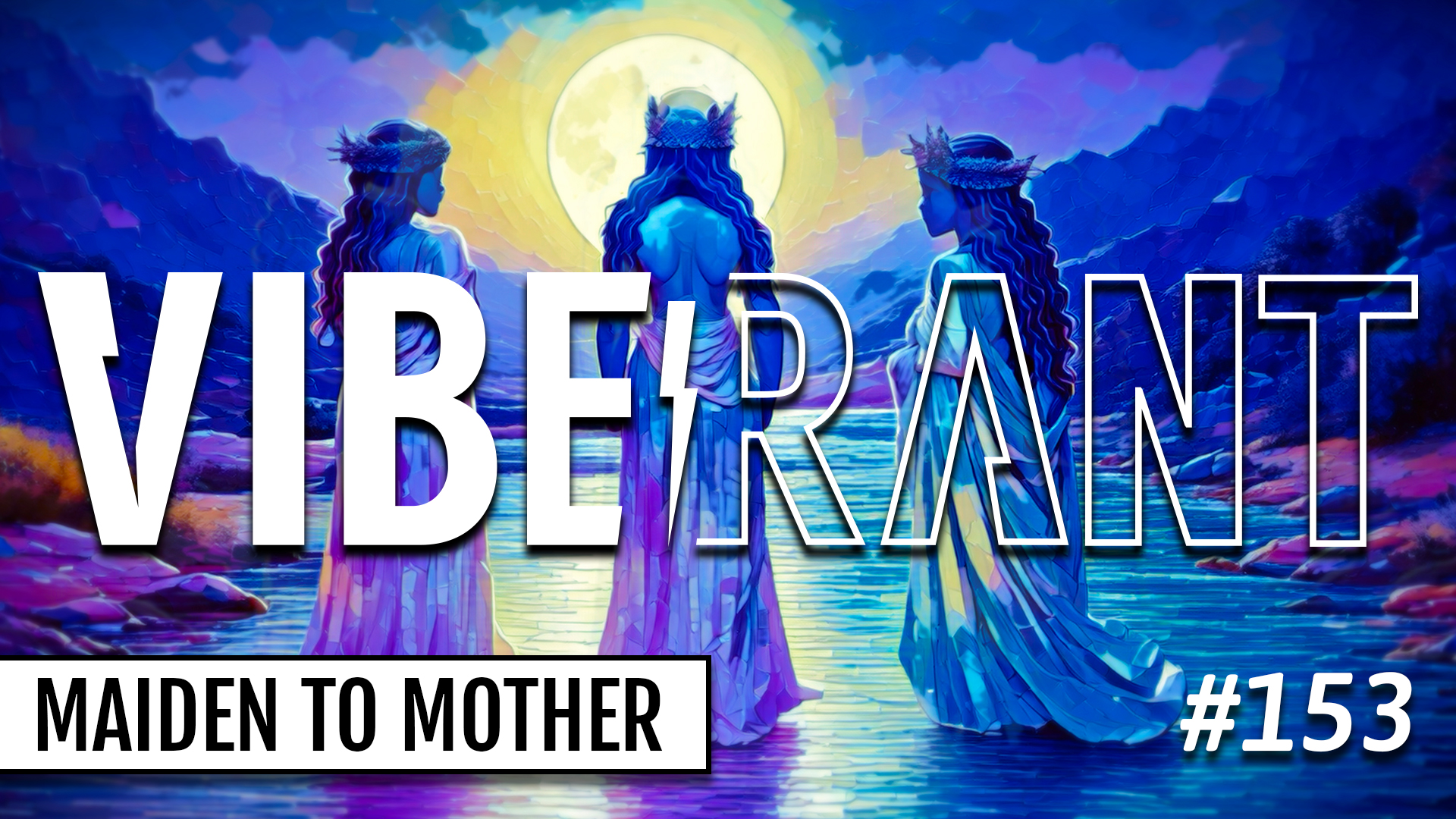
Elise Frosch | The Keeper of Natural Birth: Preparing For Pregnancy and Motherhood










Elise Frosch of Family Fungi joins InnerVerse to talk about her role as a sacred birth keeper. She helps us conceive answers to the most logical questions pertaining to birth, and we discuss why pregnancy is not a medical emergency, how to dispel fear narratives, the mother as spiritual psychopomp, perspective on the pains of labor, eliminating victim consciousness, and the story of her medically unsupervised home birth experience.
In the Plus+ Extension, Elise details the changes in body and mind during and after the 40 weeks, how not to impart the belief of original sin and brokenness to baby, talking to loved ones about circumcision, hospital SOPs, the mystery of the afterbirth, placentaphagy, and the divine twin spirit guardian.
 Plus+InnerVerse Plus+
 InnerVerse Plus+
Hear every full episode
Every extended episode, the complete Plus+ archive, premium video and a private podcast feed for your app.
Cancel any time.

Get tuned with Chance
Tuning forks find where energy is stuck in the field around your body and bring it back into flow. Sessions over Zoom, recorded for you to keep.
30 Minute Consultations
Have something to look at, or looking for guidance? We can consult oracular tools, read your chart, or just talk through whatever you choose.
In this episode
Core themes
The path from festivals to birthkeeping
Elise Frosch tells Chance Garton how she went from a private Catholic upbringing in Louisiana, hula hooping at festivals and a sociology degree, to a trip to Nepal and yoga teacher training. A friend asked her to be a doula, a word she had never heard, and searching led her to the Matrona program in Georgia. What she expected to be clinical training turned out to be teaching on the physiology and the esoteric nature of birth, and it changed her life in four days.
The case that birth is not an emergency
Much of the hour is spent challenging the idea that birth is a malfunction needing management. Elise recalls asking her sister, a neonatal ICU nurse, why the cord is cut immediately, and being told the baby must take a screaming first breath or the lungs will not develop. Chance calls that pure superstition, no different from a pitcher adjusting his cap before a game, and says the whole system runs on middlemen who frighten you into needing the expert. Elise adds that hospitals base their protocols on the average American, and she does not consider herself average.
What she says the hospital room does to labor
Elise walks through the standard sequence: triage, an IV placed just in case, monitors that limit movement, no food because a C section might be coming, and a clock that expects half a centimeter of progress every twenty to thirty minutes. When labor stalls, she says, pitocin brings contractions without the hormones of natural labor, which hurt more, which leads to the epidural. Her argument is that birth is an altered state of consciousness, so bright lights and staff asking if you are okay every ten minutes pull a woman out of herself exactly when she needs to go in.
The unconscious desire to be a victim
Chance asks whether women have confused the real power of birth with the currency of martyrdom, and Elise says yes emphatically. She points to Yolanda Norris Clark and the Free Birth Society, and to Yolanda answering a question about her painless ninth birth by saying she released the unconscious desire to be a victim. Elise heard that while pregnant with Emanuel and it landed hard. She tells women carrying birth trauma that redemption is possible, but it starts with owning that on some level they agreed to it, a hard pill she knows many will refuse.
Two births and the mystery on the other side
The stories carry the argument. Elise birthed her first son at home while her mother, once appalled, brought grapes and watermelon and cut the cord. Her second, Manu, arrived in a bathroom with only James there, no midwife, no ultrasounds. Chance closes by reading the C section as astro theology, Caesar and the sun leaving Virgo on December 25th, and by describing the mother crossing into the source realm as father, spirit and child at once, three becoming one.
Quotes
“And I would say that there's not much more magical than actual birth of a human being, an entire infinity encased in a body.”
“And she told me, oh, it's because you have to get the baby to breathe. If you don't cut it right away, then the child's lungs won't develop fully and they have to take a screaming first breath.”
“Birth is absolutely miraculous. Birth is a gift given to us by God and through God and through you as that being in portal.”
“Society is psychotic. They love it. Feels good to fear and like, oh, if something goes wrong, because it's a savior complex, like, I got to save you from yourself because you're going to die. And if you die, what am I? It's extremely narcissistic.”
“And my answer is you have to die. You have to die to go into this portal. How are you going to go into the spirit realm and go get your baby and meet God if you're so connected to your meat suit? How are you going to leave behind the maiden and transmute into the mother?”
“And she said, I let go of the unconscious desire to be a victim. And that dude, it got me because I was pregnant with Emanuel at the time and it got me. I was like, oh, that's it. Because I've been seeing the victim consciousness.”
“And if you think you're broken, then you're going to have to get someone else's opinion and someone else to tell you that you're not. But if you know that you're whole and you are beautiful and you are vibrant and growing a child and you're so wonderful, then what could possibly go wrong? Like you are this vibration.”
“How did we all get here before the modern age? They'll tell you, oh, so many died in childbirth and so many died in pregnancy and everything was going wrong all the time. I don't know about that. Were you there? I don't know about that. Seems like a lot of us made it to me.”
Elise Frosch is a natural-birth educator and "birth keeper" who, with her husband James, runs the homestead business Family Fungi; she appeared on InnerVerse twice discussing preparation for pregnancy, labor, and ecstatic natural birth.
See all Elise episodes→Kyle and Serena Denton are community herbalists creating wild-crafted and organic plant medicines out of Milwaukee since 2015. I have used their teas and tinctures on an almost daily basis for years now. Kyle is a great friend of InnerVerse and has appeared on the channel more times than I can count. These products work, not in the allopathic "pharma-medicine" way, but in a terrain-support, consciousness bolstering plant-teacher sort of way.