Synthetic Biofields & Fomenko's Time Ciphers | Chance Garton on BioCharisma









In this deep and dynamic conversation between Chance Garton (InnerVerse) and Topher Gardner (BioCharisma), the hidden architecture of mind and matter unfolds, from the spiritual implications of AI to the linguistic evidence of a forged historical timeline.
Exploring Fomenko’s New Chronology, the “synth field” of cybernetic consciousness, and the metaphysical battle between authentic will and implanted desire, this episode bridges philosophy, philology, and spiritual sovereignty.
 InnerVerse Plus+
Hear every full episode
Every extended episode, the complete Plus+ archive, premium video and a private podcast feed for your app.
Cancel any time.
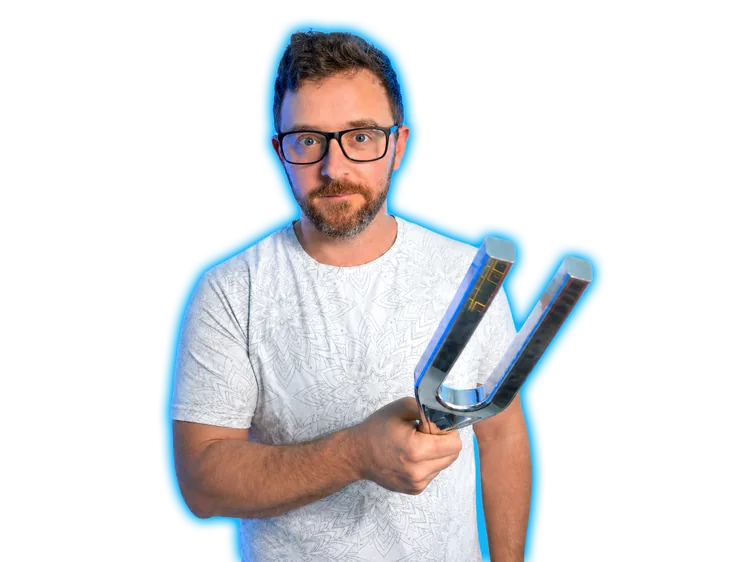
Get tuned with Chance
Tuning forks find where energy is stuck in the field around your body and bring it back into flow. Sessions over Zoom, recorded for you to keep.
30 Minute Consultations
Have something to look at, or looking for guidance? We can consult oracular tools, read your chart, or just talk through whatever you choose.
In this episode
Core themes
The Syntho Field
Topher describes what he calls a syntho field, an idea he says he tested against Eileen McCusick and writes about on his Substack: just as a living body carries a biofield, certain surveillance and data-gathering programs have grown coherent enough that he perceives them as carrying a field of their own. Chance takes the hermetic route into it, arguing that if a biofield is simply information held in coherent flow, then systems reaching that level of complexity qualify by definition. Both frame it as something to be educated about rather than frightened by, and both stress that naming it is not the same as being victimized by it.
Suggestion Before Thought
The familiar moment when an ad appears for the exact thing you were just thinking about gets reversed here. Topher, citing conversations with Chris Crutchfield and Sabrina Wallace, argues the device does not read the thought so much as seed it first, then mirror it back, and that a coming credit and tokenomics economy built on securitized biometrics gives someone an incentive to provoke a measurable cortisol spike on cue. Chance pushes back by keeping room for premonition and presentiment, and jokes that when it happens to him he simply decides he is psychic, because that story sits better with his ego.
Desire, Boundaries, and Jurisdiction
Chance describes the co-opted desire faculty he meets constantly in biofield work, where people cannot locate anything they actually want, and calls desire the current in the river of abundance: block it and the flow drops to a trickle. They read Crowley's true will line as alignment with the creator's will rather than license, and land on the cleaner formulation that what is best for me is what is best for everyone. Topher balances the cosmic view with the human one, insisting boundaries matter, evil is whatever crosses one without permission, and there will always be invading hordes to hold a line against.
Language That Will Not Fit the Timeline
Chance argues the mainstream chronology strains against how ordinary people actually speak, since you can control printed books but not the tongue of illiterate country folk. He calls proto-Indo-European a construct with no artifact or inscription behind it, propped up to hold a Renaissance-era story together, and screen-shares a list of Celtic, Sanskrit and Latin cognates, walking through focal, vac and vox to show how mouth position turns one sound into another. Topher comes at it through architecture, which he calls frozen music and the least fakeable evidence, pointing to cyclopean stonework from Peru to China and Etruscan artifacts scattered across Europe and North Africa.
Fomenko's Graphs and the Cipher Question
The revised chronology of Russian mathematician Anatoly Fomenko is a fringe position, and the two treat it as an argument worth examining rather than settled fact. Chance highlights the Almagest analysis, which claims Ptolemy's star coordinates back-calculate to medieval skies, and walks through a dynasty graph pairing two Roman empires whose reign lengths match segment for segment until a joint rule diverges. He credits Michael Anthony Alberta with the speculative leap that such precision reads as encryption rather than laziness, and pitches an unclaimed project: use large language models to brute force the key nobody has.
Quotes
“Well, you're using your prefrontal cortex to its full capacity. I find people that really use their prefrontal cortex to the full capacity don't like to augment reality.”
“I can finally create at the speed of thought with language as the tool itself, and I'm really loving that.”
“Everybody goes, oh, it's reading your mind, it's reading your biometrics, but it's actually, it goes one step prior to that. It actually suggests that thought to you.”
“Yeah, I'm psychic, rather than I had this idea planted in my head. To me that just works better for my ego.”
“Fomenko is like, you know, the majority of the history is just a rewrite. It's just a plug and play.”
“Architecture is frozen music, it's like a frozen language. It's the least fakeable aspect of history.”
“As he says, the stars do not lie, but historians do.”
“And so the next level of the idea is it's a cipher. Let's crack the cipher.”
Chance Garton is the host and producer of the Innerverse Podcast, where for over a decade he has investigated consciousness, mythology, symbolism, terrain health, and the psychosomatic language of the human body and mind. A biofield tuning practitioner, he uses tuning forks to help clients resolve physical symptoms, break negative patterns, and return to energetic coherence.
Kyle and Serena Denton are community herbalists creating wild-crafted and organic plant medicines out of Milwaukee since 2015. I have used their teas and tinctures on an almost daily basis for years now. Kyle is a great friend of InnerVerse and has appeared on the channel more times than I can count. These products work, not in the allopathic "pharma-medicine" way, but in a terrain-support, consciousness bolstering plant-teacher sort of way.