George Wiseman on Brown's Gas, Hydrogen, and the AquaCure









Inventor George Wiseman explains Brown's gas, molecular hydrogen, and how the AquaCure works, plus the loss that turned an energy researcher toward health.
Covers Brown's gas and how it differs from molecular hydrogen, the electrically expanded water component and its six constituents, hydrogen inhalation versus hydrogen-rich drinking water, the 4.7 percent lower combustion limit and inhalation safety, Tyler LeBaron and the Molecular Hydrogen Institute research, AquaCure setup and maintenance, distilled versus mineralized versus alkaline water, and Wiseman's decades as a self-employed inventor working on carburetor enhancers, water torches, and alternative energy.
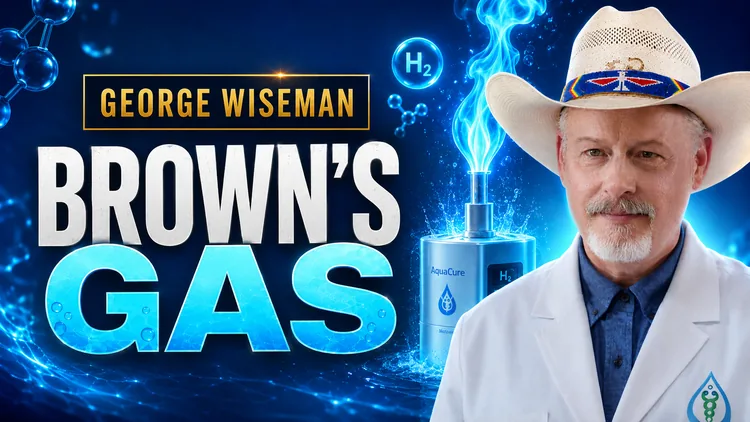 Plus+Full episode · 2h 33m
 InnerVerse Plus+
Hear the full 2h 33m episode
67 more minutes of this conversation, plus the complete Plus+ archive, premium video and a private podcast feed for your app.
Cancel any time.
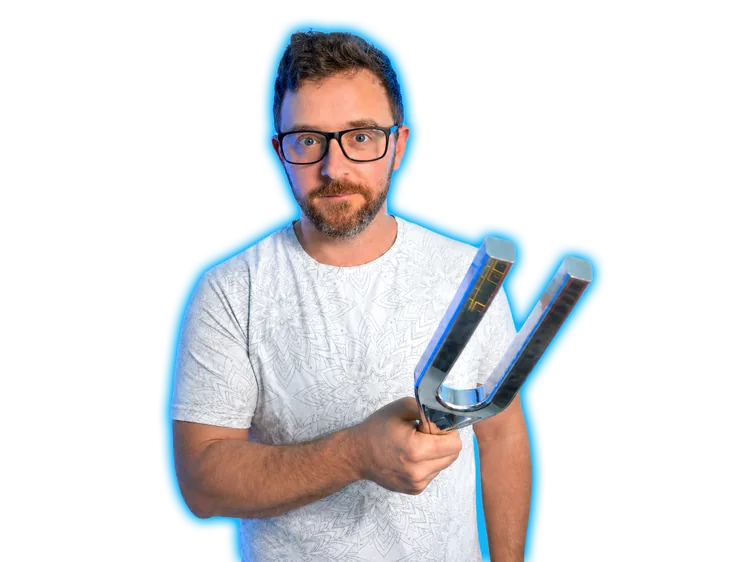
Get tuned with Chance
Tuning forks find where energy is stuck in the field around your body and bring it back into flow. Sessions over Zoom, recorded for you to keep.
30 Minute Consultations
Have something to look at, or looking for guidance? We can consult oracular tools, read your chart, or just talk through whatever you choose.
In this episode
Core themes
From the Ranch to the Shop
George grew up on a remote British Columbia ranch his father assembled from five smaller ones, a day trip from town, with no electricity and no running water, everyone up at four in the morning and working until they could not see. His father built a shop there, and George says he learned as a young child to fix almost anything, and that he disliked repairing things twice, so he fixed them better than new. As a certified automotive technician he complains that the engineers who design cars never work on them, which is why he designs machines to be easy to repair.
Accidents That Became Products
George started his own business in 1984 on twenty dollars and says he has never worked for anyone since. His first product came from a mistake, a vacuum line left hooked to the carburetor float bowl on a 1977 Volare that kept giving thirty percent better mileage after he shut the rest of the experiment down. He tells Chance he has usually earned more from the side effects of his research than the main line. When a Brown's Gas machine was quoted at three hundred thousand dollars in the late eighties, he built his own instead, and says it made the same gas on half the electricity.
Six Constituents and a Plasma
George describes Brown's Gas as six constituents rather than plain hydrogen, two thirds hydrogen to one third oxygen atomically, with the atoms recombining in several ways. One of them is still water but carries extra electrons, which makes a gaseous, negatively charged form he calls a plasma, the fourth state after solid, liquid and gas. Chance ties this back to his own interest in the electric body and daily grounding, and George answers with a brick house: a pile of bricks is not a house until some organizing factor and energy puts each one where it belongs.
The Safety Question and the Machine
Chance presses on whether inhaling the gas has actually been tested for safety, and George answers with the lower combustion limit: keep hydrogen under about four point seven percent of the intake breath and it will not burn, while the research he follows puts the useful level nearer two percent. He points listeners to the Molecular Hydrogen Institute site and to Tyler LeBaron, who consulted with him as an intern. On the machine itself he describes distilled water top ups, a cleaning every hundred or so hours, a lye electrolyte no stronger than liquid soap that stays behind as a catalyst, and redundancy safety built into every step.
Chance's Case for Nutrition First
Alone in the room afterwards, Chance makes his own case. He notes that hydrogen is literally the simplest atom there is, and that a proton, an electron and a neutron read to him like a Holy Trinity, one and one and one. He is careful to say he cannot fully advocate the machine without having tried it, and puts his own position plainly: the real solutions are nutritional, and the alchemical great work is getting your own cabinet of chemistry in order. He closes on grounding barefoot in the snow, the Telegram group, his sound healing and oracle card sessions, and vibe as the one thing anybody controls.
Quotes
“I didn't like repairing things more than necessary, so I would usually fix it better than it was new.”
“Lots of people are feeding me information, and then I kind of sort it out and I disseminate it, so everybody thinks I'm a genius, but really I'm not.”
“I like to say that the best state of mind is alert and relaxed, but most of us in the West, all caffeinated and under-rested, we're tired and wired.”
“We spend the first third of our life learning what we know how to do, and then we spend another 20 years kind of building into being effective in life.”
“I'm 32. I'm just starting to get the hang of how to be helpful as a human being.”
“In my opinion, allopathic medicine is more attuned to mitigating symptoms than it is to curing disease.”
“I don't need to be doing this. I could just retire and sit on a beach somewhere. I'm doing this because it's what's needed to be done.”
“The universe is energy, so your vibe is the only thing you have any control over, and it's what matters most, and it's what everything around you will reflect.”
George Wiseman is the inventor of the AquaCure AC50 and founder of Eagle Research, known for his work on Brown's gas (hydrogen/oxygen electrolysis) and hydrogen-based health technology; he appeared on InnerVerse twice discussing hydrogen as a macronutrient and EZ water.
See all George episodes→Kyle and Serena Denton are community herbalists creating wild-crafted and organic plant medicines out of Milwaukee since 2015. I have used their teas and tinctures on an almost daily basis for years now. Kyle is a great friend of InnerVerse and has appeared on the channel more times than I can count. These products work, not in the allopathic "pharma-medicine" way, but in a terrain-support, consciousness bolstering plant-teacher sort of way.