Was Chicago Firebombed? Tartaria & the Great Fire Conspiracy








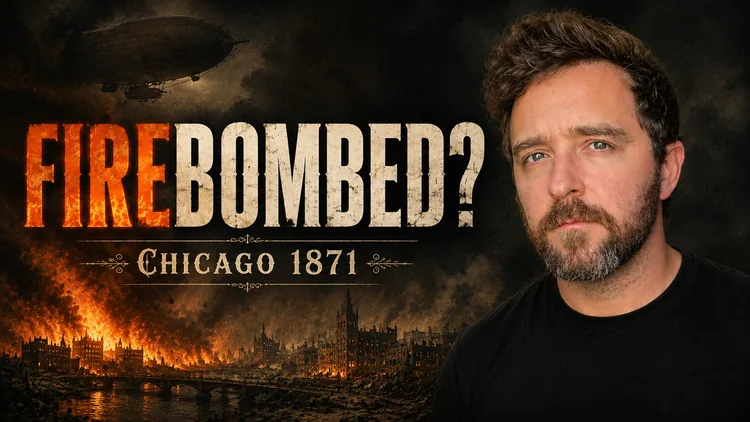
Tartaria theory says the Great Chicago Fire of 1871 was firebombed to erase the Old World. Is this alternative history conspiracy possible?
The ruins from the great fire really do resemble a bombed out city. Could the brick and limestone buildings of Old Chicago collapse to rubble from an ordinary fire? Were the streets and sidewalks themselves burning? Why couldn't the firemen stop the blaze? And why is the official cause undetermined, 150 years later? My investigation looks at Chicago's construction methods, the amount of wood in the city, weather conditions of the time, "fireproof" buildings, surviving "Old World" architecture, martial law, and the consolidation of power by the city's industrial elites in the wake of the conflagration.
 Plus+Full episode · 2h 37m
 InnerVerse Plus+
Hear the full 2h 37m episode
57 more minutes of this conversation, plus the complete Plus+ archive, premium video and a private podcast feed for your app.
Cancel any time.
 Patreon
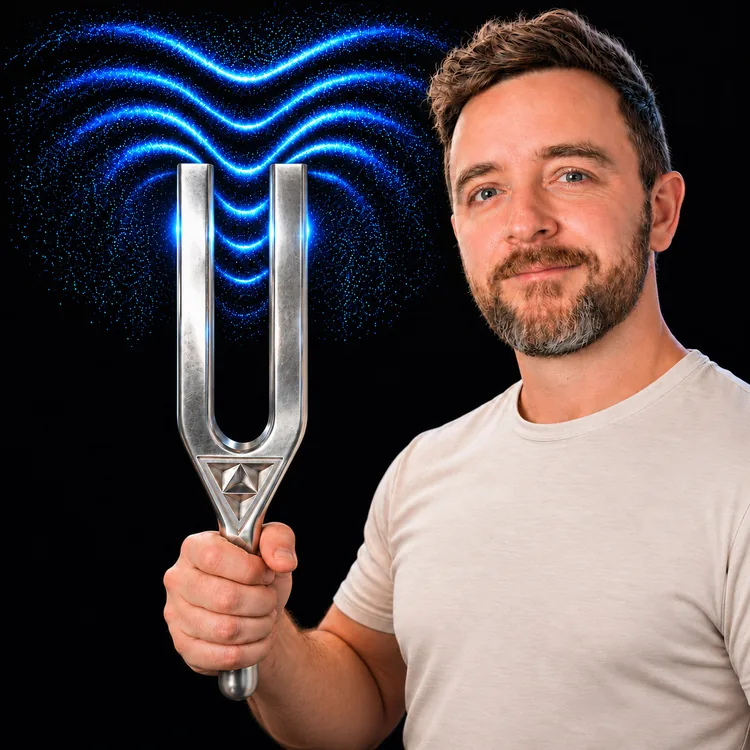
Get tuned with Chance
Tuning forks find where energy is stuck in the field around your body and bring it back into flow. Sessions over Zoom, recorded for you to keep.
30 Minute Consultations
Have something to look at, or looking for guidance? We can consult oracular tools, read your chart, or just talk through whatever you choose.
In this episode
Core themes
The Water Tower That Survived
The sharpest objection here is architectural. If the 1871 fire was a bombing run meant to erase old world buildings, why does so much grand stone still stand? William W. Boyington's Water Tower, finished in 1869 out of Joliet limestone, came through in full glory while its neighbors fell, and Oscar Wilde disliked it enough to call it a castellated monstrosity with pepper boxes stuck all over it in 1882. Old St. Patrick's from 1856, the Henry B. Clarke House from 1836, and Holy Family all survived. The Sherman House was rebuilt bigger, and the fire took only about a third of the city.
A City Framed In Pine
Chicago invented the building method that fed the fire. George Washington Snow framed a warehouse without hand cut joints in 1832, and a couple of years later the carpenter Augustine Taylor nailed St. Mary's Church together from light 2x4s for about $400, a technique mocked as balloon construction until it became known instead as Chicago construction. Its wall cavities ran from foundation to roof with no fire stops. Add roughly 60,000 buildings that were about 90 percent wood, 561 miles of raised plank sidewalk, 57 miles of tar coated wood block street, and one inch of rain from July to October.
Nobody Left To Fight It
The fire department was already broken before the first alarm sounded. In the six days before October 8, Chicago's roughly 185 to 219 firemen answered 27 alarms and worked 24 fires, then spent 14 to 17 hours on the Saturday night Red Flash fire that leveled four blocks of lumber yards and mills and cost a million dollars. Hook and Ladder Company 1 lost all of its apparatus, two steam engines were disabled, and Engine Company 6 reached the O'Leary barn after 22 hours of work and one hour of rest. Watchman Matthias Schaefer then misjudged the location by a mile, and the telegraph operator refused to correct the box.
Rubble Without Bombs
The Tartaria case leans on how much the ruins resemble Dresden after Allied incendiary bombing, and Chance grants the resemblance before explaining it. Nineteenth century mortar most likely lost its integrity somewhere around 600 to 800 degrees, while a fuel rich structural fire easily reaches 1,200, 1,400, even 2,000, so unbound brick simply collapsed into chaotic piles. Local Lemont limestone heated past 1,500 degrees becomes quicklime and crumbles to powder. The blurry roof edges offered as proof of hidden airships are halation, a known glass plate effect. Even the Tribune's fireproof 1869 headquarters burned, undone by paper, archives, and linseed oil ink.
Who Cashed In Fastest
The city's own 11th annual Board of Public Works report from July 1872 tallies about $200 million lost across 1,687 acres, names no cause, and the cause has stayed undetermined ever since. What followed is documented. Three days after the fire, Mayor Roswell Mason handed authority to Lieutenant General Philip Sheridan under effective martial law that guarded bank rubble instead of feeding anyone. Two days later he routed every relief dollar, five to ten million of it, to the private Chicago Relief and Aid Society, which closed its books with $600,000 unspent. Within 30 days Joseph Medill won the mayoralty by 46 points.
Quotes
“This document wasn't really intended for wide public consumption as a way to sell a story. It's just a document where they're counting the beans about what they lost.”
“The exterior walls are basically like chimneys with houses in the middle.”
“If the fire was some kind of clandestine operation to erase all the evidence of the old world architecture in Chicago, why would so much of that architecture remain standing?”
“The historical record shows the exact opposite. A wooden city with stone facades, Chicago style construction, balloon framing.”
“While brick and limestone might not be flammable in and of themselves, when you cook them long enough in a structural fire of wooden framed buildings, these materials are going to fall apart.”
“Nobody needs to start the great fire. They just keep the fire department weak and incompetent in their leadership until eventually a big enough fire happens.”
“They didn't hand out food. They didn't help build shelter. In other words, they were not really there to help. They were just there to guard the assets of the rich people.”
“The powerful of the city converted this catastrophe into consolidation of power, and they did it really fast, in less than 90 days, and in broad daylight.”
Chance Garton is the host and producer of the Innerverse Podcast, where for over a decade he has investigated consciousness, mythology, symbolism, terrain health, and the psychosomatic language of the human body and mind. A biofield tuning practitioner, he uses tuning forks to help clients resolve physical symptoms, break negative patterns, and return to energetic coherence.
Kyle and Serena Denton are community herbalists creating wild-crafted and organic plant medicines out of Milwaukee since 2015. I have used their teas and tinctures on an almost daily basis for years now. Kyle is a great friend of InnerVerse and has appeared on the channel more times than I can count. These products work, not in the allopathic "pharma-medicine" way, but in a terrain-support, consciousness bolstering plant-teacher sort of way.
The Sonic Slider is the flagship tool behind Biofield Tuning itself, a weighted tuning fork hand-tuned to 93.96 Hz, the twelfth harmonic of the Schumann Resonance, Earth's own natural electromagnetic pulse. Its extended handle lets you glide it smoothly across the face, neck, and body, and practitioners and users regularly report support for relaxation, circulation, and nervous system regulation. It's the same fork Chance uses in his own sessions, and a great entry point if you want to bring this work into your own daily routine.
If you ever wondered where I gained my symbolic and linguistic chops, it was the Spirit Whirled series of books, by Dylan Saccoccio. If you want to keep up with us on our show Inner Whirled, you'll need to do the same work. These books are a value and treasure greater than a college education in comparative mythology and religious studies ever could be. Give yourself the keys of discernment. Listen to Spirit Whirled.
New to Audible? Activate your free trial and use it to listen to one of my audiobooks. Amazon Prime members get 2 free audiobooks during trial. Use your free trial to try Spirit Whirled.
LotusWei provides amazing and transformative plant essence elixirs, using one of nature's most gentle and beautiful elements: the flowers themselves. Led by founder Katie Hess, LotusWei supports customers with diverse products that operate on homeopathic principles and energetic resonances. I use LotusWei Elixirs to give me an edge with psychic & energetic sensitivity, discernment, and life force coherence. In other words, LotusWei Elixirs help me be a better podcaster and Biofield Tuner. Benefits accumulate over long term use!
Clive de Carle has spent decades researching high-quality natural health essentials, from magnesium and fulvic minerals to iodine, selenium, and vegan-sourced vitamin D. His supplements are formulated with a focus on bioavailability, so the body can actually absorb and use what you're taking rather than letting it pass through unused. It's a simple, no-nonsense approach to filling the nutritional gaps most modern diets leave behind.
Melissa Kupsch is the Australian homeopath behind RMDY Collective and RMDY Academy of Homeopathy, and one of the clearest voices I know for homeopathy as true energy medicine. Her remedies work on the resonance principle, like cures like, where a matching frequency from nature is shown to the body so the vital force can recognize the distortion and resolve it. When Melissa joined Kyle Denton and me on InnerVerse, we explored the premise that spirit precedes form, and homeopathy demonstrates that principle as plainly as anything I know. RMDY makes quality remedies and first aid kits accessible, prepared with real care for who makes the medicine and how.
George Wiseman is the inventor of the AquaCure AC50 and founder of Eagle Research, where he has spent decades developing hydrogen and oxygen (Brown's gas) technology for health and home use. He has appeared on InnerVerse multiple times to talk about hydrogen as a macronutrient and EZ water.