Better the Devil You Know: Decoding the Book of Job, Apollo and the Astro-Theology of Reverend Taylor









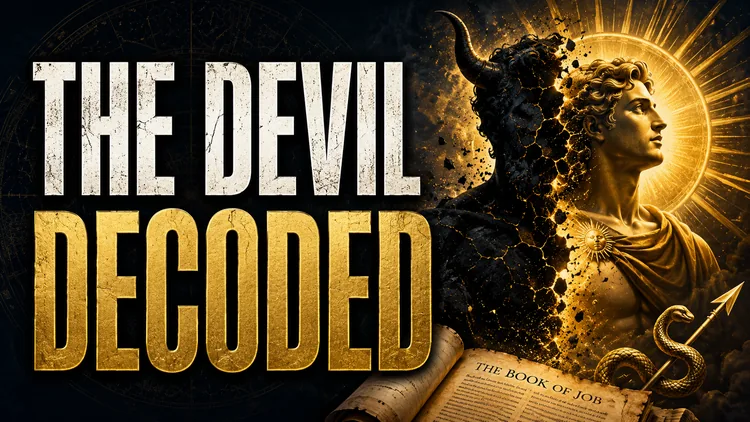
The Book of Job is one of the oldest texts in the Old Testament, and one of the most studied. It's also where the figure of the devil first appears in scripture. Robert Taylor, the 19th century clergyman known for his astro-theological lectures, spent years tracing the symbolism of the devil through the Bible and the ancient world.
In Inner Whirled 7, Chance and co-host Dylan Saccoccio continue working through Taylor's research, picking up from where the previous devil episode left off.
 Plus+Full episode · 2h 33m
 InnerVerse Plus+
Hear the full 2h 33m episode
104 more minutes of this conversation, plus the complete Plus+ archive, premium video and a private podcast feed for your app.
Cancel any time.

Get tuned with Chance
Tuning forks find where energy is stuck in the field around your body and bring it back into flow. Sessions over Zoom, recorded for you to keep.
30 Minute Consultations
Have something to look at, or looking for guidance? We can consult oracular tools, read your chart, or just talk through whatever you choose.
In this episode
Core themes
Better the Devil You Know
Dylan Saccoccio takes the episode title from an NRO mission patch whose Latin motto reads better the devil you know, and argues that the system holds people through familiarity: it reaches you through your parents, their parents, your priests and your community, so questioning it means ostracising yourself. Continuing part two of their work on Reverend Robert Taylor's astronomical theological lectures, the pair set that beside Godfrey Higgins's line that the devil is the grand ally of priests, certainly no devil, no priests, and read Taylor, jailed for blasphemy, turning the charge of blasphemy back on his accusers.
Job, Yove and the Name of Apollo
Dylan traces the name Job back through the Targums to a Hebrew form he transliterates as aiub or aiuv, noting that the beit serves as both b and v and that the vowel points arrived late, so reconstructing a dead language is, in his words, all guesswork and all opinion based. He links yove to Yova, Jehovah, Jupiter and the first father, Ju-pater, and says the same root in its aub or ob form signifies a serpent, a ghost and a necromancer. Citing Jacob Bryant, he argues the very name of Apollo is the name of Yove.
Abadir, Abaddon and the Two Halves of Job
Working from a Jacob Bryant passage on the oracles of Apollo, Chance Garton picks up the pillar name Abadir as a compound of ab and adir, then applies rotacism, swapping the final r for an n, to arrive at Abaddon, the angel of the bottomless pit covered in the previous episode. He reads the poem as astrological allegory, with Jehovah and the devil as two halves of one character, the devil and the angel on each shoulder, and warns that teaching it as literal history leaves children believing that being too good makes you a target.
Ventriloquist Oracles and the Degrees of the Priesthood
Dylan cites a lexicon admitting that the root meaning of aub can only be remotely conjectured and that its distinction from idoni is unknown. He suggests the Pythian oracles and serpent cults worked partly by ventriloquism, a priest throwing his voice through a statue, and reads Moses as a title for an initiate who forbids the Israelites from consulting ob and idoni. He sets out a degree ladder of Christians as good fellows, Jews as men of God, Israelites as men of Chronos, then Hebrews, obri, those who passed over, tying idoni to the Greek gnostes and to Adonai and Adonis.
Buried Compasses and the Bite of a Mad Parson
Chance reads Taylor's claim that the polyglot Bible's own margin dates Job to about 1520 BC among the Midianites, making it the oldest book either the Jewish or the Christian world receives as inspired. Taylor further contends the priests knew the magnetic needle long before Marco Polo, carrying the magnet in a compass box as the ark of the covenant, and hid it under allegories like Hercules sailing in a vase directed by the arrow of Apollo. Dylan closes on kion, dog in Greek and priest in Hebrew, and on dog reversed as god.
Quotes
“These things are just building off each other. This is the most fun podcast I've ever been a part of, it's exactly what I always wanted with Dylan.”
“It comes from a place of familiarity, which is how they get you. It comes from your parents and their parents, your priests, your community.”
“The very name of Apollo is the name of Yove, according to Jacob Bryant's work.”
“You take it away from an allegory and try to tell them that it's like a literally true story. You better be good, but also you might become a target if you're too good.”
“This probably still happens in places like India where they're telling their people that the god lives inside the statue, and maybe there's a priest that's just throwing his voice.”
“The evidence is already airtight without it, but further evidence that the god of the Old Testament is Apollo or Adonis.”
“They were the knowers who are admittedly in that definition necromancers, black magicians, sorcerers. It is all right there, and it's better the devil you know, that's how they get you.”
“You can look at the dog. The kion has the key to on, the sun, because they're the solar priests. And dog in reverse is god.”
Dylan Saccoccio is the author of the Spirit Whirled series, The Real Universal Empire, and the Tale of Onora. After chasing language back as far as possible, he now explores other avenues to prove cultural diffusion of the ancient universal empire of priests, navigators, masons, and merchants. Find his latest of many hundreds of articles on Substack.
See all Dylan episodes→Kyle and Serena Denton are community herbalists creating wild-crafted and organic plant medicines out of Milwaukee since 2015. I have used their teas and tinctures on an almost daily basis for years now. Kyle is a great friend of InnerVerse and has appeared on the channel more times than I can count. These products work, not in the allopathic "pharma-medicine" way, but in a terrain-support, consciousness bolstering plant-teacher sort of way.