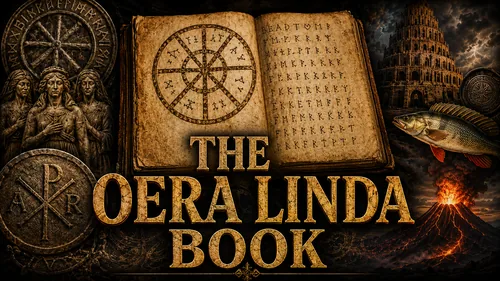
Jan Ott & Dylan Saccoccio | The Oera Linda Book: Linguistic Artifacts of Post-Flood Hidden History
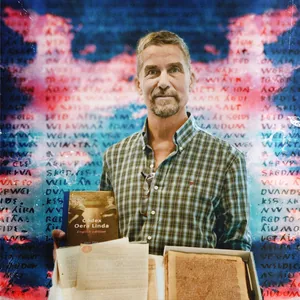









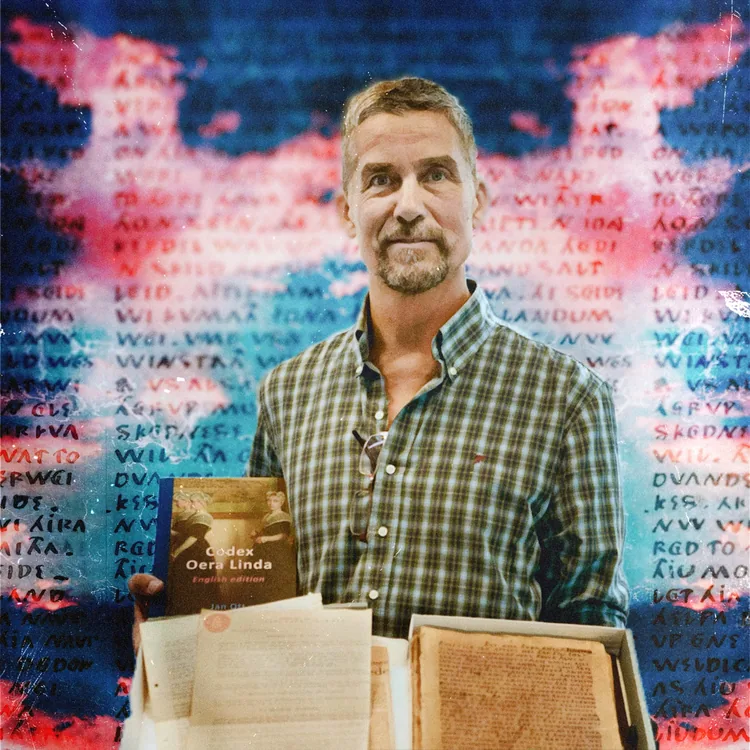
Oera Linda translator and scholar Jan Ott joins InnerVerse for a conversation about this fascinating and suppressed ancient text. Dylan Saccoccio provides questions and observations for Jan Ott as we investigate clues about the history of our world through examining language and artifacts.
 Plus+InnerVerse Plus+
 InnerVerse Plus+
Hear every full episode
Every extended episode, the complete Plus+ archive, premium video and a private podcast feed for your app.
Cancel any time.
Get tuned with Chance
Tuning forks find where energy is stuck in the field around your body and bring it back into flow. Sessions over Zoom, recorded for you to keep.
30 Minute Consultations
Have something to look at, or looking for guidance? We can consult oracular tools, read your chart, or just talk through whatever you choose.
In this episode
Core themes
A Manuscript That Refuses to Be Filed Away
Jan Ott lays out what the Oera Linda actually is, a codex that surfaced in the 1870s from Cornelis over de Linden, a shipbuilder for the Dutch Marines who inherited it and could not read it. Ott describes pre Christian texts plus two letters of instruction, describing a Frisian culture with colonies in the Mediterranean and northwest India, with the main parts dating from the sixth century before our era through roughly three centuries after Alexander the Great. He notes the paper itself has never been properly studied, and that even a thirteenth century copy would carry original content.
The Language That Made Lying Difficult
Chance Garton raises the passage he finds most striking, a Tower of Babel style account in which the original humans placed here by the creator Vralda spoke one language built so that deceit was nearly impossible. Liars would stammer and stutter and be caught out, until mischievous men devised their own tongues for cunning and trickery. Ott agrees that when every word carries a dissectible meaning, as with the Dutch eerbied splitting into honor and offering, it becomes much harder to speak while thinking something else. Dylan Saccoccio calls the resulting trust a European vulnerability being exploited today.
Testing the Forgery Charge
Saccoccio presses Ott on authenticity, and Ott answers with accumulation rather than a single proof. He points to the Tollense Valley battlefield and the Swiss pile dwellings, details a nineteenth century forger could not have known or would have had no reason to include, and to obvious Frisian fantasies of that era, such as the village of Hindeloopen, that the book conspicuously omits. He argues no good theory exists for who could have made it or why, since there was no money in it. He adds that in the 1870s the text was far harder to believe than a century of archaeology has since made it.
Sun Script, Monks and the Monogram of Christ
Saccoccio builds his case that the Oera Linda wheel is the source of a wider priestly alphabet. He ties the six spoked sun sign to the Chi Rho monogram, to the Buddhist dharma chakra and the Kalachakra, and argues Christiani is a Latin coinage from a corrupted Greek root, citing Archbishop Richard Trench and the scholar Michaelis on the late dating of gospel manuscripts. Ott adds his own example, the Alhambra numerals in southern Spain, which he says only make sense as a garbled reconstruction of numbers genuinely taken out of the Oera Linda wheel.
Freya's Folk, Folk Mothers and Minerva
Ott describes the social world of the text, a people who called themselves Freya's children, led not by a queen but by a folk mother at the main citadel, with maidens comparable to vestal virgins tending a perpetual fire, healing and giving counsel, and who could be punished severely for bad advice. Saccoccio and Ott then work through Minerva, called Nyhalennia, whose name Ott reads as one who lends new light, and who says she carries her possessions, love of wisdom, justice and freedom, in her bosom. Saccoccio contrasts the Latin spelling with the Etruscan Menrva as a dating clue.
Quotes
“I believe it was said that people who tried to be deceitful would stammer and stutter, and it would be immediately recognizable that they had bad intent and that later mischievous men began to devise their own languages through which they could actually cunningly tell lies and trick people and do evil.”
“But if, if the words you use all have a real meaning, then it becomes much more difficult to use these words while you're actually thinking about something else, and maybe in this time that we live in, people are much more used to, to lying or to hearing lies.”
“For me, it's many, many little, uh, pieces of evidence together, which has, um, made me convinced that it's authentic and also the fact that there is no, uh, no good theory about, um, how it could have been created or by whom.”
“So there's the situation that in the 1870s, when it became known, it was much harder to imagine this to be true than it is now. And that's what I meant with the archeological finds that we've had in the last hundred years. So many things have been discovered that fit into this story.”
“And that's what I'm trying to help rectify as well. And the reason this is a problem for the Bible is the New Testament claims on its title page that it was faithfully translated from a Greek original, but it's observably Monkish Latin.”
“When it was not, it was actually proving that the church hijacked a system that was already existent in Europe. And that's why I'm, the reason I'm passionate about this stuff is because if you don't know your culture's history, anybody can take it from you, you know?”
“So these people, because they saw themselves as children of Freya, and they saw themselves as one big family, brothers and sisters. Freya's band, Freya's children, was the name of their people, Freya's folk.”
“I mean, there is history in there. The question is the legitimacy of the history or the accuracy of it. I'm leaning towards the idea that there's quite a lot of accuracy to the history in the Oera Linda.”
Jan Ott is a translator and scholar known for his work on the Oera Linda manuscript, an ancient Frisian text he studies and promotes through the Oera Linda Foundation.
See all Jan episodes→Kyle and Serena Denton are community herbalists creating wild-crafted and organic plant medicines out of Milwaukee since 2015. I have used their teas and tinctures on an almost daily basis for years now. Kyle is a great friend of InnerVerse and has appeared on the channel more times than I can count. These products work, not in the allopathic "pharma-medicine" way, but in a terrain-support, consciousness bolstering plant-teacher sort of way.