Dr. John Knight Lundwall | Wisdom & The Oral Tradition: Memory and Storytelling From Mythos to Logos
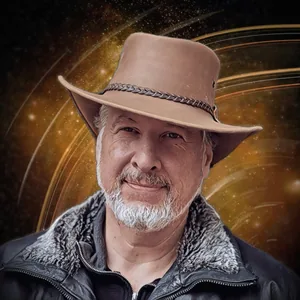









Dr. John Knight Lundwall joins InnerVerse to discuss his groundbreaking book, Mythos and Cosmos: Mind and Meaning in the Oral Age. Picking up the torch where hundreds of years of academia missed the mark, Dr. Lundwall guides our understanding of mythology as a technical language akin to scientific jargon, exposes the epistemological wall between literacy and orality, explains the analogical aspect of oral myth via the example of human sacrifices, and ponders why oral cultures did not keep histories as we know them.
In the Plus+ Extension we turn our discussion towards the category error of modernity to consider oral rites and stories as religion, question just what religion is through the example of the cult of state mandated "public health," the Renaissance prodigy Camillo and what his memory theater informs us of our own potential to recall complex ideas, the relationship between light pollution and literacy, and what it means to marry the best of both the oral and literary mind.
 Plus+Full episode · 2h 18m
 InnerVerse Plus+
Hear the full 2h 18m episode
58 more minutes of this conversation, plus the complete Plus+ archive, premium video and a private podcast feed for your app.
Cancel any time.
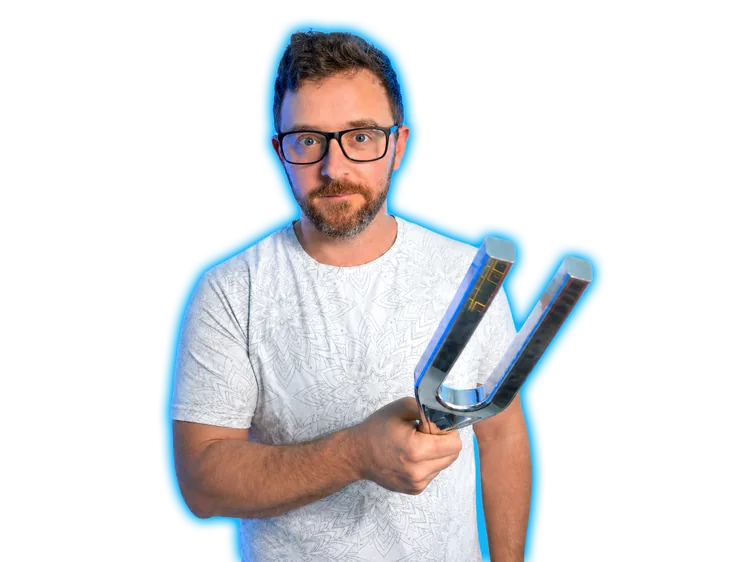
Get tuned with Chance
Tuning forks find where energy is stuck in the field around your body and bring it back into flow. Sessions over Zoom, recorded for you to keep.
30 Minute Consultations
Have something to look at, or looking for guidance? We can consult oracular tools, read your chart, or just talk through whatever you choose.
In this episode
Core themes
The Blind Spot in Myth Theory
Lundwall took his doctorate at Pacifica Graduate Institute, the Joseph Campbell school of comparative myth, and says that eight years of coursework and dissertation writing left him staring at a lacuna: neither Campbell nor Jung, neither Harrison's myth and ritual school nor Eliade's sacred and profane, ever touched orality. He points to two books from the 1960s that reopened the question, Gerald Hawkins' Stonehenge Decoded and Giorgio de Santillana's Hamlet's Mill, both savaged on arrival. Richard Atkinson's rebuttal, titled Moonshine on Stonehenge, insisted the monument was built by howling barbarians. Hawkins, Lundwall notes, turned out to be right.
Camps That Followed the Sun
Rather than treat sky watching as a curiosity, Lundwall argues that oral peoples organized survival around it. He describes the Lakota, hunter gatherers who broke winter camp for spring camp and then summer camp not simply to chase herds but to follow the sun through their constellations, each camp representing a constellation so the ground carried a sky map while the sky carried a land map. Their original summer camp, he says, was Devils Tower in Wyoming. In the ancient Near East and in Egypt, he adds, you could not build a city until you had first built a temple and cosmicized the land.
How Knowledge Survived Without Writing
For ninety nine percent of human history there was no writing, so anything worth keeping had to be passed down in memorable form. Lundwall describes oral cultures telling the same knowledge in as many mediums as possible: oral narrative as myth, somatic narrative as dance, ritual timed to a rising sun, a heliacal star rising, or a phase of the moon. Every element in that web, the herd, the valley, the star, the season, gets personified, which is why he contends orality produces polytheism while monotheism is a product of literacy. Deity names, in his reading, work as technical terms, closer to verbs than nouns.
Analogy, Orion and the Rain Making Head
Oral peoples think analogically, Lundwall argues, and the Pyramid of Unas texts show it. Read glyph by glyph they sound like gibberish, telling you to open the sky door beside the baboon's penis, which one translator renders as the sword of Orion, sitting where the ecliptic crosses the Milky Way. They are not texts at all, he says, but ritual and cosmological scenarios that were danced, sung and chanted. The same logic, he contends, is why Maya and American Southwest cultures tied heads and scalps to rain ceremonies: a head arrives when a woman's water breaks, holds every divine function, and produces tears.
Cyclized History and the Flood as Rebirth
Because oral societies cannot keep footnoted histories, Lundwall says memory gets cyclized into archetypes of eternal return, and he answers Godfrey Higgins' Anacalypsis puzzle about the absence of history before Herodotus that way. His example is Caribbean vodou, where a village founder's spirit, recalled alongside the Loa, is gradually absorbed into the deity until the historical person is forgotten. He reads the biblical flood as the creation story retold beat for beat, and argues the flood that Utnapishtim recites in the Epic of Gilgamesh is not a clumsy insertion but a resurrection sequence, matching chapter 175 of the Papyrus of Ani.
Quotes
“They were following the food chain, but they were following a sacred cosmology that had the food chain embedded in it.”
“Even the word oral is practically the same word as aura, the Greco Latin word referring to wind or breath. This is the Hebrew ruach, the Holy Spirit.”
“For 99% of human history people did not have writing. Now that's just mind blowing, because we think literate thoughts and we forget this is brand new.”
“There's no such thing as a person, place or thing. Those are symbolic overlays by which we refer to something real, but that something that is real is actually a verb.”
“The sky is the original television set. The sky is the first printing press. Of course that's using a literate metaphor for an oral category.”
“You can't memorize a phone book. In an oral culture you can memorize archetypal personified deities in ritual cycles, so historical data often gets transferred from the historical to the archetypal.”
“If you encounter a myth in an oral society, the myth represents ultimate reality. We think it's gibberish, we think it's fake, we think it's false.”
“There's something universal and eternal about this oral cosmology that not even materialist reductive science can escape.”
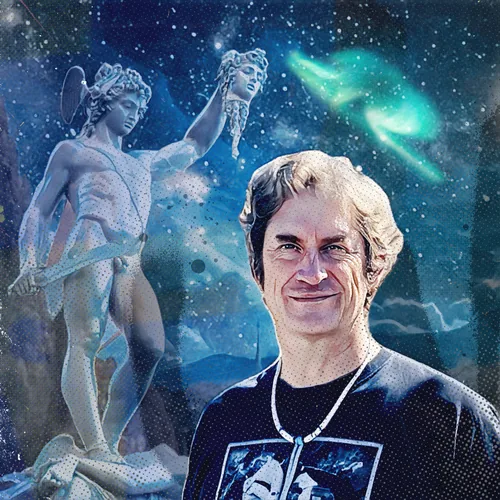
Dr. John Knight Lundwall is an academic specializing in mythology and the history of oral versus literate cognition. He is the author of "Mythos and Cosmos: Mind and Meaning in the Oral Age," exploring mythology as a technical language of oral cultures.
See all John episodes→Kyle and Serena Denton are community herbalists creating wild-crafted and organic plant medicines out of Milwaukee since 2015. I have used their teas and tinctures on an almost daily basis for years now. Kyle is a great friend of InnerVerse and has appeared on the channel more times than I can count. These products work, not in the allopathic "pharma-medicine" way, but in a terrain-support, consciousness bolstering plant-teacher sort of way.