Juan On Juan | Mystery of the Homunculus: Alchemical Investigations Into Generative Powers
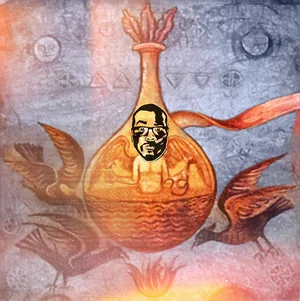









Juan Ayala of the Juan On Juan Podcast returns to InnerVerse to bring forward his research on the mysterious alchemical formation of the homunculus, the alleged process and technique of creating life through artificial means. How can this supremely secretive subject inform us about the origins of humanity, modern AI tech, the generative powers of nature, Jesus and the Brazen Serpent, and the immaculate conceptions of the savior at the onset of each world age?
 Plus+Full episode · 2h 34m
 InnerVerse Plus+
Hear the full 2h 34m episode
85 more minutes of this conversation, plus the complete Plus+ archive, premium video and a private podcast feed for your app.
Cancel any time.

Get tuned with Chance
Tuning forks find where energy is stuck in the field around your body and bring it back into flow. Sessions over Zoom, recorded for you to keep.
30 Minute Consultations
Have something to look at, or looking for guidance? We can consult oracular tools, read your chart, or just talk through whatever you choose.
In this episode
Core themes
The little man in the flask
Chance Garton brings back Juan Ayala, host of The Juan On Juan Podcast, to unpack the homunculus, the artificial little man of alchemy. Juan explains that the word itself is Latin for little man and that it did not enter the vocabulary until the sixteenth century with Paracelsus, the eccentric father of modern toxicology whose life Philip Ball chronicles in The Devil's Doctor. Paracelsus gave the first actual recipe. Earlier versions existed under other names, including the anthroparion of Zosimos that Carl Jung later wrote about, and the airborne creation Simon Magus boasted of.
Spontaneous generation and the limits of observing
The episode circles the old doctrine of spontaneous generation, the belief that maggots came from rotting meat and lice from a moist body. Juan links it to preformationism and Aristotelian biology, which survived into the eighteenth century, and to the conviction that tiny men sat crouched inside sperm waiting for the right conditions to sprout. He uses this to argue that pure observation misleads people, which is why he cannot follow the flat earth movement. Chance counters that calculation misleads too, and describes gnats appearing inside his parents' cabinet around forgotten potatoes.
The homunculus your doctor already recognizes
Juan points out that mainstream neuroscience keeps its own homunculus, the cortical map sometimes drawn as cortex man, which sizes each body part by how much brain territory controls it. Because that map shifts with habit and trauma, everyone's homunculus is different. Chance connects this to biofield anatomy and the tunings he does for clients, where, he says, a person's unconscious self image can carry a withered leg or an area cut off from life force. He also realizes his remote tuning table of crystals laid out as a body is homunculus magic.
Bodies, doubles and stolen driver's seats
The strangest thread is the Cartesian homunculus, drawn from a 1694 text Juan found that he says contains the first known use of the phrase outer space. In it Rene Descartes sniffs a powder and projects his consciousness to worlds where philosophers keep their own libraries, while a little placeholder runs his body on autopilot. Deep conversation makes it malfunction, and sometimes it refuses to give the body back. Chance compares this to a Daoist watcher, the Picatrix, and African shamanic accounts of an entity guarding the body during a journey.
Artificial persons, data doubles and fatherhood
Both men bring the idea into the present. Chance argues that the all caps name on a birth certificate is literally an artificial person traded for the placenta, and Juan asks whether corporations have been building sympathetic doubles from the data we hand over, pointing to Purdue's Synthetic Environment for Analysis and Simulation and its sentient world simulation. Juan believes the true magnum opus was never gold but artificial life. The hour closes softly, with Juan describing his two sons and Chance revealing he has a child on the way.
Quotes
“The subject of the homunculus is the study of the conditions in which life may just spontaneously generate as maggots appear on rotting meat and perhaps bees may manifest out of the corpse of a bull.”
“And again, what I love about alchemy, it's such a beautiful topic because it's, you know, it's physical, biological, psychological and transcendental. And so have your pick, right? The homunculus exists on various levels of existence, quite literally.”
“So while your consciousness is projected outside of your body, there's a little Cartesian homunculus that comes and sits down in the past and the driver's seat of your body. And it does the bare minimum for you. It'll brush your teeth. It'll eat for you. It'll go to work for you, whatever.”
“And if you read his it's the book by Philip Ball. It's called The Devil's Doctor. It's a great book that really breaks down the life of Paracelsus in a very entertaining way and his his life. And he was at the forefront of mineralogy as well, by the way.”
“And, you know, where this also ties into people's everyday lives would be the homunculus that you trade your placenta for at birth, which is your birth-certificated person, your artificial person. That's literally what your all caps name, your identity registered with the government is called an artificial person.”
“But what what she ends up saying is that there are underground cities where there are clones of people that actually exist and are currently alive, where they're like repeatedly running crazy simulations like zombie apocalypses and underground cities, fully artificially lit and everything.”
“But the artificial creation of life was the true magnum opus because in alchemy, there are various magnum opus. There is the right, the philosopher's stone, the elixir of life. You have the divine androgyn. And then you have the homunculus is one of them, too.”
“So the feeling you get when you first see your son or daughter or whatever it is, I have two sons. It's a feeling that you can't quite put your finger. You can't describe. It's indescribable.”
Juan Ayala hosts "The Juan On Juan Podcast," covering conspiratorial and occult topics, and appeared on InnerVerse discussing Gnostic archons/overlords and the alchemical mystery of the homunculus.
See all Juan episodes→Kyle and Serena Denton are community herbalists creating wild-crafted and organic plant medicines out of Milwaukee since 2015. I have used their teas and tinctures on an almost daily basis for years now. Kyle is a great friend of InnerVerse and has appeared on the channel more times than I can count. These products work, not in the allopathic "pharma-medicine" way, but in a terrain-support, consciousness bolstering plant-teacher sort of way.