Sajah Popham | Nature and Universal Truths: The Scientific Alchemy of Evolutionary Herbalism









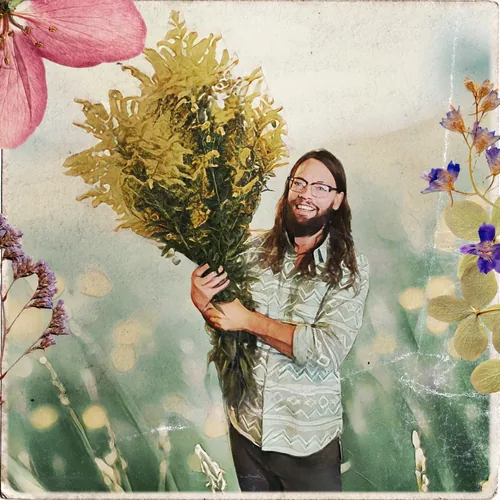
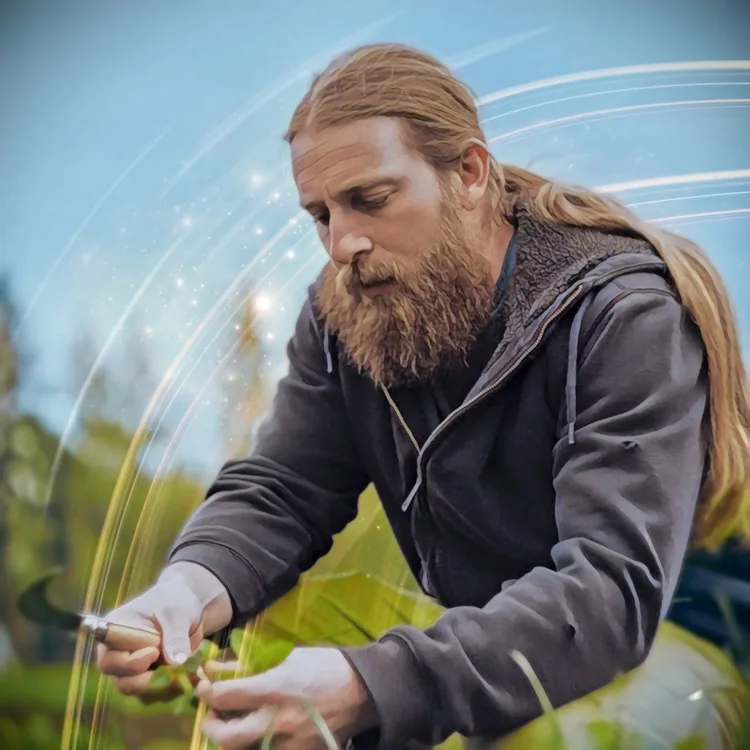
The great Herbalism teacher Sajah Popham joins InnerVerse to discuss his book, Evolutionary Herbalism. In this conversation we explore Sajah's calling to plant medicine, the fractal wholeness of nature in each being, the alchemist's secret fire, gnosis of the heart, training intuition, plants as conscious beings, holistic evaluation for treating people instead of symptoms, and the healing achieved by reframing our identity-story.
In the Plus+ Extension you'll learn about the plant patterns taught by alchemy & astrology, how to connect the metaphysical to the material, the threefold pattern of nature, Mercury the savior & spiritual alchemy, the creation of the pure plant stone and its mysterious power, planetary signatures of plants, recognizing astrological signatures of plants, and tips on how to develop a personal relationship with the planets.
 Plus+Full episode · 2h 19m
 InnerVerse Plus+
Hear the full 2h 19m episode
64 more minutes of this conversation, plus the complete Plus+ archive, premium video and a private podcast feed for your app.
Cancel any time.

Get tuned with Chance
Tuning forks find where energy is stuck in the field around your body and bring it back into flow. Sessions over Zoom, recorded for you to keep.
30 Minute Consultations
Have something to look at, or looking for guidance? We can consult oracular tools, read your chart, or just talk through whatever you choose.
In this episode
Core themes
The Energetic Architecture Model
Popham describes a model he calls energetic architecture, built on the Universal patterns he finds repeating across traditional systems. He points to the elements of earth, fire, water, air and ether, noting that Chinese thought substitutes metal and wood, and to the threefold divisions everywhere: the tridosha of Ayurveda, the three treasures and the dantian of Chinese medicine, the cardinal, fixed and mutable modes of astrology, and alchemy's three philosophical principles of sulfur, mercury and salt. From the Prima Materia through duality to the elements, he argues, the same archetypal pattern is macrocosmic and microcosmic, present in every person and every plant in differing ratios.
Gnosis Cardiaca: Knowledge Through The Heart
Garton reads a passage from the book on gnosis cardiaca, and Popham credits the idea largely to the late Stephen Harrod Buhner and his book The Secret Teachings of Plants, acknowledging that the science in it has come under scrutiny. The premise, as Popham relays it, is that everything emanates an electromagnetic frequency carrying information, and that the human heart is the body's greatest oscillator, able to entrain with other fields. He uses a radio dial as the analogy: you tune past static until the fields synchronize. He is candid that it is also easy to mistake your own thoughts for something received.
Why He Calls It Evolutionary Herbalism
Popham argues Western herbalism has lurched through identity crises while Chinese medicine, Ayurveda, Tibetan medicine, Kampo and Unani Tibb held continuity for centuries. His evolutionary model deliberately layers those stages rather than choosing between them: folk and bioregional practice where people learned from the plants themselves, the vitalist and energetic systems reading hot, cold, wet and dry, and the modern biomedical work on plant chemistry and double blind placebo controlled studies. Science has a lot to offer, he says, but he does not think we should abandon tradition for its sake. He names his contribution as reviving Western alchemy and medical astrology, once mainstream in the Renaissance.
Treating The Person, Not The Disease
Asked how his holistic evaluation works, Popham frames a symptom as a language, a communication that something deeper is off, and contrasts that with what he calls allopathic herbalism, the use this herb for that symptom mindset. He describes constitutional or tissue state assessment across three variables: temperature, moisture, and the tonal quality of the tissue. Beyond that he wants the whole timeline of a person's life, home, family and food, sometimes taking over two hours for an initial consultation, alongside tools like pulse and tongue reading, blood work and, for him, medical astrology. A teacher's line stuck with him: reaching first for an herb misses the point entirely.
Poison Into Medicine As Inner Alchemy
The conversation turns toward reframing. Popham holds that everyone carries trauma to varying degrees and that healing means refusing the role of constant victim, reorienting perception so the experience teaches something and turns weakness into strength. He connects this to what he calls the practical premise of laboratory alchemy, poison into medicine, applied inwardly. His final step in evaluation is to ask which archetypal forces, elemental or planetary, are excessive or deficient in a person, and how to turn that force from its dark side toward its light side. Garton, who practices biofield tuning, ties it back to the healing power of simply being witnessed.
Quotes
“Humanity had the notion of not just things to know but how to know a thing, and the how to know a thing involved the greater pattern.”
“I don't want to know about plants, I want to know the plants.”
“When you're bringing witness to the plants themselves, that's actually capturing the spirit of what makes them medicinal in the first place.”
“I see them as two sides of the same leaf, two languages to describe the same thing, and they don't necessarily have to be in conflict.”
“I have a feeling this is why we see such huge imbalances in nature, that no one's making offerings anymore.”
“As a holistic herbalist, if the first thing you're thinking of is what herbs to give someone, you've completely overlooked what it means to be holistic.”
“Rather than being the constant victim to the bad stuff that's happened to us, we have to learn to reorient our perception of it.”
“Nature is full of symbolism. Symbolism isn't just something that we decided on.”
Sajah Popham is an herbalism teacher and author who founded the School of Evolutionary Herbalism, integrating plant medicine with alchemical and astrological principles.
See all Sajah episodes→Kyle and Serena Denton are community herbalists creating wild-crafted and organic plant medicines out of Milwaukee since 2015. I have used their teas and tinctures on an almost daily basis for years now. Kyle is a great friend of InnerVerse and has appeared on the channel more times than I can count. These products work, not in the allopathic "pharma-medicine" way, but in a terrain-support, consciousness bolstering plant-teacher sort of way.