Kyle Denton | Life & The Language of Nature: Learning Plant Virtues with Tippecanoe Herbs
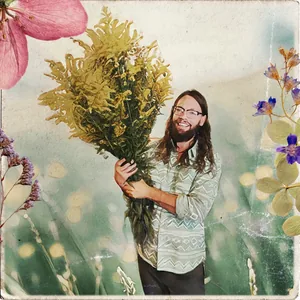









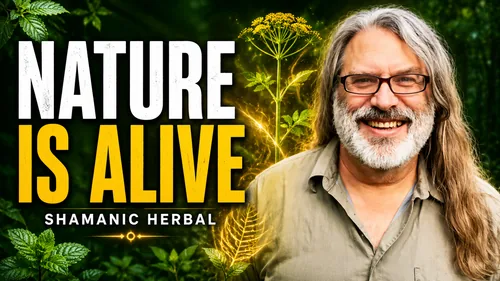
Kyle Denton is the head hippie in charge of potion preparation at his family company, Tippecanoe Herbs. Join us to discover the doctrine of signatures in the patterns of plants, to know through consciousness the virtues of vegetation without the need to memorize Latin names and categories.
In the Plus+ Extension we talk about Kyle's philosophy for herbal blends and different dosages, astro-aromatics and the scents of Aries, using the spirit of the plant for medicine without needing the physical, and many more vital ideas.
 Plus+InnerVerse Plus+
 InnerVerse Plus+
Hear every full episode
Every extended episode, the complete Plus+ archive, premium video and a private podcast feed for your app.
Cancel any time.

Get tuned with Chance
Tuning forks find where energy is stuck in the field around your body and bring it back into flow. Sessions over Zoom, recorded for you to keep.
30 Minute Consultations
Have something to look at, or looking for guidance? We can consult oracular tools, read your chart, or just talk through whatever you choose.
In this episode
Core themes
The alternative is the native
Chance Garton opens by taking apart the word alternative. What the culture calls alternative medicine, he argues, is actually the native thing, while the allopathic system is the alter native, taking what nature gave, inverting it, and handing it back as poison called medicine. He also refuses the phrase side effects, saying side effects are simply effects. That framing sets up the whole conversation with Kyle Denton of Tippecanoe Herbs, whose Milwaukee shop forages its own plants, works with local farmers, and makes every medicine it sells in an apothecary kitchen behind the counter.
Foundations instead of memorized uses
Kyle Denton describes spinning his wheels early on, memorizing that peppermint is for an upset stomach. His breakthrough was learning foundational energetic patterns rather than plant to ailment pairs. He came up through an Ayurvedic training, translating Vata, Pitta and Kapha back into air, fire, earth, water and ether, then overlapped that grid onto Western herbalism, Greek medicine and the four humors, Appalachian folk medicine and Native American practice. Now he asks a person whether their complaint feels hot or cold, tense or loose, dry or damp, and matches it to a plant that heats, cools, dries or moistens.
The map is not the terrain
The conversation keeps circling a single idea, that language is a map and the felt quality is the terrain. Chance Garton argues that an inverted culture puts the name before the feeling, so people cannot know a plant without a label and an authority to supply it. Kyle Denton agrees but adds a yes and, since categorizing is a real human gift and the scaffolding of names is useful once the feeling comes first. His teaching aim follows from this. He does not hand students authority, he reminds them they already carry it.
Kronos, Kairos and the wobble in the year
Chance Garton floats a suspicion that time does not run in perfect cycles, that a year may not be exactly 365.25 days and that nature carries wiggle. He borrows the Greek pair Kronos, measured clock time shown by the sky clock, and Kairos, subjective felt time. Kyle Denton says he sees it in a decade of annual herb walks, including an Earth Day walk cancelled by a foot of snow, and pictures the calendar as an oval rather than a circle. Enslavement, they conclude, only happens when Kronos is placed ahead of Kairos.
Reading the young lung tincture
Kyle Denton walks through the young lung tincture he sent Chance Garton, and through the doctrine of signatures, which he credits to Paracelsus around 1511. Elecampane, read as Helen of the Campania, he says dispels green and yellow mucus and suits those who feel foreign or unable to speak. Rosemary and osha are fellow aromatics, each with a different major. New England Aster, yellow centered with purple rays that open and close, he uses to relax the diaphragm. In his account plantain heals mucosal tissue and Solomon's seal acts as a gentle activator. Nature, he says, reuses patterns the way Rupert Sheldrake described morphic fields.
Quotes
“we all know that the mainstream medical mafia system is incredibly broken and inverted. And what's super hilarious about it is that they call what we are interested in here and in our spheres of communication, the alternative.”
“I don't need to know what the name of the plant is. I don't need to know anything about the plant. I can discern from these aspects that it's offering through several ways through, you know, our material senses and other spiritual senses what that plant will do and apply it over the condition that I see.”
“So what you're doing is you're putting the feeling, the quality before the language. The language is like a useful tool that may or may not even be necessary as a secondary component, but the feeling in the quality, which is apparent to us”
“I want to give people that authority so that they can claim it and they can not, I don't give it their authority. I remind them that they have this authority to, to be able to discern this, these patterns for themselves.”
“I'm starting to get really suspicious that time doesn't actually work in perfect cycles. Like I'm starting to get suspicious that a year is not 365.25 days every time. And that a moon cycle is not 28 whatever decimal every time. Like that there's wiggle there.”
“And all of the aromatic plants, I always think of them as like, they go to the college of, of decongestant, but then they have their majors. And so elecampane is like, my major is the lungs.”
“So in other words, nature takes these, uh, patterns that it, that it uses, and it puts them into the plants and uses them. It works with spirit and creates these, um, as Rupert Sheldrake would call them like morphic fields, right?”
“but from reading Anacalypsis by Godfrey Higgins, the amazing 1823 gigantic Bible of Bibles. It's the Bible of all the Bibles and scriptures. It's the syncretizing Bible of everything. It's amazing. And in it, he puts forward a theory very convincingly that the first letters were derived from leaves.”
Kyle Denton is a community herbalist and medicine maker from Wisconsin who founded Tippecanoe Herbs with his wife Serena Marinelli in 2015. From their Milwaukee apothecary they craft small batch remedies from locally harvested and organic herbs, working from a bio terrain philosophy that blends Ayurveda with Western herbalism. He also runs Root Radical Herbal Academy, has taught for over a decade through his annual three season class and his Milwaukee herb walks, and sees clients as the Tuning Herbalist, using tuning forks to read the biofield. His Substack and podcast, Resonature, explore the interval between vital herbalism, biofield tuning and cosmology.
See all Kyle episodes→Kyle and Serena Denton are community herbalists creating wild-crafted and organic plant medicines out of Milwaukee since 2015. I have used their teas and tinctures on an almost daily basis for years now. Kyle is a great friend of InnerVerse and has appeared on the channel more times than I can count. These products work, not in the allopathic "pharma-medicine" way, but in a terrain-support, consciousness bolstering plant-teacher sort of way.