Lucas King | Electro-Syncretic Perspectives: Innovating Holistic Models & The Cosmic Life Fractal









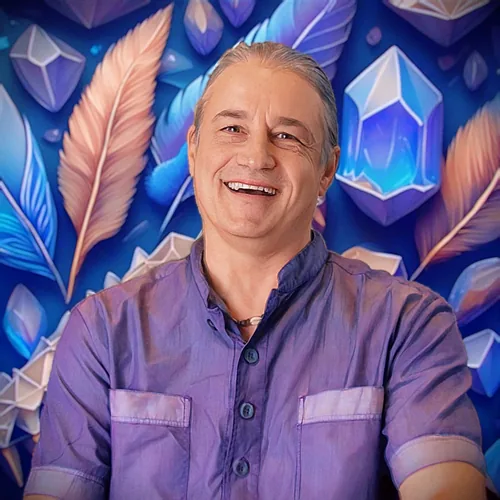
Lucas King is a gentleman farmer, heliocentricism dissident, electric universe researcher and excellent musician. In this far-ranging conversation we discuss kinesiology and the innate intelligence of the body, remote energy healing, the galvanic battery flat earth cosmology, intellectually integrating the various systems of astrology, evidence against the precession of the zodiac through supposed ages, synodic and sidereal planetary cycles, and the magic relationship of the number 27 to sky-clock timekeeping. All that in just the first hour!
In the Plus+ Extension, we get into the Mercurial Jesus, taking a natural pace with manifesting one's desired life, questioning the common conception of what stars might be, the superconductor mechanics of the firmament, the role of the luminaries (planets) within the universal battery, the relevance of the septenary in metaphysics, and recognizing Polaris as the center of the cosmos.
 Plus+InnerVerse Plus+
 InnerVerse Plus+
Hear every full episode
Every extended episode, the complete Plus+ archive, premium video and a private podcast feed for your app.
Cancel any time.

Get tuned with Chance
Tuning forks find where energy is stuck in the field around your body and bring it back into flow. Sessions over Zoom, recorded for you to keep.
30 Minute Consultations
Have something to look at, or looking for guidance? We can consult oracular tools, read your chart, or just talk through whatever you choose.
In this episode
Core themes
Kinesiology and the Body's Intelligence
Lucas traces his path from studying conservation and land management to reading Jane Roberts' Seth Speaks, which turned a victim mindset into the idea that you create your own reality, and then to kinesiology in his late twenties. He describes muscle testing as an on and off switch for asking the body questions, working through charts, meridians and sound balances, and says a surrogate can stand in for someone at a distance. Chance compares this with his own remote sound work using dowsing rods, crystals and candles, and Lucas says he views the meridians as power lines and treats the zodiac and the Chinese meridian system as the same map.
Lucas's Battery Model of Nature
Lucas brings the conversation back to his galvanic battery model, arguing that the four classical elements line up with a battery's parts: earth as earth, the salt waters as the electrolyte, and air and fire at the anode and cathode, where he notes oxygen and hydrogen are produced. He says he has been moving away from the model lately as research pulls him elsewhere, but still treats it as a toolkit, arguing that once you look at electrochemistry you cannot unsee it. Chance answers that consistency is the hallmark of truth, and that self-similarity across scales lets a person grasp one field without being a specialist in it.
Reconciling Sidereal and Tropical Astrology
Asked how to square sidereal and tropical astrology, Lucas starts from what a farmer would do: watch the sky at the same time every day, since midnight, evening and 2am views show different stars. Checking Stellarium an hour before sunrise on the equinox, he found Aquarius heralding the sun, while in the evening Aries follows it like a sheep following the shepherd, with the sun sitting between the two signs. He links the morning view to the old man, bull, lion and eagle, and the evening view to the tropical zodiac, and Chance recaps that each consistent viewing habit could produce its own astrology.
Lucas Questions the Precession of the Equinoxes
Lucas argues precession may not happen at all. In his model the stars are fixed to one another like a painting on a wall that can be turned but never rearranged, and he hypothesises that the electromagnetics of the system lock the sun and stars together. He calls the textbook rate of one degree every 72 years too slow for anyone to check, and adds that if a thousand years were added to the calendar, historical star positions could not be trusted. Chance suggests precession adds a layer of confusion that props up a false history of zodiac ages, comparing it to the Tower of Babel and shrinking attention spans.
Sky Clock Math and the Number 27
Walking through a slide, Lucas multiplies a sidereal day of 23 hours 56 minutes, about 0.997 of a solar day, by 365.25 to get roughly 364.23 days, and argues the resulting day of drift never shows up, likening it to two runners at different speeds crossing a finish line together. He explains synodic periods, tracked against a star, and says published sidereal periods for the outer planets are derived from them. Starting from the moon's 27 day sidereal cycle, he finds multiples of 27 behind synodic periods, such as 108 times 0.27 giving 29.16 days, and Chance ties the sun's base number 50 to the Sumerian chief god.
Quotes
“Information-based worldview warfare may be the oldest form of divide and conquer in the tyrant's textbook.”
“Why did that occur? There's a reflection going on between your life and your inner world.”
“You're looking at the meridian system as like power lines through the body, and that's how I view them.”
“When you apply the self-similarity across scales that is true to all forms of nature and dimensions of nature, all of a sudden the world becomes way less disjointed and confusing.”
“Get a grasp of just the operation of the battery and then see how it applies to multiple fields.”
“If you're a farmer, you need to know where you are in the season, what to plant, the weather, those sort of things, cycles.”
“The further we get into that level of complexity and abstraction away from the simple truth of nature, the less centered we are, the less still we are, the less rooted we are.”
“We're in an environment where the stars are actually fixed, and there's a perception thing going on where we're just viewing this rotation.”
Lucas King is a self-described gentleman farmer, heliocentrism dissident, and electric universe researcher, also known as a musician (performing as LCKing), who explores alternative cosmological models, kinesiology, and astrological/planetary cycle theories.
See all Lucas episodes→Kyle and Serena Denton are community herbalists creating wild-crafted and organic plant medicines out of Milwaukee since 2015. I have used their teas and tinctures on an almost daily basis for years now. Kyle is a great friend of InnerVerse and has appeared on the channel more times than I can count. These products work, not in the allopathic "pharma-medicine" way, but in a terrain-support, consciousness bolstering plant-teacher sort of way.