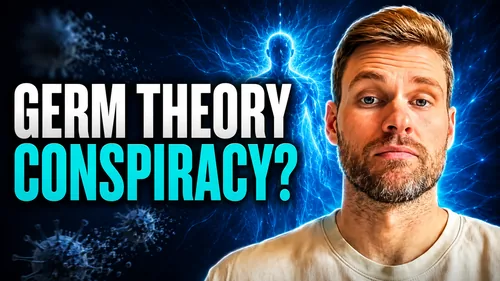
The Black Death Wasn't a Plague: Dr. Marizelle Arce on Germ Theory, Pleomorphism & Medical History









Like the priest-craft of old, modern medicine is based on arcane systems of thought, invisible causes, and fabricated histories. Genetics, epidemics, germs, and all those diseases we allegedly cured are founded on some very flexible statistics...
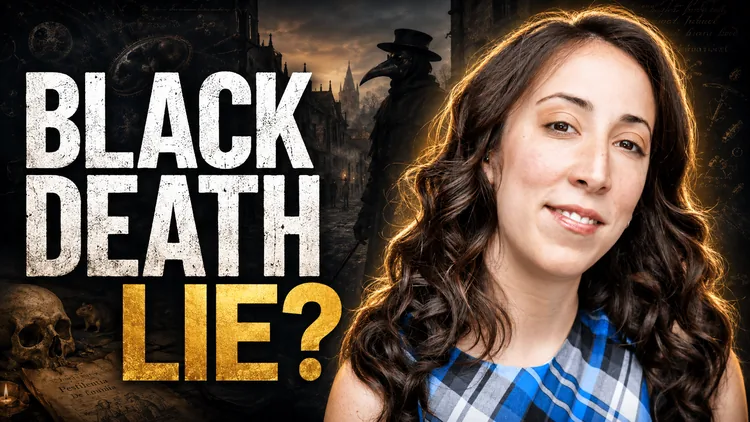
Dr. Marizelle Arce returns to InnerVerse for another great chat about the history of medicine's divergent terrain vs. germ philosophies. We discuss environmental and lifestyle factors of health, misconceptions about genetics and "viruses", the worldview influence of false historical narratives, pleomorphism and microbial adaptability, and much more. In Part 2 we discuss German New Medicine, parenting and childhood health from the terrain and holistic perspective, mind-body relationship significance, what earwax tells the terrain doctor, and whether or not EMF is dangerous.
 Plus+Full episode · 2h 18m
 InnerVerse Plus+
Hear the full 2h 18m episode
67 more minutes of this conversation, plus the complete Plus+ archive, premium video and a private podcast feed for your app.
Cancel any time.
Get tuned with Chance
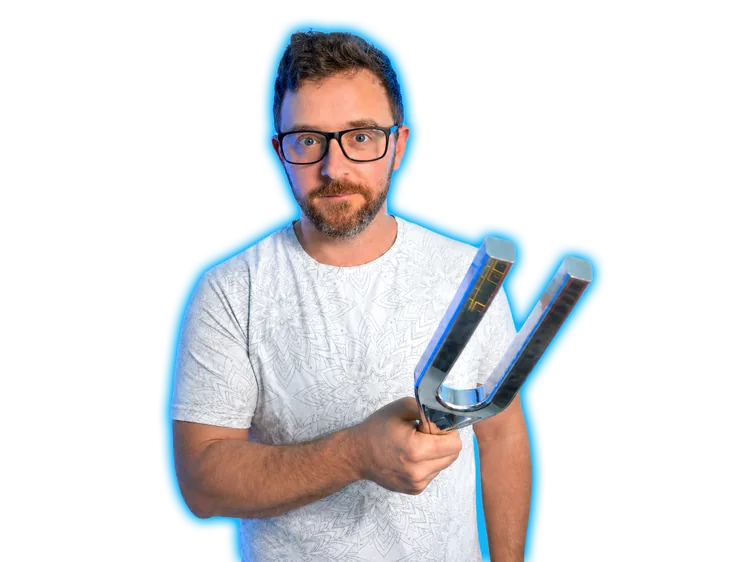
Tuning forks find where energy is stuck in the field around your body and bring it back into flow. Sessions over Zoom, recorded for you to keep.
30 Minute Consultations
Have something to look at, or looking for guidance? We can consult oracular tools, read your chart, or just talk through whatever you choose.
In this episode
Core themes
Robes Off, Lab Coats On
Chance opens by framing germ theory as an old protection racket in new clothing, arguing that a priest class which once sold protection from demons and hell simply put off the robes and put on the white lab coats, keeping the caduceus as its emblem. Arce adds that the older model at least assigned responsibility, since affliction followed something you did wrong, while the germ model of the late 1800s told a healthy, well behaved person that sickness arrives by accident, no fault of their own, and then offered a product as the fix.
The Road Not Taken
Both argue that terrain thinking is not a French curiosity but the road the establishment declined to take, naming Claude Bernard, Florence Nightingale and Rudolf Virchow, the Prussian pathologist Chance calls the father of pathology. Arce describes her own work as environmental medicine, asking where food comes from, how clean the air is, what a job and a household do to a body, and she recounts industrial era slums, tap water and coal smoke, tenement crowding, wood alcohol sold as liquor, and distillery fed cows in alleyways whose milk gave raw milk its lasting bad name.
Unpacking The Black Death
Turning to the objection she hears most, Arce contends the Black Death was a bundle of separate events rather than one contagion, noting that books from the late 1700s do not describe it the way modern teaching does, and that flu like symptoms in some people and blackened fingers, hands and toes in others were amalgamated into a single worldwide story. She traces the Latin plaga, meaning to strike or wound, arguing that its pestilence sense arrives with the Vulgate Bible and the ten plagues of Egypt, producing what Chance calls a retroactive historical edit through a shifted word.
Genetics And The Bell Curve
Arce calls the science of genetics an outright fraud, reasoning that genes are only ever seen through the same instruments and methods used to claim a virus, which Chance recaps through Koch's postulates and the absence of any isolated, purified particle shown to cause the symptoms attributed to it. She grants inherited traits and epigenetic influence while asking why her sister is blonde, points to Mendel's peas, junk DNA, placebo and nocebo effects, and repeatable results that hold only inside a bell curve. Chance ties it to what he calls worldview warfare, alongside a history he considers shakier than the science.
Old Books And Young Terrain
The pair trade antiquarian enthusiasms, Chance for Webster's 1828 dictionary and Arce for the 1771 Encyclopaedia Britannica, the old naturopaths Adolf Just, Louis Kuhne, Benedict Lust and Sebastian Kneipp, Virchow's roughly two thousand publications, and her copies of the United States pharmaceutical directory, which she says thinned as ammonia, arsenic and mercury based entries replaced older plant listings. Arce describes her Substack series Navigating the Terrain and printable lessons for children, her microbiologist mother showing pond water under microscopes and starting school recycling in the nineties, and Chance links a biofield tuning session to pleomorphism in action.
Quotes
“Now, the priesthood has basically shed the spiritual appearances and taken on sciency jargon. Put off the robes and put on the white lab coats.”
“If you go back not even that far, decades, more than centuries, terrain was not a fringe idea. It was simply the road not taken by the establishment.”
“You have this propensity to sell a product rather than change the conditions with which people are living.”
“Those were different things happening and all just amalgamated as to, oh look, this is happening worldwide.”
“It just happens that you catch it. It just happens that you have misfortune. You're a good person. You're doing all the right things.”
“When you really just kind of look at it zoomed out, the whole science of genetics is a crapshoot.”
“History is a huge huge factor to how we tell the story of how health and disease have shaped humanity.”
“The whole civilization can shift overnight by the word of what you think.”
Dr. Marizelle Arce is a terrain-focused physician who researches pleomorphism, reframes conditions like Lyme disease, and challenges conventional germ theory narratives.
See all Dr. episodes→Kyle and Serena Denton are community herbalists creating wild-crafted and organic plant medicines out of Milwaukee since 2015. I have used their teas and tinctures on an almost daily basis for years now. Kyle is a great friend of InnerVerse and has appeared on the channel more times than I can count. These products work, not in the allopathic "pharma-medicine" way, but in a terrain-support, consciousness bolstering plant-teacher sort of way.