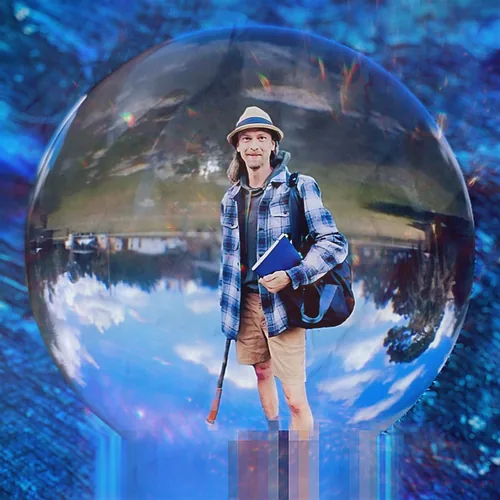
Mark Steeves | Esoteric America, S.E.E.E.N. & Breaking Routine To Investigate The Weirdness









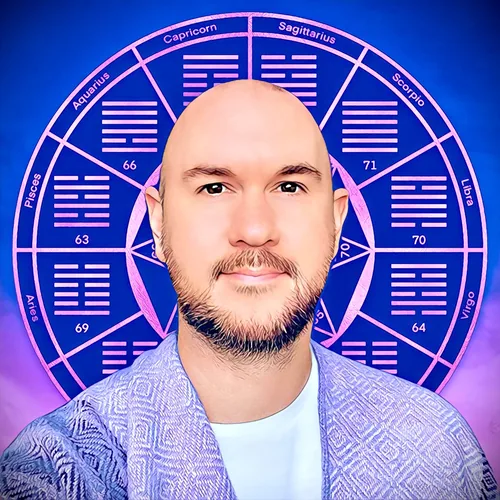
Mark Steeves, host and co-host of many epic podcasts, including his flagship show My Family Thinks I'm Crazy, returns to InnerVerse to talk about his new projects, Esoteric America and S.E.E.E.N. Mark is quickly becoming a leader in the world of synchromystic explorations, connecting to Gaia consciousness, and of course, the conspiracy & spirituality that we love to research.
 Plus+InnerVerse Plus+
 InnerVerse Plus+
Hear every full episode
Every extended episode, the complete Plus+ archive, premium video and a private podcast feed for your app.
Cancel any time.
Get tuned with Chance
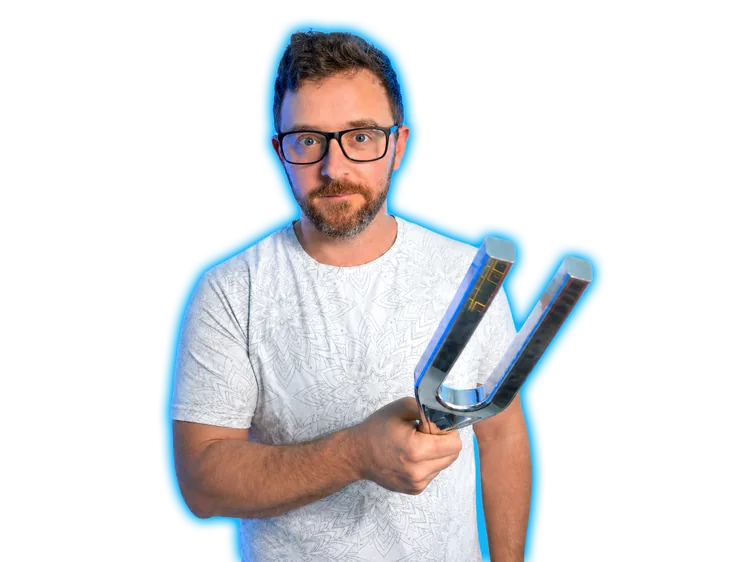
Tuning forks find where energy is stuck in the field around your body and bring it back into flow. Sessions over Zoom, recorded for you to keep.
30 Minute Consultations
Have something to look at, or looking for guidance? We can consult oracular tools, read your chart, or just talk through whatever you choose.
In this episode
Core themes
A crowdsourced map of a strange country
Mark Steeves came on to talk about Esoteric America, the new show he launched with Chad Stemke after recording five episodes before releasing any of them. The premise is that listeners, not experts, should be the guests. Mark tells Chance Garton he can only speak for Connecticut, so he wants local researchers everywhere filling in the map with mounds, native history, Tartaria, colonial history and oddities like the one footed snorkel monster. He points to Andrea breaking down Baudette, Minnesota and Jack Asgard breaking down the Inland Empire as the model for what the show is trying to build.
What S.E.E.E.N. actually asks you to do
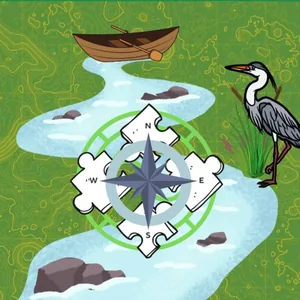
The pamphlet Mark wrote stands for the Synchromistic Exploration of the Ever Expanding Now, and he frames it as a travel guide to wherever you already are. It grew out of his frustration with the Randonautica app, which never worked in an area with no phone service. The kit is a pair of dice, a compass, a map, a notebook and pen, a camera, a backpack and a cup. The cup holds the dice so you can shake them while driving, with odds meaning left and evens meaning right, provoking randomness until you are genuinely lost.
Dreamwalking instead of sleepwalking
Mark argues that most of us are sleepwalkers and that dreamwalking is the deliberate opposite, a way of waking up to a reality that is always there the way dreams are. He believes the land itself carries an energetic imprint from the people who lived here for thousands of years, and that those layers sit under only four hundred years of newer history like soil turned over by a farmer. You can connect with ancestors who share no genealogy with you, he says, through the dirt, the plants, the animals and the common ground you both stand on.
Why the psychedelic push looks suspicious
Chance raises the question of why psychedelics are suddenly being moved into pharmaceutical and psychiatric territory, and suggests a hyper materialistic culture is grabbing them as another experience to collect. Mark answers that science is trying to quantify spirituality by breaking plants down into molecules, and speculates the real goal is finding a chemical bridge into augmented digital reality, noting synthetic compounds are easier to program. His stronger claim is that people have it backwards. The experience is in you and the mushroom only activates it. He compares his book to a swing set next to the roller coaster of ayahuasca.
Breaking routine, gratitude and omens
The practical heart of the conversation is that our problems live inside our routines, so stepping out of the daily pie chart of hours creates room to see them. Mark asks people to set aside real time, express gratitude, and log every object, omen and occurrence, because a pattern surfaces after a few outings. He teaches a walking meditation of matching steps to breath, and describes the drifting state you enter while driving as a doorway to synchronicity. Chance closes with the copy of The Alchemist by Paulo Coelho that reached him in Chicago days after he asked for it.
Quotes
“We will have experts, we will have authors, but we want to have listeners. Why? Because we're trying to fill out that map. We want to show people how strange this country really is. And the best way to do that is by recruiting as many local researchers as we can.”
“My dad has all these books on like local regional lore. And it seems that that used to be a really big thing that people would write little books about local legends and mythology. And there was a flavor for every location. And people were really, really interested in that.”
“So if this book that I wrote and it stands for the Synchromistic Exploration of the Ever Expanding Now, I say that all the time, like everybody should know it, but it is a mouthful. But the book can be used anywhere. It's a travel guide for anywhere, wherever you are.”
“And why is this all getting pushed in such big mainstream places to do these hardcore psychedelics? And the answer that I came across from somebody commenting somewhere that just like, Whoa, that makes sense is that we're dealing with a hyper materialistic culture. And not that psychedelics have no spiritual value. I don't think that at all.”
“The experience is in you. The plant is activating it, right? There's no experience in the plant. Science wants to say that the experience is in the mushroom, the experiences in the DMT. No, no, no.”
“So in a very literal sense, we might actually be connecting with and communicating with ancestors through our bodies just by going out into a more untamed environment with older ground and older growth and touching the trees and walking barefoot.”
“And with the right examination of those symbols, you can rewrite the story of your life, you know? That's kind of what the book helps people understand is you are constantly authoring your life with your mind and with your actions.”
“So when you walk, you're going to try to match the rhythm of your steps with your breath. And this is going to be different for everybody. Everybody has different gait, different height, you know, breath. So it's going to be different for everybody, but you got to find the rhythm.”
Mark Steeves hosts the podcast 'My Family Thinks I'm Crazy' and related projects (Esoteric America, S.E.E.E.N.), exploring synchromysticism, conspiracy, and alternative spirituality.
See all Mark episodes→Kyle and Serena Denton are community herbalists creating wild-crafted and organic plant medicines out of Milwaukee since 2015. I have used their teas and tinctures on an almost daily basis for years now. Kyle is a great friend of InnerVerse and has appeared on the channel more times than I can count. These products work, not in the allopathic "pharma-medicine" way, but in a terrain-support, consciousness bolstering plant-teacher sort of way.