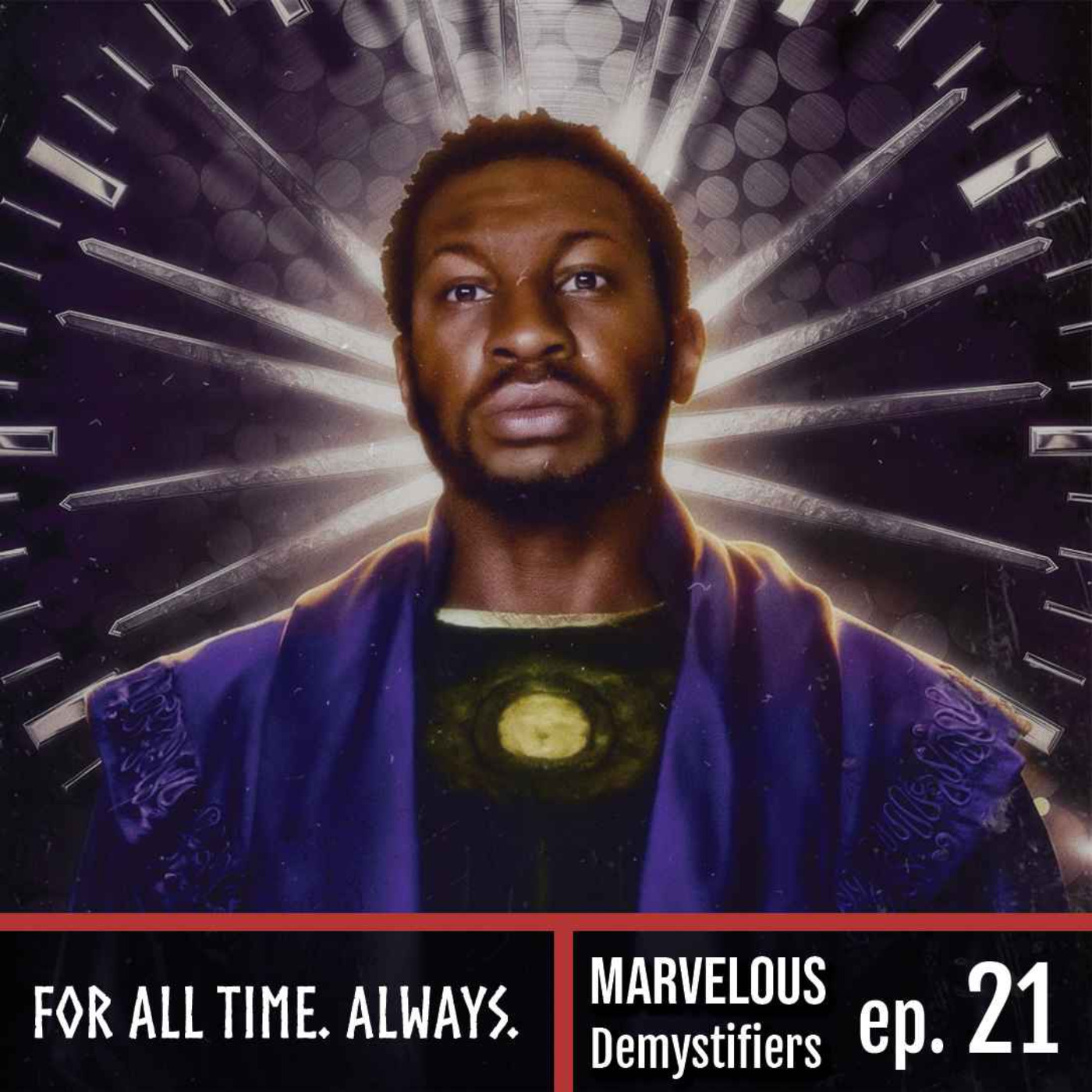
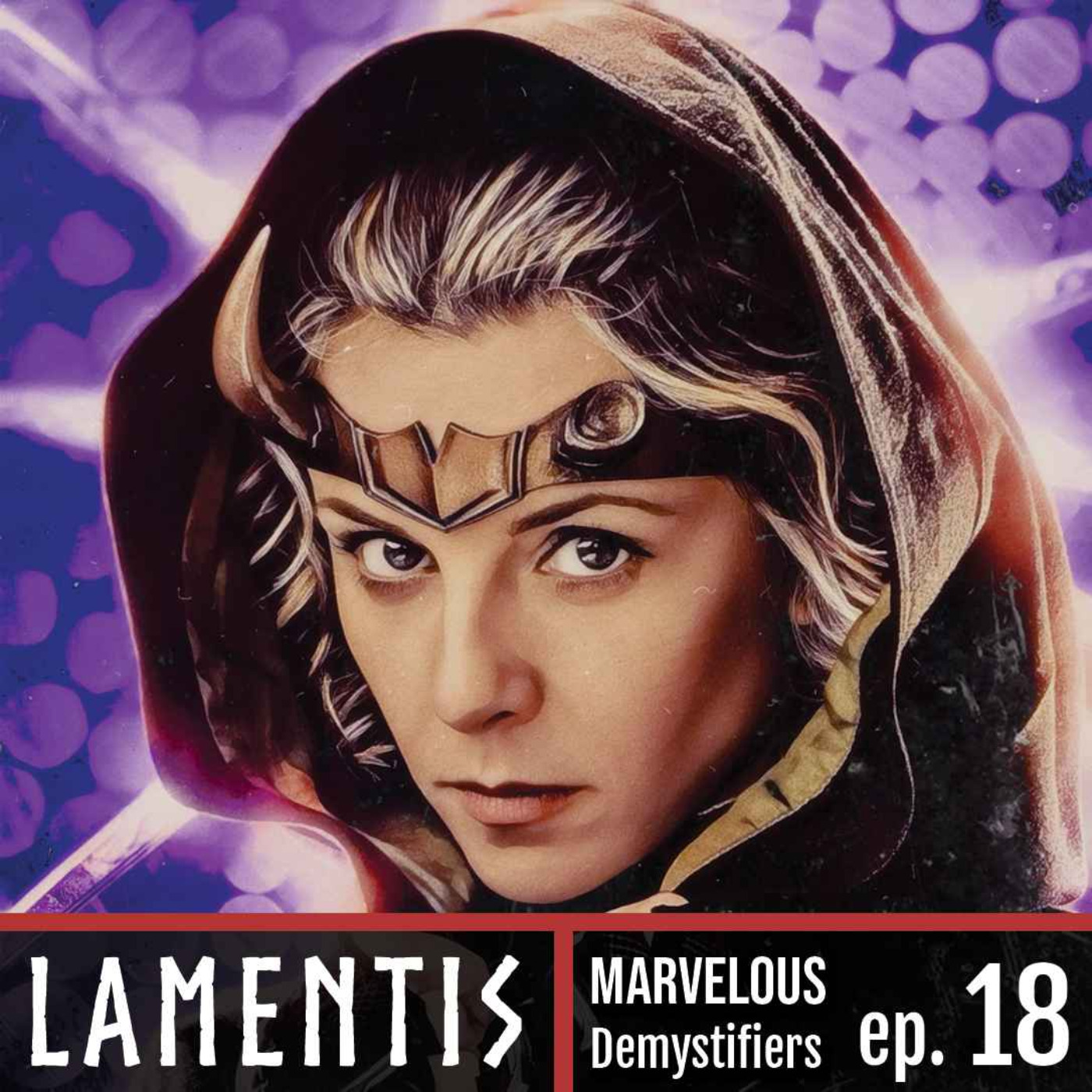
Lamentis & The Equilibrium of Adjustment's Scales: Loki S1 Ep3 | Marvelous DeMystifiers Ep. 18









Slick and I pick up the Marvelous DeMystifiers trail once again! The third episode of Loki conceals some dark Disney dealings, a path to deeper understanding of the Justice card of the major arcana, the prophet Jeremiah and the book of Lamentations, and a revelation of the misguided magical reasons for all the gender bending pushed in society.
 Plus+InnerVerse Plus+
 InnerVerse Plus+
Hear every full episode
Every extended episode, the complete Plus+ archive, premium video and a private podcast feed for your app.
Cancel any time.

Get tuned with Chance
Tuning forks find where energy is stuck in the field around your body and bring it back into flow. Sessions over Zoom, recorded for you to keep.
30 Minute Consultations
Have something to look at, or looking for guidance? We can consult oracular tools, read your chart, or just talk through whatever you choose.
In this episode
Core themes
Lamentations, Tammuz and the Bacchus Cycle
Chance said the episode title pointed to the Book of Lamentations and the prophet Jeremiah, and he read the name as Yah, Rah and Maya. He quoted a passage from one of Dylan Saccoccio's Spirit Whirled books about women weeping for Tammuz in July, and compared that mourning to Osiris and Bacchus. Chance argued that Loki played the Bacchus figure and that the weeping season matched the sun's decline from Leo through Virgo toward Libra. He also drew the episode's frame from the Book of Lamentations verses on the cut off horn.
One Name, Many Gods Through Letter Swaps
Chance said the crowd of gods in mythology came mostly from epithets and letter swaps that scholars mistook for separate beings. Over the episode he proposed that Tyche and Dike were one figure, that Lady Justice and Fortuna were one figure under different names, and that GBL, the number 35, led toward gavel and Bible. Gabe offered Themis as an anagram of Metis and said the epithets all described the same figure. Chance also tied nexus, ligare and lex into one story about law as religion.
The Adjustment Card and the Fornax Sky Map
Gabe brought Crowley's book on the Adjustment card, including the letter Lamed, the Lambdoma and a link to Notre Dame, and he kept pointing to the Fornax constellation, tying it to the river lyrics of the opening song. He also pointed to the orb in the sky as the card's orb. Chance read Crowley's line that the marriage of opposites was the annihilation of illusion and asked whether joining the masculine and feminine destroyed or created everything. One of the hosts said the meteor bunker had the shape of the Fornax constellation.
Wine, Fans and the Savior in the Basket
Chance connected the grape harvest in Virgo and pressing in Libra to the Lamentations imagery, to Loki throwing Sylvie into a barrel, and to the purple color grading. Gabe added Diogenes in his wine barrel as the Crater constellation and the Canes Venatici dogs. Chance later read the winnowing fan as a cradle, an ark and an oar, linked it to Venus, and traced the heart symbol to the silphium plant, noting that the name sounded like Sylvie, whom he called the silver moon to Loki's sun.
Stasis Versus Flow as Two Equilibriums
Chance closed with his main thesis that equilibrium could mean the stasis of death, as he understood Crowley's description, or the flow of exchange, which he compared to the water cycle. He said both readings were true and that nature respected either choice, and he read a viewer's note that the Pythagoreans called 35 harmony. One host called the nostalgia spell an explicit definition of entertainment, and Chance said entertainment literally meant to enter and hold the mind. The hosts closed by reading the TemPad as a pad and tab that kept tabs on a person.
Quotes
“I don't really know where to start, but when you have an allegory to work from, that's a great framework for us to be able to discuss these things and teach about these things. And I think that's why the scriptures were always in allegory form in the first place, because that's like the best way to do it.”
“That name, Jeremiah, is Yah, Rah, Meah, or Maya. So, you have the God or the Lord, Yah, and then Rah, the son, and then Meah, or Maya. That's illusion, or the name of the mother of Buddha, the name of the mother of Mercury.”
“The huge plurality of gods in mythological systems is mostly due to the misunderstanding the mainstream has that one god or goddess has many, many names in different cultures, or letter swaps create different versions of the name for different dialects, different spellings, and that epithets are confused for individual extra gods.”
“I just noticed that Themis is an anagram for Metis. Metis meaning wisdom was an epithet for Athena and also Phanes, the figure also called Dionysus that burst forth from the Orphic egg, the world egg was called Metis as well. So, you know, when you start mixing up their so-called epithets and alternate names, you realize, ah, it's all the same guy.”
“I love that you mentioned the temple, that she's like communicating through the temple, because the card that we're focusing on for this episode, the adjustment card, was said to be inspired by the French, the temple of the French. And I was like, temple of the French? That's Notre Dame.”
“And regardless of if you think you've separated church and state, if you believe that there's a mystical thing called a government that has laws, that, you know, Santa Claus is watching you to see if you've been naughty or nice, all of that, you are in a religion.”
“He's basically the original hermit card. The wine barrel that he lives in is the Crater constellation. The Crater constellation is a wine cup because, as Chance was elucidating, this is the season for, you know, cheers. But the dogs of Diogenes hanging out around his barrel, that's Canes Venatici, right there next to the Crater constellation.”
“I found that interesting cause this character Sylvie, it's basically the word silver and silver is the moon. She is set to destroy the TVA. That's her entire mission. And moonlight is the decaying light where a sun is like the generative light. She's basically the moon to Loki's sun.”
“According to the mainstream, the heart symbol, as we know it, originates in fifth to sixth century BC Egypt as it represented the heart-shaped fruit of the plant silphium. Silphium, that sounds like Sylvie. Sylvie, Sylvie, it's basically the same word.”
“The Fornax constellation is at the foot of the Eridanus River in the heavens. And so it's literally in a bend, in an oxbow of the river. Like the river does a really dramatic loop on itself and inside of that loop is where the Fornax constellation is.”
“And you guys see the difference between the two versions of justice or adjustment, balance, equilibrium being stasis and death, or it's equilibrium of flow and it's life. Everything is unrestricted in its ability to flow and exchange. I think philosophically, both versions are correct and true.”
“So it's so fascinating to me because, Chance, here we are studying Loki going down really obscure associations. I mean, it doesn't get much more thin branch of speculative association to get to the end of the scene with Morgan Freeman and find out that it's all about the seven deadly sins again.”
Gabriel, known on air as Slick Dissident, co-hosts InnerVerse's Vibe Rant show and is a longtime recurring guest on the podcast. He teaches occult symbolism and tarot on his YouTube channel, ranging across the Major Arcana, the esoteric Enneagram, mythology and archetype, mystic linguistics, and the symbolism hidden in popular film. He is best known for Tarot-tories, his own system mapping the 22 Major Arcana and zodiac archetypes onto the geography of the United States.
See all Gabe episodes→Kyle and Serena Denton are community herbalists creating wild-crafted and organic plant medicines out of Milwaukee since 2015. I have used their teas and tinctures on an almost daily basis for years now. Kyle is a great friend of InnerVerse and has appeared on the channel more times than I can count. These products work, not in the allopathic "pharma-medicine" way, but in a terrain-support, consciousness bolstering plant-teacher sort of way.