Khon-Spearacy Against The Ennead (Moon Knight pt. 3) | Marvelous Demystifiers Ep. 7









The super-team returns to analyze the third episode of Moon Knight, in which we meet the Observers from the Overvoid, witness the zodiacal precession, and the cast fixates on their wounds. It's a terra-bull bloodbath worthy of Hathor in this one.
 Plus+InnerVerse Plus+
 InnerVerse Plus+
Hear every full episode
Every extended episode, the complete Plus+ archive, premium video and a private podcast feed for your app.
Cancel any time.
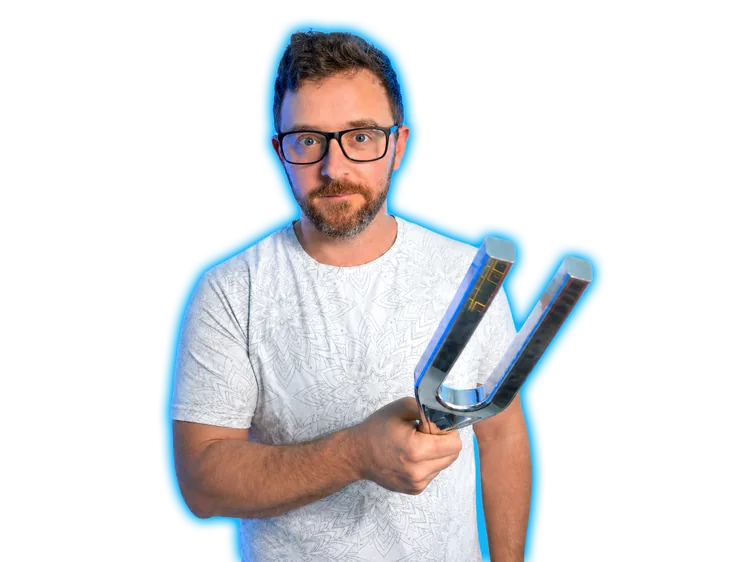
Get tuned with Chance
Tuning forks find where energy is stuck in the field around your body and bring it back into flow. Sessions over Zoom, recorded for you to keep.
30 Minute Consultations
Have something to look at, or looking for guidance? We can consult oracular tools, read your chart, or just talk through whatever you choose.
In this episode
Core themes
Law, Passports, and the Straw Man
Chance named the legal system as the episode's biggest theme and pointed to the court proceeding and the passports, which he read as the private self set against a fictional corporate identity. Gabe argued that the law is biblical and rests on Egyptological law, and that government behavior echoes secret society symbols. In the court scene, one of the hosts compared the judge's request for a legal name and birthday to the straw man, claiming that agreeing to the identity let a possessing agent take over the body.
The High Priestess and the Mississippi
Gabe read the opening passport scene as an appearance of the high priestess card. He pointed to the royal blue of the pen and the marshmallow cap, and to birth and issue dates that he reduced to the pillars Jachin and Boaz. In his tarot territories work, he said, the high priestess was the Mississippi River, the placenta of the nation. He cautioned that tarot was a personal practice, but became something far more nefarious when applied to the public at large.
Wordplay, Gematria, and Hidden Codes
Gabe heard the Marvel Studios logo as an anagram of lust and Libra, the two cards he said Crowley swapped in the Thoth deck. He also ran gematria on the episode title, The Friendly Type, and reported 93 and 153. Chance traced salvager to the serpent root and to salvation, and pirate to pyramid. Gabe also rearranged lines of the show's dialogue into anagrams, and another host said he would start watching with subtitles to catch more of them.
Fake History and Egyptian Mythology
Chance played a clip of the cast praising the show's historical accuracy and called it complete nonsense, adding that what was valuable in those traditions was mostly lost. One of the hosts read out the Heliopolis creation myth and argued that the Egyptians never meant their gods literally, and another host suggested comic book storylines such as Rama-Tut rewrite myth in the public mind. Gordy added that the old West gambling game Pharaoh doubled as a kind of tarot divination.
Mirrors, Portals, and Trauma Loops
One panelist noted that Western horse racing used a mirror to freeze time at the finish, and the group took the show's many mirror scenes as portals between selves and spaces. Gabe linked the moon card's two dogs to the kneeling and standing pair on the hill. One of the hosts argued that the same symbolic system meant to heal a divided self could be inverted to fracture people, as in MK Ultra, and another noted that the producers added the sound of broken glass to Harrow's footsteps.
Quotes
“There's a court proceeding. There's passports. There's a lot to do with that. So you know, your straw man identity versus real identity, the public and the private. I think that's a major theme in the show at large, but this episode hones in on it. And on top of that, we get plenty of misconstrued Egyptological fake history, fake news.”
“One of the important things that is being attempted by a series like this is to give a new generation and older generations a revamped understanding, or a first impression more importantly, of ancient Egypt and what these people believed, which can completely throw somebody off the course of what may actually be valuable from these traditions. And what is valuable from these traditions is, I think, mostly still lost.”
“So the passport represents your private self, or your state identity, as opposed to your fictional corporate personhood identity on the driver's license. So the fact that these characters are using passports as their identification, I think demonstrates back to that idea that she's chosen or initiated or royal in some way, that she's got freedom. She's not in the serf class or the slave class.”
“Because that root salve is related to serpent. And it is also, of course, salvation, Messiah encode. And she definitely fulfills a role like that in the show later on. And the salvagers are the pirates, or the ones with fire, pirate coming from the same root as pyramid. So she's stealing from thieves, but she's still pirating things.”
“I think that's what we're getting is a glimpse at the roots of law. Everybody should know the law is biblical. It's based on the way that the law worked in the Bible, and that story is based on Egyptological law going all the way back. So we will see a lot of that continuity of how the legal system works.”
“A lot of people get into tarot and it's all good in terms of the personal work and the personal relationship to it. That is how this is supposed to work. But I'm here to tell you, when you apply this system to the public at large, it has a whole another dynamic and takes on some very nefarious tones and implications that people don't think about.”
“In my tarot territories work, the high priestess is the Mississippi River. It represents the Mississippi River. The Mississippi River is the placenta of the nation. It is the umbilicus. It is the port of call for all of the bounty, so that goods and services in the olden days used that as the main line of transportation. So it's a very important mantle.”
“She who carries two torches. She gets her picture taken, flash. And she gets her picture taken again, flash. That's two torches. She's definitely embodying Hecate. And later on she does it again. Hecate is she who takes long strides, the far darter, her many names for Hecate. She embodies it throughout.”
“But this appears to be some sort of priestess in white garb, maybe sacrificial offering or a priestess going to a remote temple location. And there's a person pushing the boat behind her who's wearing red. So the ferryman is wearing red and she's wearing white. Those are the two colors of the Yom Kippur ritual.”
“Because as soon as I hear the word, it's coded. You better believe I'm getting out the camera. I'm snapping pictures and doing the gematria. So the scene where he says it's coded, he's standing in this shape. This is vortex math. He's saying it's a code while he's standing inside the symbol of vortex math right here, which is integral to the enneagram.”
“He's standing and she is kneeling. That is the nature of the two dogs on the moon card. One dog is seated, tame, domesticated. The other dog is standing up, wild and ready. Just like she is kneeling and he is standing as they look up at the moon.”
“Also, the big gambling game, if you go out to all the old West towns around here, the gambling game was Pharaoh, it wasn't poker, it was Pharaoh. And Pharaoh was a card game, but it was also kind of a divination. It was essentially kind of a tarot thing, but they called it Pharaoh.”
“People want to make these things appropriate, and maybe inspire people to be like, yeah, bring back Hathor. Hathor is cool. She was sexy in the movie. Why would I think she's diabolical or evil? Well, when you apply the cultural norms, the cultural undertones to what they're saying in the film, a lot of very nefarious potentialities come forward.”
Gabriel, known on air as Slick Dissident, co-hosts InnerVerse's Vibe Rant show and is a longtime recurring guest on the podcast. He teaches occult symbolism and tarot on his YouTube channel, ranging across the Major Arcana, the esoteric Enneagram, mythology and archetype, mystic linguistics, and the symbolism hidden in popular film. He is best known for Tarot-tories, his own system mapping the 22 Major Arcana and zodiac archetypes onto the geography of the United States.
See all Gabe episodes→Kyle and Serena Denton are community herbalists creating wild-crafted and organic plant medicines out of Milwaukee since 2015. I have used their teas and tinctures on an almost daily basis for years now. Kyle is a great friend of InnerVerse and has appeared on the channel more times than I can count. These products work, not in the allopathic "pharma-medicine" way, but in a terrain-support, consciousness bolstering plant-teacher sort of way.