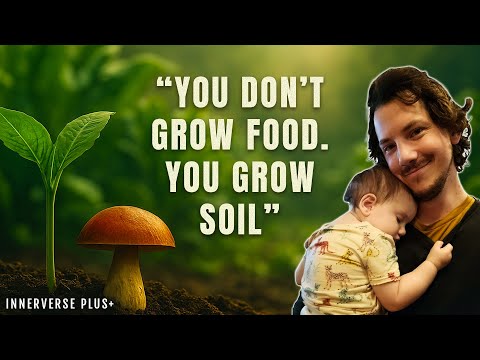
Matt Powers | The Permaculture Student: Cultivating An Unstoppable Enthusiasm For Life
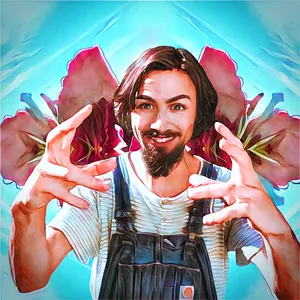









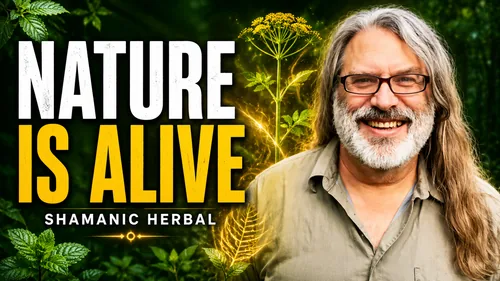
Citizen Scientist Matt Powers joins InnerVerse to talk about his innovative permaculture research. Topics include the spontaneous generation, DNA and nature's memory, viral messengers, how to get good soil, and comprehensive composting.
In the Plus+ Extension, Matt talks about cultivating unstoppable enthusiasm, his daily spiritual & movement practices, plant intelligence, and the circle of communication between microbes in our body and those in the environment.
 Plus+InnerVerse Plus+
 InnerVerse Plus+
Hear every full episode
Every extended episode, the complete Plus+ archive, premium video and a private podcast feed for your app.
Cancel any time.

Get tuned with Chance
Tuning forks find where energy is stuck in the field around your body and bring it back into flow. Sessions over Zoom, recorded for you to keep.
30 Minute Consultations
Have something to look at, or looking for guidance? We can consult oracular tools, read your chart, or just talk through whatever you choose.
In this episode
Core themes
Composting as Everyday Alchemy
Matt Powers calls composting "straight up alchemy": kitchen scraps go into a bokashi bucket, a worm bin or a hot pile, and the gardener joins a process he says scientists still cannot fully explain, such as thermophiles that seem to appear from nowhere as a pile heats and vanish as it cools. He describes bokashi as a Japanese method rooted in the crowded Edo period that can digest even meat and bones on a kitchen counter, shows the auto composter he built with his son from a bounce house blower, and closes with his core advice: compost is the key and the starting place.
DNA, E. coli and Nature's Memory
Matt says his DNA sequencing of compost and natural soils turned up roughly 40 percent unclassified material and E. coli in 40 to 50 percent of each sample, leading him to argue that E. coli is a vast, mostly harmless family living inside plants and fixes nitrogen. He proposes that much of the unclassified share is durable DNA fragments that microbes absorb through horizontal gene transfer, by viruses, conjugation or taking up dead DNA, and that in waterlogged, poorly made compost they may draw on old genes to express pathogenic traits. Asked whether nature keeps a permanent genetic record, Matt points to fungal spores and the mycogenesis theory.
Viruses, Messages and Nature's Filters
Chance asks whether viruses are widely misdescribed, and Matt answers that it depends where you look: he says the literature includes viruses that act as messengers and signals, and cites work on fusarium wilt in tomatoes where, he says, a particular pseudomonas endophyte retasked the virus. Chance suggests pathogens arising from damaged soil may be nature's message to the person who altered it, and Matt adds that it is also a push toward equilibrium. He argues that when trees, watersheds and living stream edges are lost, people become the filtration system for toxins, which he sees as why heavily concreted cities are so hard on the people living in them.
A Soil Roadmap for Backyard Gardeners
Asked how a novice with a possibly sprayed yard can get to great soil, Matt starts with testing, since every site holds and repels things differently, then recommends watering in high quality compost as a slurry or a compost tea extract that he says carries remediating microbes. He shows a wettable arbuscular mycorrhizal fungi powder to mix with unchlorinated water or dust onto roots at planting, claims it can multiply phosphorus uptake and root reach dramatically, and explains endophytes, the microbes living inside healthy plants that he credits with their best smells, tastes and colors. Over time, he says, these associations link into an underground communication network.
Citizen Science Versus Scientific Dogma
Matt describes soil testing as a black box full of false positives and is building a database so growers can compare results, bridging the biology camp and the mineral camp and, he hopes, testing whether moon cycles matter for planting. He explains why he avoids PCR with a delay pedal analogy, arguing that too many amplification cycles can make a sample read as almost anything, and the talk turns to the idea of a cult of scientism and the backlash the speakers say Tyrone Hayes faced over his atrazine research. Matt also gives away a free, peer reviewed permaculture textbook he frames as an update to Bill Mollison's 1980s material.
Quotes
“A future where humanity remembers that we are not separate from nature; we are the living embodiment of the consciousness of nature.”
“There's, I believe, a feedback loop that changes the person when you garden and when you eat that food.”
“We all can be participating in what baffles scientists when you actually get down to that actual pinpoint layer of what really is going on here. We're at the cutting edge when we're making compost.”
“The most heroic act is to take back our connection to the source of as many things as possible in life.”
“If we don't let nature do the services of cleaning the air and water, we are physically the filtration system for that.”
“The only way we know anything is to create a picture frame or a lens that allows us to see nature in the natural cycles more clearly.”
“To grow your own food, you are putting your own essence into the land, and the land is learning from your essence and giving back to you what you need most.”
“Compost is the key and it's the starting place, and as we get better at it we refine it, and I think everyone should dive in and start composting everything that they can.”
Matt Powers, known as "The Permaculture Student," is a citizen scientist and permaculture educator focused on soil health, composting, and sustainable growing methods.
See all Matt episodes→Kyle and Serena Denton are community herbalists creating wild-crafted and organic plant medicines out of Milwaukee since 2015. I have used their teas and tinctures on an almost daily basis for years now. Kyle is a great friend of InnerVerse and has appeared on the channel more times than I can count. These products work, not in the allopathic "pharma-medicine" way, but in a terrain-support, consciousness bolstering plant-teacher sort of way.