Who Was Melchizedek, The King of Salem?









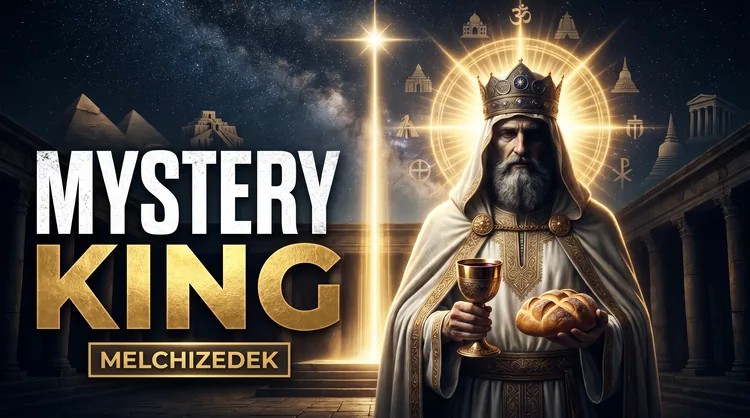
Who was Melchizedek, the King of Salem, who had no father or mother, and an eternal priesthood? This is the mystery that has befuddled Biblical scholars for centuries, revealed in comprehensive totality in this new episode of Inner Whirled. How does this king of justice and peace of Old Testament times relate to the New Testament Eucharist? Are Christian rites and ceremonies unique or did they come from something more ancient? And what does it all have to do with the North Pole and Polaris?
In Inner Whirled 11, Chance and co-host Dylan Saccoccio dig into the mystery and follow the trail through scripture, etymology, and the ancient priesthood traditions to find out.
 Plus+Full episode · 3h 10m
 InnerVerse Plus+
Hear the full 3h 10m episode
121 more minutes of this conversation, plus the complete Plus+ archive, premium video and a private podcast feed for your app.
Cancel any time.
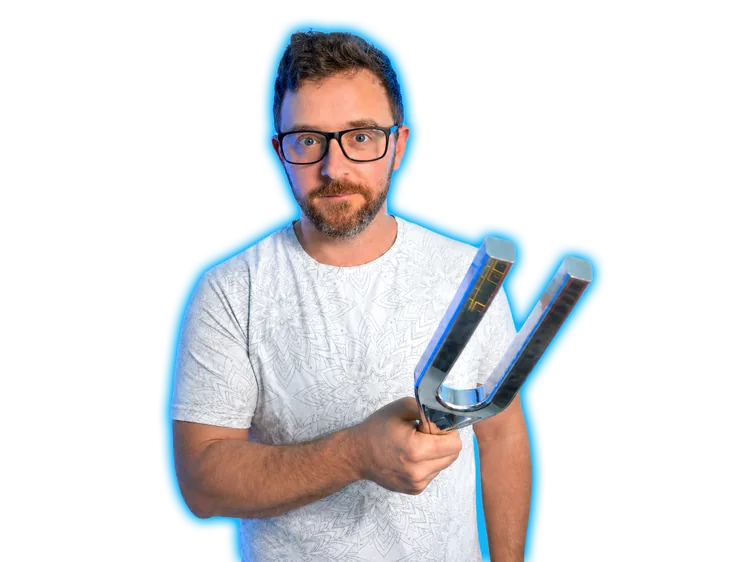
Get tuned with Chance
Tuning forks find where energy is stuck in the field around your body and bring it back into flow. Sessions over Zoom, recorded for you to keep.
30 Minute Consultations
Have something to look at, or looking for guidance? We can consult oracular tools, read your chart, or just talk through whatever you choose.
In this episode
Core themes
The Priest Without Genealogy
Hebrews 7:1-3 introduces Melchizedek as king of Salem and priest of God most high, the figure who meets Abraham returning from smiting the kings, blesses him and receives a tenth of everything, and who is described as being without father, without mother, without genealogy, having neither beginning of days nor end of life. Chance Garton notes that most churchgoers he asked simply answered who is that. Reverend Robert Taylor, quoted at length, argues that Genesis 14 drops this personage in abruptly, as someone the author expected his readers to already recognize.
Polaris, the Sun, or Both
Saccoccio calls himself a bothist, willing to read dual symbolism. He argues the name belongs to the solar cult that, as Jacob Bryant tried to show, titled everything after the sun, while conceding that Masonic and modern occult tradition assigns Melchizedek to Polaris. The logic offered is that the sun rises, sets and dies at the solstices, while the pole star does not, matching a priest with no beginning of days. Garton reads Rene Guenon's The King of the World, which links Manu, Metatron and Melchizedek to Agartha, Shambhala and the Siddha Ashram, while explicitly declining to assert it.
Letters That Refuse to Stay Put
Much of the episode is philological. Saccoccio argues the Greek sigma and the sigma tau ligature interchange, leaving English fossils where the T goes unpronounced in listen, mistletoe, Christmas and epistle, so Christos and Chrestos blur. Melchizedek's first root is melek, king, nearly identical to malak, messenger or angel, and Garton suggests the yod may push it toward kings of justice. Both note that Sedeq means justice and is also the Hebrew name for Jupiter, and that Salem, Shlomo and Solomon share a peace root, with Salem doubling as sulam, ladder.
Bread, Wine and the Word for Peace
Garton points out that the Eucharist is usually taken as Christian, yet Genesis has Melchizedek bringing forth bread and wine long before, which is the show's scriptural argument for a tradition older than the church. Saccoccio adds his green room epiphany that Greek eirene, peace, sounds like Ierne and Hibernia, so Ireland might be the land of peace rather than the land of Erin, and that the Hebrew word for wine, yayin, may sit inside it. Godfrey Higgins is quoted from Anacalypsis on Romish rites already in use among the Gentiles.
Gematria and Astrotheological Geography
Garton walks through the value 294 for Melchizedek, which he says he also finds for Nimrod, for hagios, the saints, and for ekklesia, those called out, which he reads as an inner school rather than a church, quoting Sefer Sapphires on a priesthood identical with the true and invisible order. Saccoccio traces Nimrod through the Greek Nebrod of Jubilees to Strabo's Nebrodi mountains in Sicily and to Orion, placed between Gemini and Taurus, and argues Moab, or Muav, may signify without father. Taylor's Sanchuniathon fragment supplies a most high God slain by zodiacal beasts.
Quotes
“I asked three Christians what they thought about Melchizedek while I was preparing for this. I got the same answer each time.”
“And not one, as far as I can tell with anything I've ever seen from any of these people, has addressed this Prince of Peace without mother, without father, without genealogy.”
“You still see ST words that don't pronounce the T, like listen, mistletoe, Christmas, epistle.”
“The sun rises and sets, the sun lives and dies at the solstices. Polaris doesn't. So you can see how in this tradition, they ascribe that name to Polaris.”
“And it is, but it's older than Christianity. Even the Bible says so, because that's the sacrifice that Melchizedek offers after Abraham comes and brings him the tithes of 10% of the spoils of war.”
“Whatever degree of latitude you live on, you can look this up. If you're north of the equator, that latitude was measured by acquiring an elevation angle to Polaris.”
“And I'd submit it is the light of this world, the Prince of Peace, King of Righteousness and Judgment, the sun.”
“Even though we've given you a filling meal here in the free preview with an hour of introduction to the subject matter, and the real good stuff is on the other side.”
Dylan Saccoccio is the author of the Spirit Whirled series, The Real Universal Empire, and the Tale of Onora. After chasing language back as far as possible, he now explores other avenues to prove cultural diffusion of the ancient universal empire of priests, navigators, masons, and merchants. Find his latest of many hundreds of articles on Substack.
See all Dylan episodes→Kyle and Serena Denton are community herbalists creating wild-crafted and organic plant medicines out of Milwaukee since 2015. I have used their teas and tinctures on an almost daily basis for years now. Kyle is a great friend of InnerVerse and has appeared on the channel more times than I can count. These products work, not in the allopathic "pharma-medicine" way, but in a terrain-support, consciousness bolstering plant-teacher sort of way.