Michael Tsarion | The Self & the Mysterium (Free InnerVerse Plus+ Show!)









This episode was removed from YouTube a few months ago for no clear reason, so it's time to dust it off and present it in its entirety, with the Plus+ extension free for all.
Legendary lore-master Michael Tsarion joins Innerverse to discuss Disciples of the Mysterium, a book about finding Selfhood in a society lost to collectivist dogma. Michael has been researching and writing on conspiracy topics for over 30 years, and in this episode we sum up his crucial conclusions on psychology, philosophy, and the infectious cult of artificial gnosis.
 Plus+InnerVerse Plus+
 InnerVerse Plus+
Hear every full episode
Every extended episode, the complete Plus+ archive, premium video and a private podcast feed for your app.
Cancel any time.
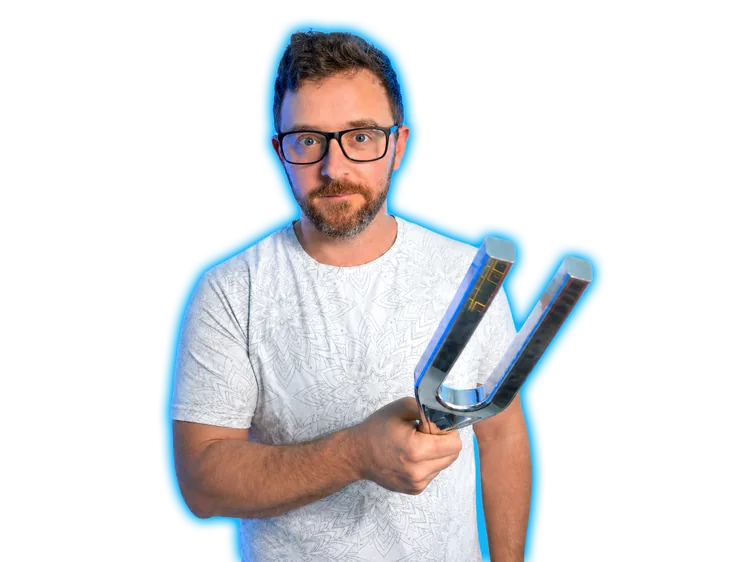
Get tuned with Chance
Tuning forks find where energy is stuck in the field around your body and bring it back into flow. Sessions over Zoom, recorded for you to keep.
30 Minute Consultations
Have something to look at, or looking for guidance? We can consult oracular tools, read your chart, or just talk through whatever you choose.
In this episode
Core themes
The Body Is the Root, Not the Prison
Chance Garton opens by reading from Tsarion's book Disciples of the Mysterium, the passage arguing that incorporeal minds do indeed exist within corporeal bodies, and Tsarion contends that severing the two is the first cut made by what Garton calls the priest-archies, the seed of divide and conquer inside a single consciousness. Tsarion argues that many spiritual paths begin as flight from the body, calling the relationship necrophilous, and warns of seekers with their head in the stars who have lost their root. He allows hatha yoga as body centered, and cites Alvin Boyd Kuhn on what Kuhn called the cult of mortification.
The Contrarium and the Rescue of German Idealism
Tsarion explains the contrarium, his own word for an originary disharmony that he says makes consciousness and life possible, and traces it through Jacob Boehme's dark light and white light, Meister Eckhart, Kant, Fichte and Hegel. He argues Fichte, not Hegel, coined thesis, antithesis and synthesis, and calls Hegel the most misinterpreted philosopher who ever lived, claiming leftist Hegelians dumped his metaphysics and kept a few political scraps. Tsarion says Hegel's real worry was the corrosion of the mitwelt, or society, and that alienation was his most used word. He points to his own books Path of the Fool and Disciples of the Mysterium.
Mysterium: The Ideas We Hold About Ideas
Tsarion defines mysterium as the false idea generated about reality, which then breeds further ideas about ideas in religion, politics and daily life. His remedy is apophatic method, a continual self-critique he says should be taught to children rather than left to chance, and he insists everything he teaches has been double and triple critiqued. Applied to science, he invokes Thomas Kuhn on paradigms, and names Charles Tart, Iain McGilchrist, Rupert Sheldrake and Michael Cremo as credentialed dissenters. Garton reads Tsarion's line that without a rational vision of ourselves as perfect beings, psychology and psychiatry will ultimately lead us nowhere.
Gnosticism, Hermeticism and the Wealthy Converts
In the second hour Tsarion separates Gnosticism, which he calls world negating and psychotic at its core, from Hermeticism, which he describes as body centered, earth centered and right brained. He walks through the Nag Hammadi library found in the 1940s, Bishop Irenaeus as the earliest source for the word, and the confusion with the Essenes, Mandeans and Ebionites, criticising GRS Mead, Stephan Hoeller and Manly P Hall for conflating the two traditions. He then claims a wealthy Gnostic set, naming the head of the airline KLM, adopted an aversion therapy strategy: saturate the world with sex, drugs and rock and roll until people recoil from it.
Simulation, Armoring and the Return to Selfhood
Garton reads an article about Princeton physicist Hong Qin, whose AI algorithm is said to bypass physical law and go straight from data to data, and links simulation theory, the cyberpunk tarot, Elon Musk and Ray Kurzweil to a digital demiurge. Tsarion answers with Wilhelm Reich, describing emotional plague and ocular armoring, and argues the Gnostic is fleeing not the planet but himself. Garton then takes the 1828 Webster's definition of simulation, feigning to be what one is not, calling hypocrisy psychic self-murder. His long solo outro closes with Lao Tzu, the Tao, and the pun that all one and all alone differ by one letter.
Quotes
“We're really taking a swing at the whole pop culture Gnosticism, the perennial philosophy of absolute victimhood that comes in the materialistic form as simulation theory.”
“A lot of people have their head in the stars or the clouds and they've lost their root and the root being the body.”
“I think the occult is just advanced psychology and philosophy married together. I think that's really what you're doing when you study the occult.”
“It's out of that mud of deconstruction that the most perfect sunflowers grow. And we've lost that in the West.”
“Our focus will always see imperfection when we look at just a piece, but without the peripheral vision of wholeness, then we wind up with the 100 years of institutional psychology that we've had.”
“It's only the left brain's myopic idea that goes, that's imperfect, we need science and pharmacology to fix it. So we need to put earrings on the Mona Lisa.”
“How can anything be outside the natural world? Walter Russell would kill himself laughing at that.”
“Now you have a scientific materialist way to conceptualize the very same prison planet. The demiurge and the archons are now the computer programmers.”
“You're not trying to get away from the planet. You're not trying to get away from reality. You're trying to get away from yourself.”
“Joining the protest, going on the march or whatever the thing is that you're jumping in to the crowd is a euphoric experience.”
“It's a very psychosomatic thing. It's not an idea. It's not mysterium. It's an actual process of re-visioning the body, reintroducing yourself to it.”
“Ascension programs are dangerous. They tell you that where you're at and what you are isn't already part of perfection.”
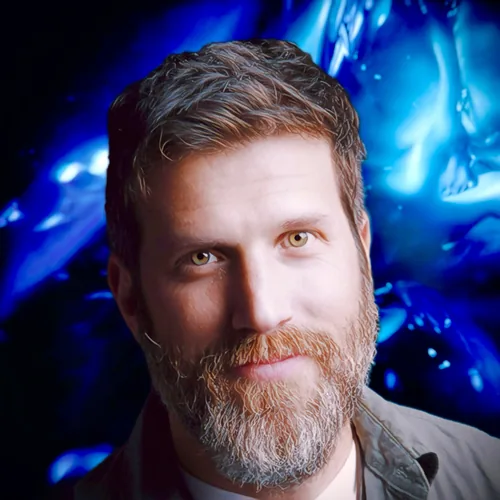
Michael Tsarion is a researcher and author who has written and lectured on conspiracy topics, occult psychology, symbolism, and gnosticism for over 30 years; on InnerVerse he discussed his book 'Disciples of the Mysterium' and the fate of selfhood in a collectivist, simulated society.
See all Michael episodes→Kyle and Serena Denton are community herbalists creating wild-crafted and organic plant medicines out of Milwaukee since 2015. I have used their teas and tinctures on an almost daily basis for years now. Kyle is a great friend of InnerVerse and has appeared on the channel more times than I can count. These products work, not in the allopathic "pharma-medicine" way, but in a terrain-support, consciousness bolstering plant-teacher sort of way.