Thomas Gorence | The Paranoid American: Conspiracy, Comic Crafting, AI Art & Freemasonry
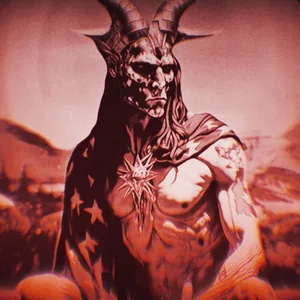









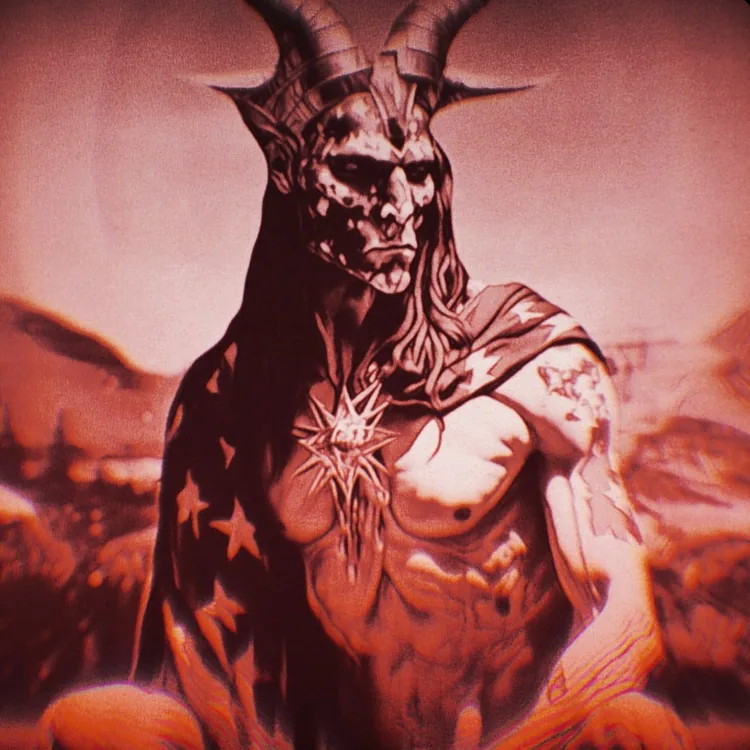
Thomas Gorence is THE Paranoid American, a conspiratorial media mogul of sorts. In tonight's live episode we will get to know him better, while exploring the efficacy and enjoyability of communicating through the comic book medium. Along the way, we'll dip into dialogue on his innovations with AI art, and in the Plus extension, his experiences and thoughts on Freemasonry, and if he's got any juicy revelations to share about the esoteric knowledge preserved by secret societies.
 Plus+Full episode · 2h 24m
 InnerVerse Plus+
Hear the full 2h 24m episode
72 more minutes of this conversation, plus the complete Plus+ archive, premium video and a private podcast feed for your app.
Cancel any time.

Get tuned with Chance
Tuning forks find where energy is stuck in the field around your body and bring it back into flow. Sessions over Zoom, recorded for you to keep.
30 Minute Consultations
Have something to look at, or looking for guidance? We can consult oracular tools, read your chart, or just talk through whatever you choose.
In this episode
Core themes
Surfing the Front Edge of the AI Tools
Thomas Gorence tells Chance Garton he made it his mission this year to learn every new visual AI tool, comparing it to surfing or to the wild west of 1990s computing. He walks through Mid Journey, the Discord bot where a prompt like 1980s sitcom, full house DVD rip, film grain produced the fake retro television stills that fooled viewers into thinking they were real Russian shows. Because the models learned from scraped file names and tags, knowing how to phrase a prompt matters, exactly like knowing how to talk to a brand new search engine.
The Boogeyman Is Dependence, Not Skynet
Gorence says he does not expect robots to start murdering anyone. His worry is quieter, that we become so reliant on technology that when the people who understand it retire and die, or an EMP wipes the systems, nobody can rebuild what we lost. He compares it to forgetting how the ancients built strong columns, except a microprocessor cannot be reverse engineered without matching technology. He also warns about faulty rules creeping into models, likening it to what he calls the Rockefeller medicine system, which in his telling treats a symptom and leaves you months later wondering why your leg is swollen.
Chance Argues That Logic Is a Light
Chance Garton offers a counter case. Every doomsday has been a false alarm, so instead of Terminator 2 he frames AI spiritually. Computing runs on logic, and logic is the yang half of yin and yang, the ordering, clarifying, light bringing force. He argues we have been sold the idea that logic is dehumanizing, when logic is what lifts us out of chaos, so a system built on sound logic should produce good, and one built on broken logic will simply self destruct. Gorence pushes back that good logic is as abstract a promise as good communism.
Thirteen Billion Dials and the Inverted Keys
The most important shift, Gorence argues, is that we inverted our control over technology. Programmers used to write the logic and understand it. Now a trained model has something like thirteen billion little dials, more parameters than any human could hold in mind at once, and we spend our time reverse engineering what it is already doing. AI has taken the car keys. He notes it finds correlations humans would never look for, which is why big data became the currency and why Nvidia stock is shooting through the roof as everyone buys GPUs.
Why the Video Jitters and Hands Got Fixed
Asked why AI video feels like a string of parallel potentials rather than one fluid recording, Gorence explains stable diffusion. Each frame begins as random static from a seed, then denoises into detail, and settings like previous frame influence, clip skip and CFG control how wild the motion gets. He names Deforum for prompt blending, Runway ML Gen 2 for coherence, and Control Net with Open Pose plus the hand extension, which places a colored stick figure and finger joints so hands are no longer a problem. He also points to Across the Spider Verse.
Quotes
“It reminds me of when search engines were brand new, and if you knew how to talk to a search engine, you were like 10 or 20 times faster than anyone else if you just knew like the tricks and how to speak to it.”
“And the ultimately, so ultimately what I think is that we've been fed for a long time a bunch of BS that logic is dangerous, that logic taken to its conclusion is like somehow dehumanizing or inhumane.”
“But even scarier than that, and I think the most important point, is that with AI we've kind of inverted our control over technology. So up until AI starts getting a huge boom over the last decade or so, especially in consumer market.”
“Are we on this road of externalizing further and further our capacity to do it ourselves, from our own imagination, with our own hands? And is that a pendulum that reaches some kind of apex? Is that what the singularity means?”
“The druids, for example, originally they were not interested in keeping their esoteric doctrines in written form, because it was important to them for their initiates to actually exercise the capacity of their memory.”
“A LoRA operates by injecting its own biases into the model. So if I go and get like a JFK LoRA and I just type apple, if that LoRA model is strong enough, it'll only make apples that look like JFK, or JFK eating apples, or like every single thing will have JFK in it.”
“It's really interesting, it's like everyone has these checkpoints in the form of the actual frames drawn in the comic book. But the in between the frames, the action that animates that, that takes you from this image to that image, we all get to create that in our own imagination, in our own minds.”
“And it's going to be called the Homunculus Owner's Manual, and it breaks down the entire concept of what a homunculus is, how to make one, what kind of powers they can give you, the names of people that have claims to have unearthed this research.”
Thomas Gorence, known online as "The Paranoid American," is a comic artist and conspiracy-themed media creator; he appeared on InnerVerse twice discussing NLP, comic crafting, AI art, and Freemasonry.
See all Thomas episodes→Kyle and Serena Denton are community herbalists creating wild-crafted and organic plant medicines out of Milwaukee since 2015. I have used their teas and tinctures on an almost daily basis for years now. Kyle is a great friend of InnerVerse and has appeared on the channel more times than I can count. These products work, not in the allopathic "pharma-medicine" way, but in a terrain-support, consciousness bolstering plant-teacher sort of way.