Thomas Gorence | NLP & Mind Control: The Techniques of Neuro-Linguistic Programming
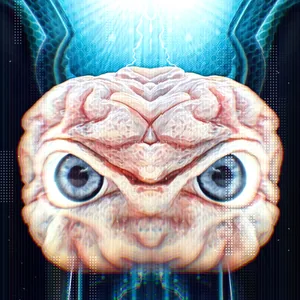









The Paranoid American Thomas Gorence returns to InnerVerse to articulate the arcane art of Neuro-Linguistic Programming, a set of techniques that can allegedly assist us in rewiring our minds to break unhealthy habits and adverse associations. What are the occult and magical origins of NLP, and how might these tactics be used for social engineering and mind control?
In the 2nd hour, on InnerVerse Plus, we dive deeper into NLP tactics, explore their relation to psychic/energy vampirism, discuss digital entrainment, and much more.
 Plus+Full episode · 2h 10m
 InnerVerse Plus+
Hear the full 2h 10m episode
60 more minutes of this conversation, plus the complete Plus+ archive, premium video and a private podcast feed for your app.
Cancel any time.
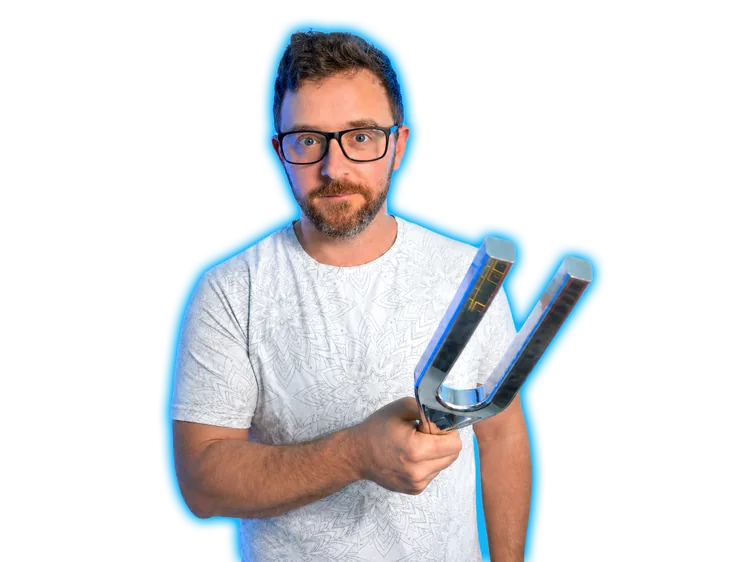
Get tuned with Chance
Tuning forks find where energy is stuck in the field around your body and bring it back into flow. Sessions over Zoom, recorded for you to keep.
30 Minute Consultations
Have something to look at, or looking for guidance? We can consult oracular tools, read your chart, or just talk through whatever you choose.
In this episode
Core themes
NLP as reverse engineered charisma
Thomas Gorence frames neuro linguistic programming less as a doctrine than as a checklist you get by observing a charismatic person and indexing every successful behavior they have. He credits Richard Bandler and John Grinder as the originators, then notes that their split scattered the field into competing brands, trademarks and licensed trainer schemes that he compares to a pyramid. His own preference is to ignore the packaged models entirely and treat NLP as a Walmart combo bundle of borrowed techniques. Chance Garton pushes back gently, arguing that having a full model beats picking up social instincts piecemeal.
Anchoring, the technique underneath everything
The pair spend much of the hour on anchoring, which Thomas defines as putting someone into a charged state and then linking that state to a sensation. His examples run from a wedding song and a grandmother's perfume to burning sage before ritual, the tap method, and the McDonald's commercial that flashes its logo for one second after the happy family scene. He calls olfactory anchors the strongest because smell binds to memory hardest. Spatial anchoring gets a live demonstration, with Thomas charging one side of the frame with approval and the other with boredom while explaining he is doing it.
Mesmerism, hypnotism, and the MKUltra thread
Thomas traces NLP back through stage hypnotism to Franz Mesmer, animal magnetism and the idea of an energy field you could transfer between people, noting that hypnotism branched off rather than dissolving into modern psychology. He first encountered NLP through his own MKUltra research, then paid roughly six hundred dollars for a last minute seat at a Bandler seminar near his Florida apartment around 2005. Chance connects this to the occult read as cosmic psychology, where learning the mind dynamics of the individual means pulling the levers of the whole society, which is why fracturing one psyche scales.
Crowds, rhetoric, and manufactured consent
Citing Gustave Le Bon's The Crowd, Thomas argues a crowd is a single dumb person whose intelligence never exceeds the lowest common denominator, so a confident speaker with all the wrong information can still carry a room. After confidence comes the trivium, grammar, logic and rhetoric, which he points out is now taught almost exclusively in politics and sales. He extends this to media control, saying you no longer need a Bavarian Illuminati when six corporations, a think tank report written by former agency staff, and a short Zoom call will do. He adds that Mockingbird style retractions exploit the mind's blindness to negation.
Turning the toolbox on yourself
The most actionable stretch is Thomas explaining how to run these techniques on your own mind. He reframed brutal Disney commutes by casting the driver who cut him off as an uncle and the slow car ahead as grandma, then anchored that calm to how he held the wheel. He walks listeners through the swish method, zooming a joyful memory bigger and brighter while shrinking a cringe memory into blurry black and white, and builds a memory palace starting with a twenty foot childhood toy blocking the front door. Chance applies the same logic to breaking late night eating.
Quotes
“When you're talking to people, if you want to have more influence over them, so most people think in terms of visual, some people think in terms of audio and some people think in terms of kinesthetic and feeling.”
“But what the practices that NLP kind of encapsulates and teaches people, that's the real power behind them. And you can take all of these tools out of there. NLP is just sort of indicative of somebody that studies a bunch of different techniques and puts them together with intent.”
“The nature of the universe is mental and whenever minds are in the same proximity with each other, it's sharing awareness or sharing space. There's a phenomenon where the more coherent mind seems to dominate and the other mind molds to the more coherent mind.”
“So that's just one type of anchor, you know, and that's why they always show these families and like, oh, man, that family looks so happy, bam, McDonald's go away. So that way, hopefully in like three or four hours later, you're not even thinking about family.”
“Your body is trying to protect you from some kind of suppressed emotion or feeling that you've told it is off limits, maybe subconsciously.”
“The second that happens, now you've got like nanoseconds to start implanting suggestive themes. And it's almost like a cheat code. It's like you've, you've just hotwired the car and now the next thing that you say to someone goes right through all of their filters.”
“And you can almost consider rapport is like an invisible social credit system that we're all cataloging on each other, right? We've all got our own little crypto banks of social currency.”
“So if you're really focused on what you don't want, I gotta stop doing this. I gotta stop doing this. I don't want this. I don't want this. You're basically telling your mind more of this and the more effective method would be what you would rather what you actually want, keeping that in your vision.”
Thomas Gorence, known online as "The Paranoid American," is a comic artist and conspiracy-themed media creator; he appeared on InnerVerse twice discussing NLP, comic crafting, AI art, and Freemasonry.
See all Thomas episodes→Kyle and Serena Denton are community herbalists creating wild-crafted and organic plant medicines out of Milwaukee since 2015. I have used their teas and tinctures on an almost daily basis for years now. Kyle is a great friend of InnerVerse and has appeared on the channel more times than I can count. These products work, not in the allopathic "pharma-medicine" way, but in a terrain-support, consciousness bolstering plant-teacher sort of way.