Sophie Fletcher | The Basics of Human Design, Somatic Psychology, & Strengthening Uniqueness
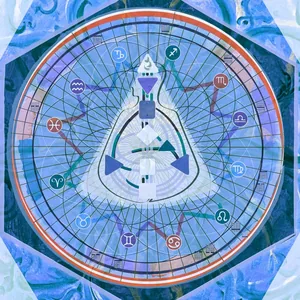









Blending Divination Disciplines to Better Discern Our Differences...
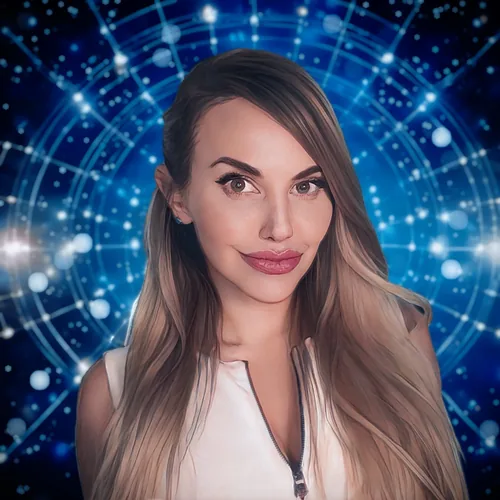
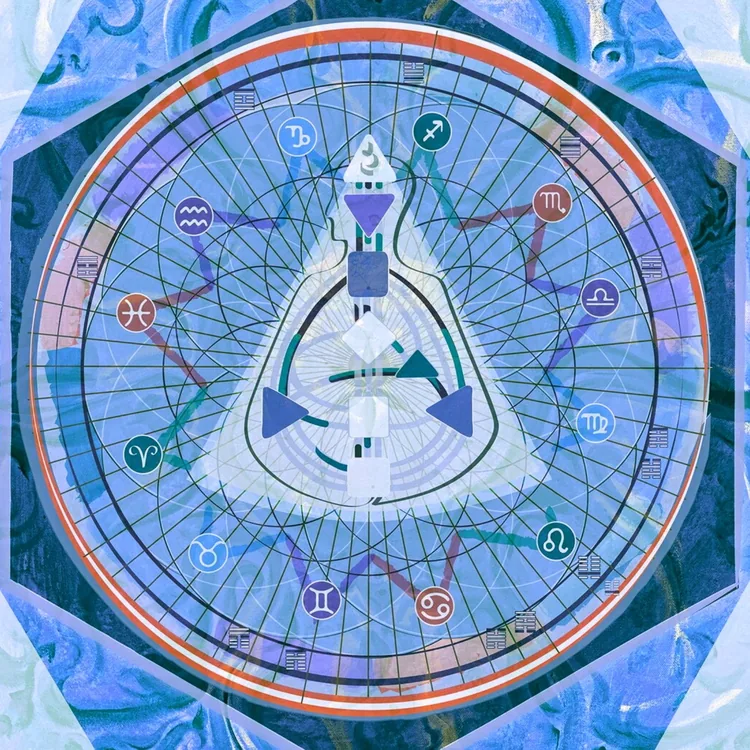
Sophie Fletcher returns to InnerVerse to provide us with an introduction to the syncretic divinatory philosophy of Human Design. We discuss Sophie's education background in various psychological and somatic modalities, the importance of taking your body with you on your spiritual path, the origins of Human Design, how it helps one discover their uniqueness, the different types of people within HD, and examples on how to incorporate the knowledge of your personal style of energetic authority.
 Plus+Full episode · 2h 32m
 InnerVerse Plus+
Hear the full 2h 32m episode
65 more minutes of this conversation, plus the complete Plus+ archive, premium video and a private podcast feed for your app.
Cancel any time.
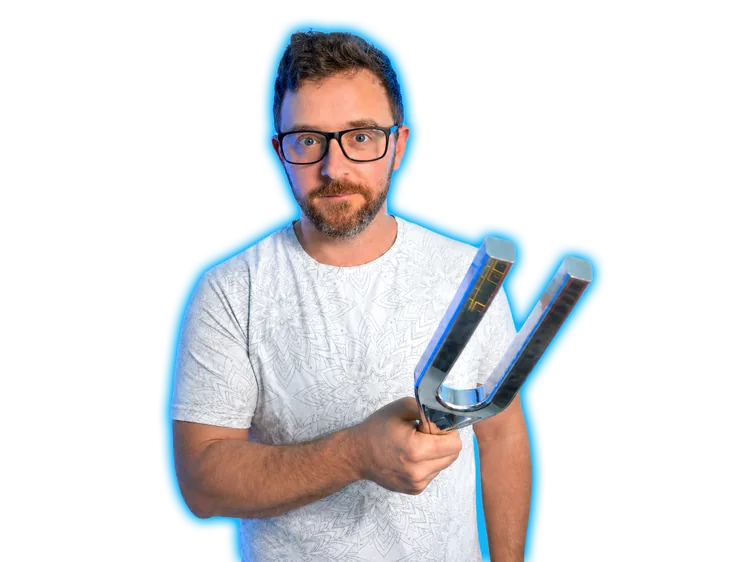
Get tuned with Chance
Tuning forks find where energy is stuck in the field around your body and bring it back into flow. Sessions over Zoom, recorded for you to keep.
30 Minute Consultations
Have something to look at, or looking for guidance? We can consult oracular tools, read your chart, or just talk through whatever you choose.
In this episode
Core themes
From spiritual community to a depth psychology PhD
Sophie Fletcher tells Chance Garton she was raised inside a spiritual community from around age four, a framework she credits with keeping her grounded even as it fed a habit of dissociating into what she calls the dorsal, shut down side of the nervous system. She studied philosophy and psychoanalysis, finished a first master's in spiritual psychology at 24, then met a bodyworker trained in Chinese meridian theory whose wife used human design in her coaching. Human design and somatic work arrived together for her. She later completed a second master's and a PhD in depth psychology with a somatic emphasis at Pacifica Graduate Institute.
The six sciences behind the human design system
Fletcher reports that human design was transcribed by a man later known as Ra Uru Hu, who said a voice delivered the material to him. He taught it, then told his students to burn everything and disappeared, returning later to rebuild the system from notes the students had quietly kept. As she presents it, the system combines four esoteric sciences, a nine chakra Hindu model, the Kabbalistic tree of life, the I Ching and astrology, with two modern ones, the 64 DNA codons and neutrinos, which she describes as the smallest particles that carry mass and information. She works with tropical rather than sidereal charts.
Five types, five auras, five ways of working
The body graph, Fletcher explains, sorts people into five types. Generators and manifesting generators are the energy types at roughly 70 percent of the population, defined by a lit up sacral center she likens to an energizer bunny, with an enveloping aura and a strategy of responding rather than initiating. Manifestors are about 8 percent, the only type designed to initiate, carrying a fixed and repelling aura. Projectors, about 20 percent and her own type, have a penetrating aura and are meant to wait for recognition and invitation. Reflectors, about 1 percent, have no defined centers and a sampling aura she says is ruled by the moon.
Authority is the body deciding, not the mind
Fletcher calls authority the most practical piece of the system, each person's designed route to a decision, and says that in human design nobody at all is built to make a final call from the mind. A defined spleen, she describes, gives one quiet instinctual read that speaks only once. A defined sacral answers in the now through sounds and physical movement, and she has clients practice on low stakes choices like pointing at things in the refrigerator. A defined emotional center trumps the others and gives no clarity in the moment, only clarity over time. Garton, she notes, filters through spleen and sacral to emotional authority.
The emotional wave and the 2027 cycle switch
Emotional definition, Fletcher says, means living on a wave where a high or a low needs no reason, and the skill is surfing it rather than being crashed around by it. She and Garton share the 37-40 channel running from the emotional center to the ego center, which she calls a ratchet wave that climbs in plateaus then plummets. She contends human design describes roughly 400 year cycles, with the current one switching in 2027 inside the emotional center, and argues emotionally defined people carry the onus of naming their own state honestly. Garton closes by using the system as a diving board into his own intuition.
Quotes
“I had really always been interested in people, like what makes people people, what makes you different than me, what makes certain people make certain choices.”
“The body and the mind aren't separate. The body is actually in the mind. It's not the other way around. The body is made up of mind stuff.”
“My favorite part of human design is that it's known as the science of differentiation.”
“There's 26 letters in the alphabet, but every story told using those 26 letters is absolutely different and unique with infinite possible variations and permutations.”
“If there were more generators on this planet who were taught and encouraged to really go for what they want, like be honest with their answers, we would have a very, very different planet.”
“A lot of kids have been trained out of their original noises and taught to say yes or no. Like the phrase of, use your words, say yes or no.”
“There's nothing wrong with me that I don't have the same sacral go, go, go energizer bunny as the generator, as my generator husband. I'm literally designed differently.”
“Those little incongruent aspects don't matter as much because ultimately we're just using it as a diving board to leap into the well of our own deep inner knowing.”
Sophie Fletcher, PhD, blends Human Design with somatic psychology to help people understand their unique energetic makeup and integrate embodied approaches to spiritual development; she appeared on InnerVerse to introduce the basics of Human Design and somatic practice.
See all Sophie episodes→Kyle and Serena Denton are community herbalists creating wild-crafted and organic plant medicines out of Milwaukee since 2015. I have used their teas and tinctures on an almost daily basis for years now. Kyle is a great friend of InnerVerse and has appeared on the channel more times than I can count. These products work, not in the allopathic "pharma-medicine" way, but in a terrain-support, consciousness bolstering plant-teacher sort of way.