Trauma Creates Other Versions of You That Are Still Alive | Thomas Zinser, Soul-Centered Healing









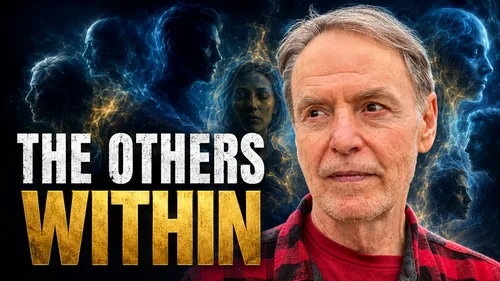
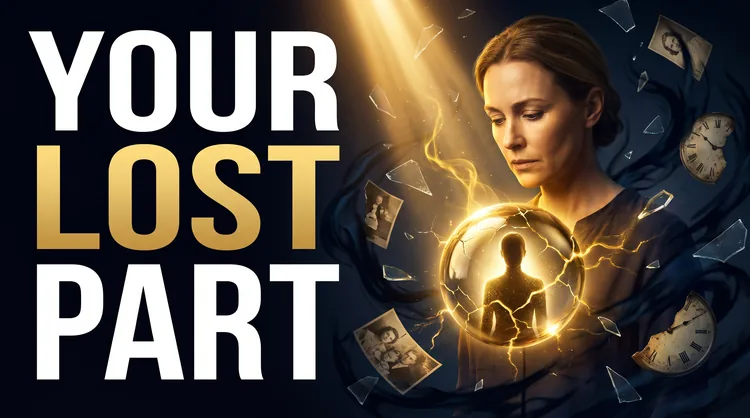
What if the inner critic, the anxious loop, and the self-saboteur are not personality traits but conscious fragments of a past self still living inside the moment of their creation? Dr. Thomas Zinser spent 15 years developing soul-centered healing alongside the spirit guide Gerod to answer exactly that question.
Dr. Thomas Zinser, retired psychologist, hypnotherapist, and author of Soul-Centered Healing, joins InnerVerse to cover the creation of ego states during trauma and how they persist as conscious, autonomous fragments frozen in an eternal traumatic present, the higher self as the soul's active link to present incarnation, the ideomotor response protocol for communicating with sub-personalities and guiding them to receive light-love energy from the higher self, how sub-personalities are located in specific chakras and aura layers and can leave the body entirely for protection, pre-birth and past life sub-personalities carried across reincarnations, and the difference between authentic dissociation and what Chance sees as a social media DID trend.
 Plus+Full episode · 2h 33m
 InnerVerse Plus+
Hear the full 2h 33m episode
65 more minutes of this conversation, plus the complete Plus+ archive, premium video and a private podcast feed for your app.
Cancel any time.
Get tuned with Chance
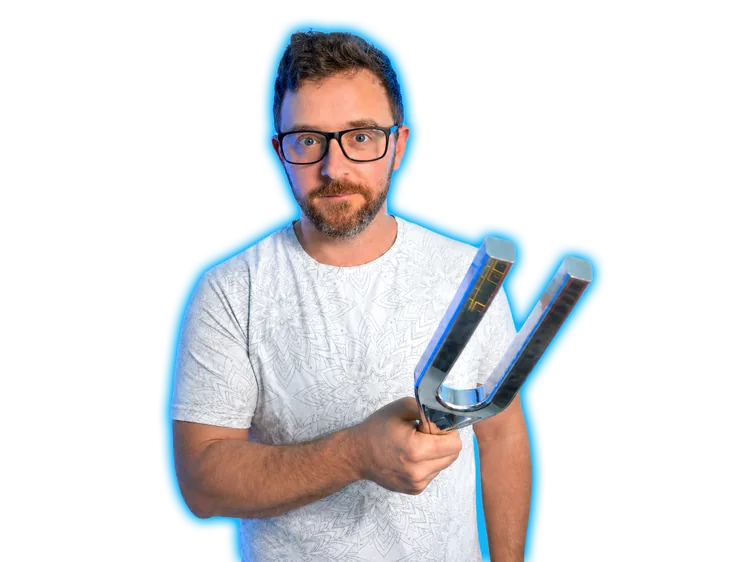
Tuning forks find where energy is stuck in the field around your body and bring it back into flow. Sessions over Zoom, recorded for you to keep.
30 Minute Consultations
Have something to look at, or looking for guidance? We can consult oracular tools, read your chart, or just talk through whatever you choose.
In this episode
Core themes
Everyone Carries Subpersonalities
Zinser, a psychologist retired after 40 years of practice, describes how the psyche meets trauma by creating ego states or subpersonalities that take over to protect the self, then slip back into the unconscious once things are safe. He insists these parts are conscious beings that can communicate and live in a narrow reality, an idea he says mainstream psychology finds hard to accept. Asked about a social media trend of young people claiming dissociative identity disorder, he says he did not know it as a trend and frames multiplicity as a spectrum: everyone has subpersonalities, but only in the extreme do they take over the executive function.
Stuck in an Eternal Present
A subpersonality, Zinser says, lives in an eternal present, conscious only of the time and place where it split off and unaware of its own free choice or of any other world. When a later event touches the same fear or anger, the original part can be triggered, come forward and take on the body's new age, so a part formed at four may present at seven or twelve, or a new part may form with a vibratory link to the first, leaving groups of ego states living together. Once contacted, he says, they can be caught up to date, since they perceive and learn though they are not creative.
Light Offered but Never Forced
Zinser relays Gerod's description of the higher self as a piece the soul sends into the present incarnation, aware of this life and past lives and able to bring light, love and energy to wounded parts. The catch, he says, is that subpersonalities share the soul's free choice, so a frightened or angry part can stop that light and the light will not override it, which is where blocks come from. Using ideomotor finger signals under hypnosis, he asks each part to agree to receive the light, and he reports that nearly every part that accepts becomes cooperative, shares what it carried once, releases it and integrates.
Where the Fragments Live
Zinser says most subpersonalities are created in a bodily experience and carry its physical side, and they can say where in the body they sit; one group, he recounts, moved out of a client's elbow after a Rolfing session disturbed them, and badly threatened parts may leave the body for the aura. Past lives add a layer: Gerod told him the soul tucks unresolved parts into a protective pocket as it returns to the light, and that pocket can open in a later incarnation when a present issue matches the old one. Chance hears an echo of the stuck energy he finds in the field with biofield tuning.
Why the Client Leads the Healing
Zinser admits it is hard to work on your own subpersonalities, since they were created to keep their experience from the conscious self and healing asks them to do what they were made not to do. That is why he speaks to each part directly and explains that its sharing happens only once; doing that on yourself means wearing two hats at once. The process is client-directed and experiential, the practitioner only guiding, which Chance welcomes as a guard against a hypnotist's biases. Zinser began training practitioners after retiring, in a program of at least two years, and says his current third group is the last he will train personally.
Quotes
“I have come to trust that the most profound healing is provided by the power of epiphany.”
“This is the part that's so difficult to understand in terms of mainstream psychology, that there is actually other parts of ourselves that are conscious and alive.”
“At one level, we all have subpersonalities. Nobody gets through life unscathed.”
“You can interpret life the way you would interpret a dream, and that the meaning and the teleology of it is going to be there in exactitude.”
“These ego states, from my point of view, they not only influence the self. Depending on who they are, what they carry, what's happened, they can very strongly direct the self.”
“As Gerod said, the soul will take those unresolved parts and put them in a pocket within the soul, protecting them from the light.”
“All that exists is the light and life and incarnation and reality and expansion and flow and beauty and truth and love.”
“The thing I would emphasize is the healing process is directed by the client. We work with what they present. We don't go calling things forward.”
Dr. Thomas Zinser is a retired psychologist and hypnotherapist who developed 'soul-centered healing,' a framework treating trauma-induced ego states as autonomous fragments of the self; on InnerVerse he discussed healing these psychic schisms, the higher self, and spirit attachments.
See all Thomas episodes→Kyle and Serena Denton are community herbalists creating wild-crafted and organic plant medicines out of Milwaukee since 2015. I have used their teas and tinctures on an almost daily basis for years now. Kyle is a great friend of InnerVerse and has appeared on the channel more times than I can count. These products work, not in the allopathic "pharma-medicine" way, but in a terrain-support, consciousness bolstering plant-teacher sort of way.