Psychopomps, Underworld Gods & Cthonic Guides with Mario Garza of Symbolic Studies









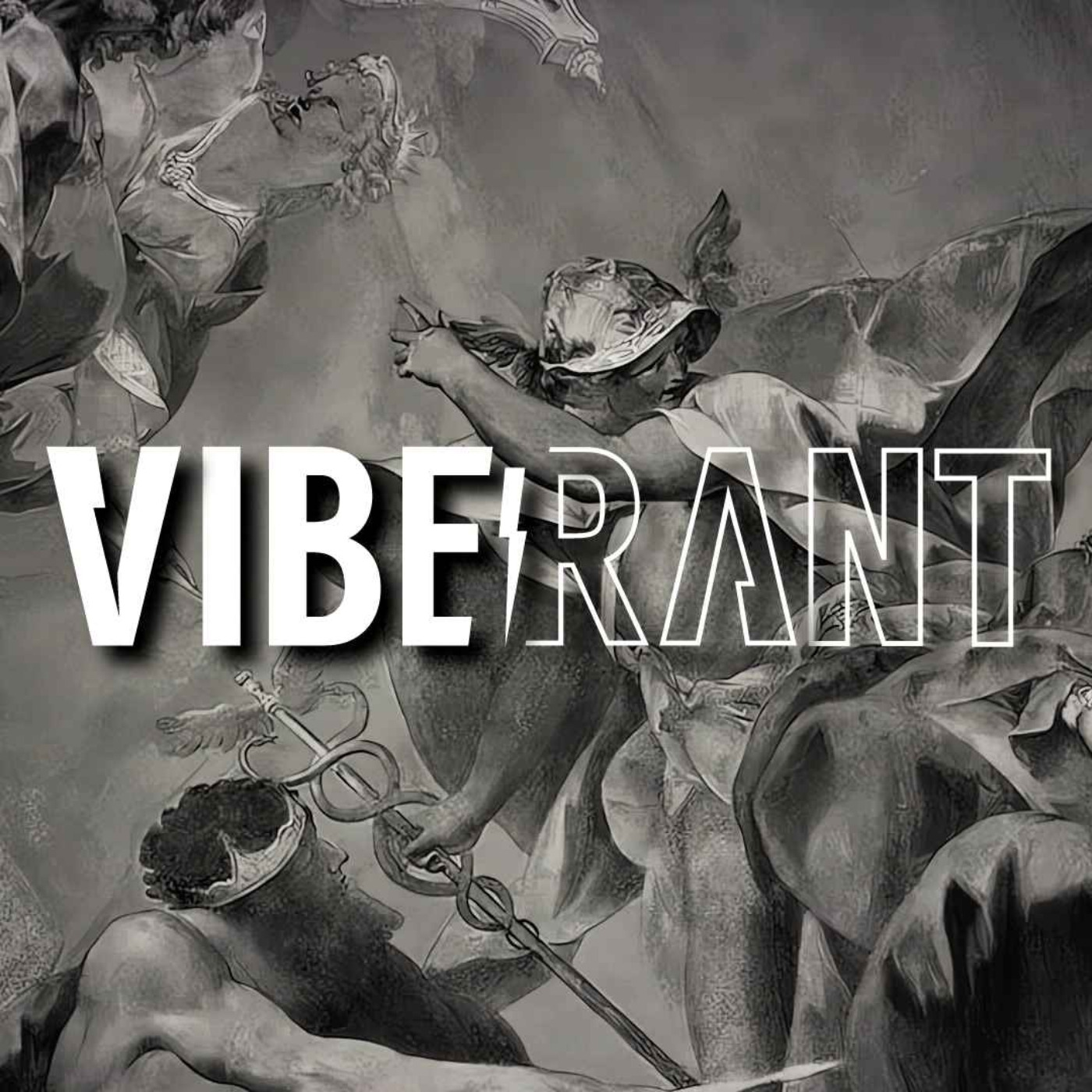
In this Vibe Rant, Mario Garza (Symbolic Studies) and I explore the psychopomp archetype, the guide of deceased beings to and through the underworld. Do the symbolic links between Chthonic & underworld Gods across cultures and times point to a metaphysical reality to these shepherds of souls?
 Plus+InnerVerse Plus+
 InnerVerse Plus+
Hear every full episode
Every extended episode, the complete Plus+ archive, premium video and a private podcast feed for your app.
Cancel any time.
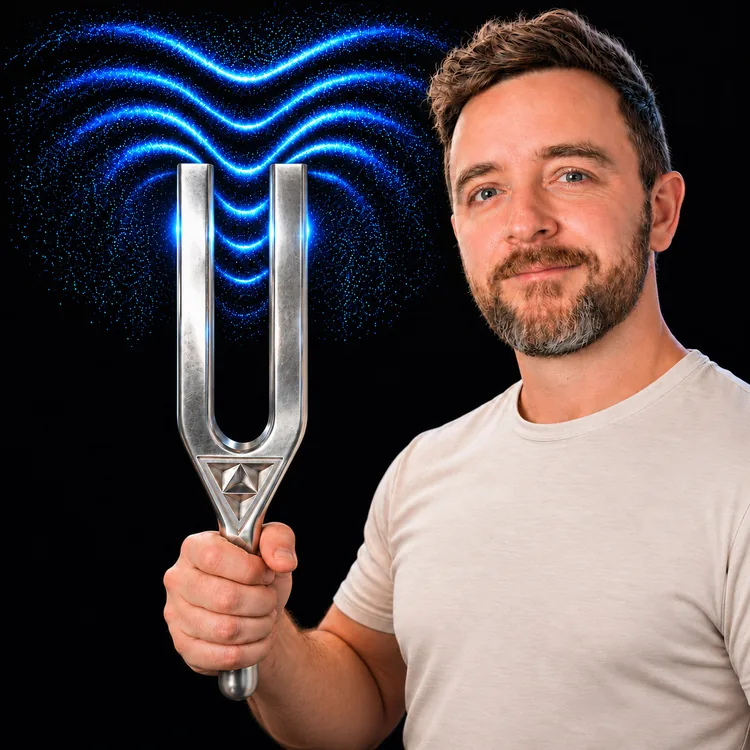
Get tuned with Chance
Tuning forks find where energy is stuck in the field around your body and bring it back into flow. Sessions over Zoom, recorded for you to keep.
30 Minute Consultations
Have something to look at, or looking for guidance? We can consult oracular tools, read your chart, or just talk through whatever you choose.
In this episode
Core themes
Symbol or Living Guide
Chance opens with the question he wants held through the whole talk: is the psychopomp only symbolism pointing at nature, or a being that actually exists? If all is mind, he reasons, the first emanation from the divine source could be the trunk of the tree that all life branches from, and the guide met after death might be the oldest, eternal part of ourselves. Asked where he leans, Mario says he is inclined to think most everything is essentially a metaphor, likening the guide to a traveler returning from an exotic land, while leaving room to update his view.
Etruscan Faces of the Guide
Chance's slideshow leans on older Etruscan figures. He presents Vanth, a winged figure on funerary urns bearing a torch, key and scroll, often paired with Charun, whose hammer and the underworld krater he appears on lead Chance to suspect a link with Vulcan. Asked to read the images, Mario spots what looks like a noose hanging between Charun's legs. Chance then reads about Suri, a god of volcanoes and fire known to the Romans as Apollo Soranus, whose wolf priests on Mount Soracte reportedly walked barefoot over burning coals, and argues that the name Hades derives from an epithet of Suri.
Letter Swaps Beneath the Names
Chance applies philology throughout, cautioning that each added letter swap makes a link stretchier. Swapping V for B and T for D, he hears Vanth in the Buddhist bardo, and he returns to the swaps again and again. Chance says it blew his mind when he noticed that Pater, as in Dis Pater, might hide the ancient Greek word for a rudder, pedalion, which would make the father a steersman, though he calls it spitballing. He also links Orcus to Argus and to the ark that preserves life through catastrophe, and, reading Godfrey Higgins's Anacalypsis, suggests a thread worth exploring between the Etruscan Tinia and the Chinese Tian.
Libra's Scales and the Polar Axis
Speaking in Libra season, Mario finds it fitting that the seventh sign is the one that carries us into the underworld. He reads the scales through twin pillar symbolism, Boaz and Jachin, with a central pillar, the middle way, serving as the vertical axis that makes any scale work. Mario then shares an entry from Jean Chevalier's symbolic dictionary: at the equinoxes the pointer of the scales becomes the changeless polar axis, in ancient China the Great Bear was called the Jade Scales, and the Sanskrit word for scales, tula, also names the holy land at the pole. He ties this to the weighing of souls.
Twins, Placentas and the Shades
Twin symbolism keeps surfacing. Chance notes that Yama's name can mean twin and that Xolotl was the twin of Quetzalcoatl, the evening and morning phases of Venus. He argues that the closest twin and guardian each of us has is the placenta, which he believes carries its own spirit, and says Biofield Tuning sessions showed him how much birth stories shape people. Gabe, fighting phone troubles, sends a voice message calling Hades the Lord of the shades and counting seven gates. Chance also speculates, admittedly conjecturally, that ill intentioned souls may persuade the newly dead not to go into the light.
Quotes
“I'm inclined to think most everything is essentially a metaphor.”
“A psychopomp is either a guide of souls to the place of the dead or the spiritual guide of a living person's soul.”
“To me the hermit seems like he's an elder shepherd, you know, he has that staff, right? And he has that cloak and that hood. He lives a solitary life.”
“But the soul is the reservoir of all of it. And the soil is that for the earth.”
“To me, having a female psychopomp is very, very interesting. It to me makes a ton of sense because for all intents and purposes, the way I tend to look at it is that the underworld is actually very, very feminine.”
“Libra is the seventh sign of this system that we have. And so it's very interesting that the seventh sign would be the sign that brings us into the underworld, in my opinion.”
“When I think about the scales, I can't not think of the two pillars symbolically kind of representing the pans, but then that central pillar, the middle way, actually being the vertical axis that makes a scale even work.”
“That's a very important word, the shades. Hades is the Lord of the shades.”
“I think that it's the spirit of the placenta and it is your twin.”
“I don't like the Yama character very much. But I like Mercury, I like Jesus.”
“It seems kind of philosophically sound that if all is mind, which I think I've been able to demonstrate to myself in my own life, you have to prove it to yourself. I don't think you can prove it to other people.”
“I think we have the ability to step in and out of time. And I think we don't know how it works. I don't know how to do it, but I have experienced it.”
“So there's this idea that literally Ursa Major and Minor are scales of universal or cosmic balance.”
Mario Garza is the artist and researcher behind Symbolic Studies, a project sharing symbolic insights on the zodiac, mythology, folklore and world religions, with astrology as its foundation. A lifelong artist who has worked as an art director and graphic designer for nearly 25 years, he runs Symbolic Studies from the Pacific Northwest alongside his wife Michelle, who co-hosts the podcast with him. His work traces syncretic threads across tarot, occultism and comparative religion, including the argument that the major deities of antiquity were originally polar gods before a solar model was laid over them. He also offers symbolic birth chart and tarot readings, private lessons and freelance design.
See all Mario episodes→Kyle and Serena Denton are community herbalists creating wild-crafted and organic plant medicines out of Milwaukee since 2015. I have used their teas and tinctures on an almost daily basis for years now. Kyle is a great friend of InnerVerse and has appeared on the channel more times than I can count. These products work, not in the allopathic "pharma-medicine" way, but in a terrain-support, consciousness bolstering plant-teacher sort of way.
The Sonic Slider is the flagship tool behind Biofield Tuning itself, a weighted tuning fork hand-tuned to 93.96 Hz, the twelfth harmonic of the Schumann Resonance, Earth's own natural electromagnetic pulse. Its extended handle lets you glide it smoothly across the face, neck, and body, and practitioners and users regularly report support for relaxation, circulation, and nervous system regulation. It's the same fork Chance uses in his own sessions, and a great entry point if you want to bring this work into your own daily routine.
If you ever wondered where I gained my symbolic and linguistic chops, it was the Spirit Whirled series of books, by Dylan Saccoccio. If you want to keep up with us on our show Inner Whirled, you'll need to do the same work. These books are a value and treasure greater than a college education in comparative mythology and religious studies ever could be. Give yourself the keys of discernment. Listen to Spirit Whirled.
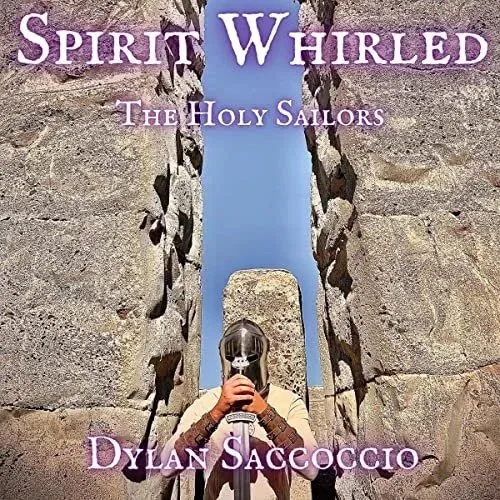
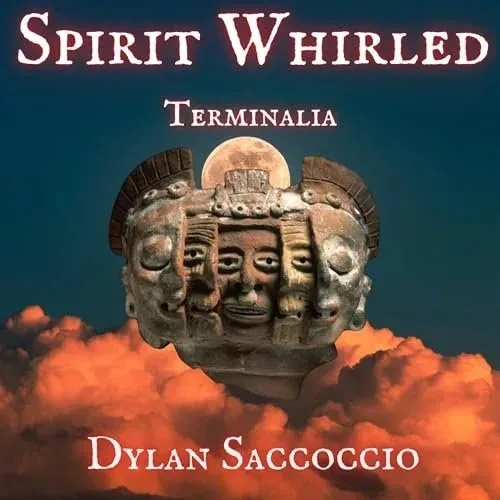
New to Audible? Activate your free trial and use it to listen to one of my audiobooks. Amazon Prime members get 2 free audiobooks during trial. Use your free trial to try Spirit Whirled.
LotusWei provides amazing and transformative plant essence elixirs, using one of nature's most gentle and beautiful elements: the flowers themselves. Led by founder Katie Hess, LotusWei supports customers with diverse products that operate on homeopathic principles and energetic resonances. I use LotusWei Elixirs to give me an edge with psychic & energetic sensitivity, discernment, and life force coherence. In other words, LotusWei Elixirs help me be a better podcaster and Biofield Tuner. Benefits accumulate over long term use!
Clive de Carle has spent decades researching high-quality natural health essentials, from magnesium and fulvic minerals to iodine, selenium, and vegan-sourced vitamin D. His supplements are formulated with a focus on bioavailability, so the body can actually absorb and use what you're taking rather than letting it pass through unused. It's a simple, no-nonsense approach to filling the nutritional gaps most modern diets leave behind.
Melissa Kupsch is the Australian homeopath behind RMDY Collective and RMDY Academy of Homeopathy, and one of the clearest voices I know for homeopathy as true energy medicine. Her remedies work on the resonance principle, like cures like, where a matching frequency from nature is shown to the body so the vital force can recognize the distortion and resolve it. When Melissa joined Kyle Denton and me on InnerVerse, we explored the premise that spirit precedes form, and homeopathy demonstrates that principle as plainly as anything I know. RMDY makes quality remedies and first aid kits accessible, prepared with real care for who makes the medicine and how.
George Wiseman is the inventor of the AquaCure AC50 and founder of Eagle Research, where he has spent decades developing hydrogen and oxygen (Brown's gas) technology for health and home use. He has appeared on InnerVerse multiple times to talk about hydrogen as a macronutrient and EZ water.