The Horsemen vs. the Dark Serpent Mothers of Wisdom w/ LC, Mario & Slick









Tonight the Horsemen ride to war against the inverted gnosis of Nag Hammadi literalism. Along with LC King, Slick Dissident and Mario Garza, I will be presenting the case that the creation mythos of Cathars, Gnostics, and many modern "truthers" is in fact a fairy tale based on astrotheology and priestly pun-craft. Buckle up.
 Plus+InnerVerse Plus+
 InnerVerse Plus+
Hear every full episode
Every extended episode, the complete Plus+ archive, premium video and a private podcast feed for your app.
Cancel any time.
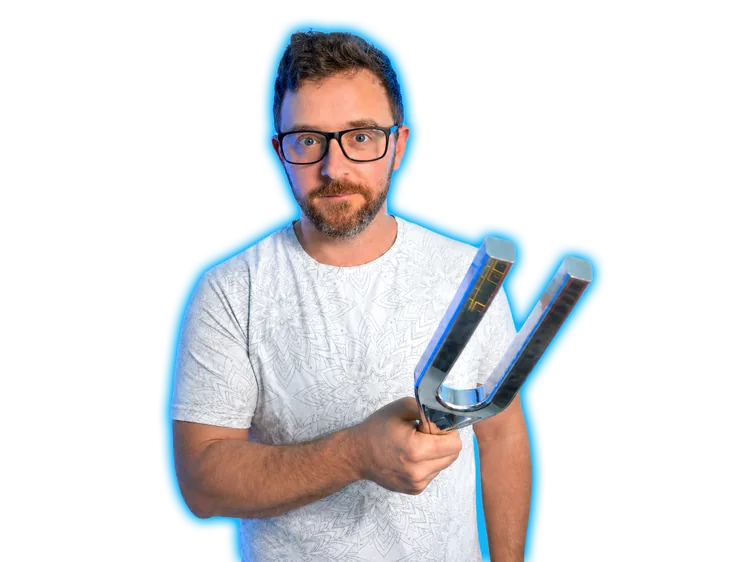
Get tuned with Chance
Tuning forks find where energy is stuck in the field around your body and bring it back into flow. Sessions over Zoom, recorded for you to keep.
30 Minute Consultations
Have something to look at, or looking for guidance? We can consult oracular tools, read your chart, or just talk through whatever you choose.
In this episode
Core themes
Pop Culture Gnosticism as Hyper Reality
Chance opened by arguing that popular Gnosticism, from The Matrix to Final Fantasy VII, treated reality as a prison because people judged the world through a media filter. He read an 1823 passage from Godfrey Higgins warning against metaphysical absurdities and a Baudrillard summary of hyperreality. Mario compared religious texts to maps that people trust more than the land, and Lucas argued that splitting science from spirituality produced the same disconnected construct. Chance added that scripture, interpretation and re-interpretation formed a copy of a copy of a copy.
Constellation Writing and Priestly Puns
Chance presented the idea of lumashi, constellation writing, which he credited to an academic scholar of Mesopotamian astrotheology introduced to him by Gabe. He claimed ancient priest astronomers derived history from the interplay of star patterns and wordplay, and that conquering rulers used it to hand people a divinely approved past. Chance cited Rome's Troy story and the Arthurian round table as examples. One panelist observed that a text with no teacher or oral tradition invited misreading, and Chance warned that treating an allegory as literal history repeated the conquerors' move.
Victim Mindset and the Loosh Farm Question
Asked for a quick take on what Gnosticism meant, the panel split into personal angles. Gabe described a battle line between the individual and the collective. One of the hosts argued that no layer of victim consciousness runs deeper than believing reality is a loosh farm with nothing good in it. Mario described his own positive outlook, used a fish hatchery analogy to explain why the idea still intrigued him, and said he saw the demiurge and archons as metaphor. Near the end of the show, Gabe called Gnosticism hard core honesty and compared Gnosis to the song of Sisyphus.
Decoding Nag Hammadi, Sophia, and the Demiurge
Chance broke the name Nag Hammadi into roots he read as serpent, watcher, black and mother or maker, calling this his own interpretation. He noted the translation they used came from a project funded by UNESCO and remarked that this coincided with the creation of the CIA, echoing a link Gabe had raised earlier about the 1947 public release. Chance traced Sophia to wisdom and flowers, read the demiurge as a subordinate workman through Webster's 1828 dictionary, and argued Eve and YHVH shared a name. Mario connected Sophia and the demiurge to Virgo and Mercury.
Geometry, Kabbalah, and Trinities
Lucas walked the panel through the vesica, claiming it produced the geometric, harmonic and arithmetic means and the musical ratios behind sevens and twelves. Chance mapped the Gnostic aeons onto the Kabbalistic tree, arguing popular Gnostics misread emanations, and Mario noted Malkuth as the lowest sphere and linked it to the earth. Chance then listed Trinities from Brahma, Shiva and Vishnu to Adam and Noah, while Gabe closed by suggesting the archons might simply be numbers that cannot be broken.
Quotes
“I do think that it's inverted whenever we take scriptures that are astrotheology and try to make them into something literal and historical, which is, we're taking a swing at something that's big going on for millennia. As long as we have such a thing as history, and the farther you go back, the more it's diluted with mythology. And the more obvious it is as such.”
“Their public release date corresponds within a week of the CIA. So we are talking about that incredible pressure point, that nexus point, right there from 46, but particularly 47. And in the conspiracy culture, when you say the number 47, everybody's fireworks are going off in their heads.”
“People who talk about this never actually read this text. That's the other thing. I feel like it's a big echo chamber of like one interpretation was injected into the conversation sphere and it's just been bouncing around in a telephone game ever since.”
“You get this idea of what reality is from your media, whether it's CNN or fiction. Oh wait, that's the same thing. And then because the actual physical reality doesn't conform to this view, this filter, this lens, this astral realm that you've pulled over your eyes, the wool, you then see the real world as unreal, must be a simulation, must be a fake, must be a prison.”
“I say that science and spirituality, one and the same thing, they should teach you both. If you're looking at science, it should teach you about spirituality and vice versa. So if they're disconnected, then you get this what you're calling hyper reality or not reality at all, and a construct.”
“And we've seen it ever since, whether it's Rome claiming the history of Troy, which means Trinity and the whole story is clearly mythology, but they call it history, or following that the 12 emperors of Rome, that's the 12 signs of the zodiac, or how England got the history with King Arthur given to them with the 12 knights of the round table.”
“This right here is crucial, and it's specifically in this text that Eve creates Adam. That's the same as in some aspects of the Targums as well. God didn't create Eve out of the rib of Adam. Eve created Adam out of her own virgin birth.”
“I always looked at it almost just kind of like, if this is a loosh type situation, on one hand I can almost see the fact that, it's like if you take a fish hatchery and there's fish in the hatchery and one of the fish described to the other fish what the whole setup was with this hatchery, they would think that fish is nuts, right?”
“Chance, I think you're totally right that it goes back to the stars. And I think that you're going to have more answers, probably studying star maps than you are, you know, studying actual maps or other maps, if you will.”
“From that initial vesica, then you get three sort of aspects that are born out of it. And these are basically the geometric mean, the harmonic mean and the arithmetic mean. So they're like the parts of that initial first virgin, I guess.”
“I think that Gnosticism is just freaking hard core honesty. It's just Stoics speaking as much truth, as powerful of truth as they can, and keeping it alive forever. And it hurts. It sucks to find out that things are not all peachy keen, like the collective wants you to go along to get along.”
“I think of Gnosis, it has the word sis, makes me think of Sisyphus. G-N-O-S-I-S in reverse is the sis song. So Gnosis is the song of Sisyphus. And yeah, it sucks. We're here, we're pushing that rock up all the time constantly.”
“This was way more profound and significant than I expected it to be. I didn't have many expectations, but honestly, dude, you killed it, and you're making me think about a lot of things. I am reevaluating things. This makes a lot of sense, the Kabbalistic Gnostic connection. I don't think it can really be denied.”
Gabriel, known on air as Slick Dissident, co-hosts InnerVerse's Vibe Rant show and is a longtime recurring guest on the podcast. He teaches occult symbolism and tarot on his YouTube channel, ranging across the Major Arcana, the esoteric Enneagram, mythology and archetype, mystic linguistics, and the symbolism hidden in popular film. He is best known for Tarot-tories, his own system mapping the 22 Major Arcana and zodiac archetypes onto the geography of the United States.
See all Gabe episodes→Kyle and Serena Denton are community herbalists creating wild-crafted and organic plant medicines out of Milwaukee since 2015. I have used their teas and tinctures on an almost daily basis for years now. Kyle is a great friend of InnerVerse and has appeared on the channel more times than I can count. These products work, not in the allopathic "pharma-medicine" way, but in a terrain-support, consciousness bolstering plant-teacher sort of way.