
The Journey Out of Hip-Hop Hypnosis with Al Dawg









Author and eternal athlete Al Dawg joins Vibe Rant to talk about his new book, The Sharter: A Millennial Journey Out of Hip-Hop Hypnosis. What has the psychological operation known as gangster rap done to the younger generations, and how can comedy help us pull the mentally enslaved back from the hellish simulation that is modern music?
 Plus+InnerVerse Plus+
 InnerVerse Plus+
Hear every full episode
Every extended episode, the complete Plus+ archive, premium video and a private podcast feed for your app.
Cancel any time.
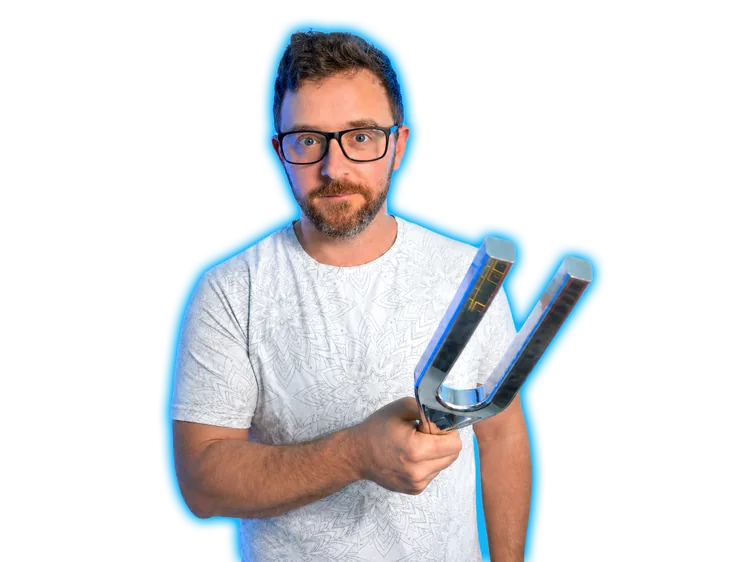
Get tuned with Chance
Tuning forks find where energy is stuck in the field around your body and bring it back into flow. Sessions over Zoom, recorded for you to keep.
30 Minute Consultations
Have something to look at, or looking for guidance? We can consult oracular tools, read your chart, or just talk through whatever you choose.
In this episode
Core themes
Hip Hop Hypnosis as Social Engineering
Al Dawg described hip hop hypnosis as the state of absorbing a fraudulent culture without question, and he argued that gangster rap is not organic but engineered from the top down. He pointed to the term baby mama, which he said entered everyday speech only around 2003, as an example. He also suggested that 50 Cent and G-Unit played a role in soldiers' mindset during the Iraq war, and floated his belief that the original Eminem was replaced after 2008. Chance Garton said he was an outside observer of the genre and recognized the pattern from friends and family.
The Secret Meeting and Opiate Advertising
Chance read aloud from a passage in The Sharter based on an anonymous essay about a closed door music industry meeting in 1991. In that account, labels invested in private prisons and pharmaceutical firms, so rappers would be used to advertise opiates in lyrics and videos. Al Dawg said he satirized and exaggerated the essay, and noted that the author was never identified. He argued that Lil Wayne normalized lean for millions of viewers, and that rappers act as mascots for drugs. Chance said he had never read the essay before, and Al Dawg stressed that he had exaggerated it for the novel.
Humor as the Way Out
Al Dawg explained that he began with a research project on rapper deaths but chose satire instead, saying he would rather snap people out of hypnosis through humor than bring more hell to readers. He argued that fiction can be more truthful than nonfiction and that humor is a survival mechanism. Chance Garton added that parables and allegory convey truth better than being told, since people must ask the questions themselves. Al Dawg said his next book, about a surf assassin, continues his comic crime lane, and he welcomed blunt feedback.
Demons, Ritual and Reflection
Al Dawg said XXXTentacion once told a live stream that he had demonic energy, and he argued that a Faustian bargain for fame opens a portal to the demonic realm. He also described recurring rapper deaths as possible rituals, though he questioned what role management and money played. Chance Garton offered another frame, arguing that the demonic realm is the disassociated human soul without a body, and that healing our own inner division weakens outside influence. Al Dawg replied that he pictures demons as flies around feces and prefers creating his own symphonies.
Pods, Screens and Reclaiming Attention
Al Dawg argued that the iPod made people's appetite for music insatiable, and Chance Garton noted that earbuds make everyone their own pod person. Al Dawg said he now studies Russian in his car instead of replaying lyrics, and that lessening his music intake made songs sound better. They compared television worship in boomer households to phone use, with Al Dawg calling the iPhone almost too good, a vice that should ultimately be used as a tool. Chance Garton suggested treating technology as magic and noted that a dark screen is literally a mirror.
Quotes
“I think that snapping a generation and the generation younger than us out of hip-hop hypnosis via humor is probably one of the most important things that we can do.”
“A really big moment for me was putting on Lil Wayne's The Carter 5, because I grew up a huge Lil Wayne fan. I put it on and I'm sick to my stomach, dude. I have a physical reaction.”
“I realized I knew all the words to that Rolling Stones song as well. And now if I think about all the hip hop lyrics that I know, what a big waste of time. So instead of listening to hip hop in my car, I study Russian.”
“Let's talk about a term like baby mama. That term wasn't used in 1999. That's an example of hip hop culture that's totally inorganic, not grassroots, very top-down culture affecting the populace.”
“I'd rather snap people out of hip hop hypnosis via humor, via this fiction tale. You can take the truth and be more truthful with fiction, in my view, a lot of times more so than nonfiction.”
“I think that humor is a survival mechanism. It's not a coincidence that people that are funny often have really interesting lives.”
“Once you see it, you can't unsee it. You see that 20 year old kid bumping in his Acura, you know what I mean? That kid's under hip hop hypnosis.”
“Say you had a knowledge of chakras or biofield anatomy, you could write a character who keeps rolling his left ankle but also has crippling anxiety. You wouldn't have to say that's a biofield thing, but it would just feel accurate to people.”
“The next level up is to realize the parable, the allegory, is way more effective to convey truth than any other way of just telling it how it is. You can't have authority hand you truth.”
“If you got something on your face, like a piece of broccoli, and people don't say anything, I'm suspect of those people. I'm greatly appreciative of the friend who points something out and says, hey man, that's broccoli on your face.”
“Am I going to voluntarily spend weekend after weekend after weekend working on a book? Absolutely. It's torture, but I love it.”
“I think that's the new model, the teach as you learn model. That seems to be where the world is going. I think that's a very honest way to operate.”
“If you stay under hip hop hypnosis, you're going to get smothered by Lizzo. That's the final message I have. So read The Sharter or you're going to get smothered.”
Kyle and Serena Denton are community herbalists creating wild-crafted and organic plant medicines out of Milwaukee since 2015. I have used their teas and tinctures on an almost daily basis for years now. Kyle is a great friend of InnerVerse and has appeared on the channel more times than I can count. These products work, not in the allopathic "pharma-medicine" way, but in a terrain-support, consciousness bolstering plant-teacher sort of way.