What Really Makes Kids Sick? Dawn Lester on Terrain Parenting









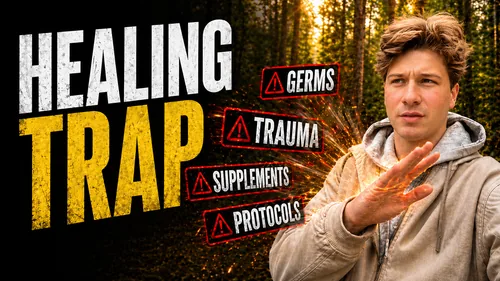
What really makes kids sick? Dawn Lester returns to InnerVerse with Chance Garton to explore terrain theory, children's health, and her new book, A Fresh Look at Childhood Illness.
Could a different understanding of a child's environment change how we parent? From nutrition and emotional safety to family relationships, the mind-body connection, and biofield tuning, we explore Dawn's perspective on what shapes childhood health. Chance brings his own experience as a father into a conversation about listening, boundaries, and the beliefs we pass down. When a child pushes back, what might we be missing, and what might we need to unlearn?
 Plus+Full episode · 2h 10m
 InnerVerse Plus+
Hear the full 2h 10m episode
52 more minutes of this conversation, plus the complete Plus+ archive, premium video and a private podcast feed for your app.
Cancel any time.
Get tuned with Chance
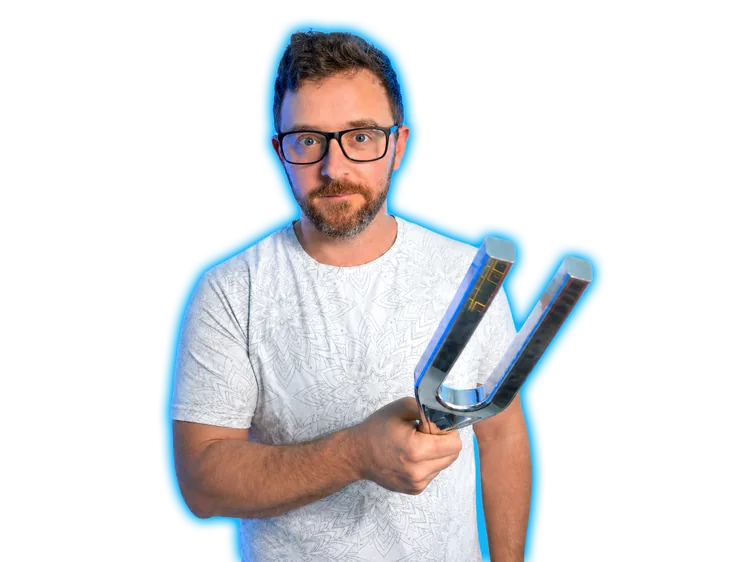
Tuning forks find where energy is stuck in the field around your body and bring it back into flow. Sessions over Zoom, recorded for you to keep.
30 Minute Consultations
Have something to look at, or looking for guidance? We can consult oracular tools, read your chart, or just talk through whatever you choose.
In this episode
Core themes
Trading Fear for a Fresh Look
Two years after her last visit for What Really Makes You Ill?, Dawn Lester returns with A Fresh Look at Childhood Illness, her first solo book, carrying a foreword from Dr. Marizelle Arce. Dawn argues that parents are conditioned to read every sniffle as a sign that something is wrong, trapped in a narrow medical chain of symptom, disease, medicine and recovery. She wants this information in the hands of young people before conception, since calm, informed parents raise calmer children, while anxious parents feed a loop of agitation that babies quietly absorb and reflect back.
What Terrain Means in Everyday Childhood
Chance frames the terrain as nourishment, environment, exposures, and the most overlooked layer of all, thoughts, emotions, relationships and safety. Dawn defines the terrain as everything we are exposed to, steering clear of the diet wars in favor of natural, minimally processed food, while warning that rigid, anxious eating rules carry unhelpful energy of their own. She cautions against forcing food on children, a lesson she notes Tom Cowan learned the hard way, and Chance describes letting his daughter set her own appetite and pace with solid food, even as relatives and experts expected otherwise.
Why Dawn Reads Symptoms as Cleanup
Chance reads a passage from Dr. Marizelle Arce's Germs Are Not Our Enemy describing sneezing, coughing, fevers, rashes and vomiting as signs of removal and rebalancing toward homeostasis. Dawn argues that the terrain paradigm shows a body that knows what it is doing, pointing out that mainstream sources themselves describe most so-called infectious illnesses as mild and self-limiting. Rather than suppression, she favors cuddling, calming music, homeopathy and tuning to ease discomfort, while Chance separates short acute episodes from recurring chronic patterns, which he says are where symbolic biofield reading earns its keep.
The Biofield and a Tuning Fork at Home
Dawn credits Eileen McKusick with helping refine her final chapter, describing a toroidal field showing that who we are does not end at our skin, and invoking the Kybalion's first principle that everything is mind. Chance offers his own refinement, calling the body the visible expression of mind and the biofield its invisible part. From years of tuning, he describes linking nutrition and nurture to the mother archetype, then shares how a weighted sonic slider on his newborn daughter's left abdomen, the zone he associates with frustration versus satisfaction, settled her lingering upset within about a week.
Listening, Bedtime, and Breaking Patterns
Drawing on Gabor Maté, Dawn argues that unheard children reshape their natural personalities simply to stay safe, and she prefers guidelines and boundaries to rigid discipline. Chance describes how society reverses the order, making children sacrifice their needs for parents, then tells how his wife helped him drop a bedtime standoff, letting their daughter wander for five minutes until the meltdowns stopped entirely. Dawn names the generational patterns this breaks, and the closing turns to Thomas Szasz on chemical imbalances and William Osler of Johns Hopkins, who held that a physician should teach people not to take medicine.
Quotes
“Parents are generally made to be scared of what's going on with their children.”
“Your body is the visible expression of your mind. And then your biofield is the invisible part of your mind.”
“They don't come out as blank slates that you parents have to fill. They are beings in their own right.”
“It should be the parent putting aside what they want or need for their child.”
“Who we are doesn't end at our skin. We have this energy field around us.”
“The natural tendency of the human is to rise, to grow, to expand, to evolve. And the only reason that that doesn't happen is interference.”
“It isn't a question of will. It isn't a question of who's the stronger one, who's going to impose will.”
“The real doctor is the one who teaches you not to take medicine.”
Dawn Lester is co-author (with David Parker) of What Really Makes You Ill?, which challenges conventional germ-theory explanations of disease; on InnerVerse she discussed alternative theories of illness and the consciousness dimensions of a healing crisis.
See all Dawn episodes→Kyle and Serena Denton are community herbalists creating wild-crafted and organic plant medicines out of Milwaukee since 2015. I have used their teas and tinctures on an almost daily basis for years now. Kyle is a great friend of InnerVerse and has appeared on the channel more times than I can count. These products work, not in the allopathic "pharma-medicine" way, but in a terrain-support, consciousness bolstering plant-teacher sort of way.