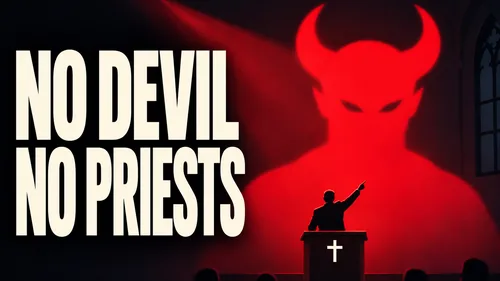
Why Would the "Right" Cancel Plato? Chance Garton on Dawn of Discernment | Ep. 25: Balance is Key









I recently joined Dawn Lester, co-author of "What Really Makes You Ill," for an engaging and highly philosophical exploration of the schismatical schematic underlying the "right, left, right, left" march of tyranny's boots. This was inspired by the recent banning of Plato by a Texas university, and the consideration of what we can learn from Plato's esoteric teachings.
 Plus+InnerVerse Plus+
 InnerVerse Plus+
Hear every full episode
Every extended episode, the complete Plus+ archive, premium video and a private podcast feed for your app.
Cancel any time.
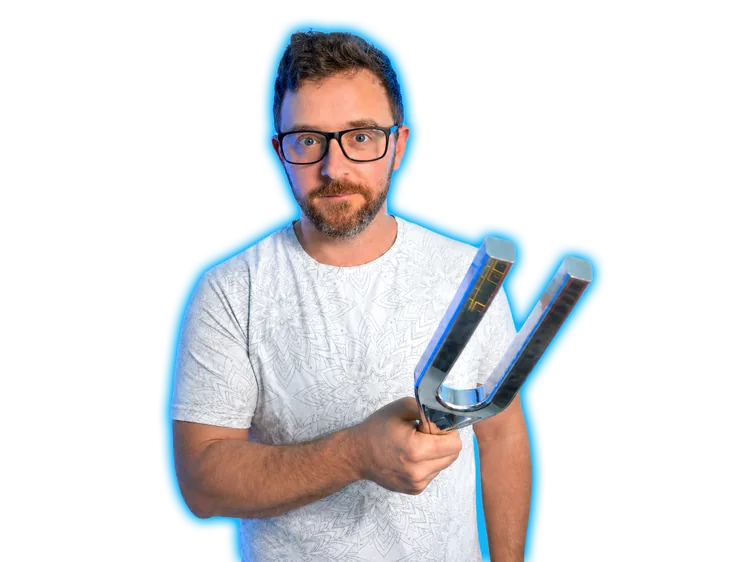
Get tuned with Chance
Tuning forks find where energy is stuck in the field around your body and bring it back into flow. Sessions over Zoom, recorded for you to keep.
30 Minute Consultations
Have something to look at, or looking for guidance? We can consult oracular tools, read your chart, or just talk through whatever you choose.
In this episode
Core themes
Balance as a Thread Through Chance's Work
Chance Garton said the word that kept returning across his tuning practice and his podcast was balance. He described nature as self-correcting and used kudzu as an example of a plant that he said found its place in the local environment over about thirty years. He added that humans differ because they have free will and can choose balance or not. Chance described Biofield Tuning as balancing energy that he said gets stuck to the left, right, front or back instead of circulating through the toroidal field, and he said belief systems keep that energy off balance. Dawn Lester responded that the aim was coherence and harmony.
Plato, Atlantis, and Polarization
Chance said a news article about a Texas university restricting Plato sent him back to the Timaeus and Critias, and he noted he had not verified the story. He argued that Atlantis comes from a single ancient source, that Plato used a Greek word for a sea rather than an ocean, and that the tale reads as allegory instead of literal history. Chance described the clash of the Atlanteans and the early Athenians as a warning about polarization, one society honoring descent from the gods and the other believing in ascent. Dawn Lester said she saw the same problem in being offered only two choices.
Governance and Personal Responsibility
Dawn Lester asked how governance would work, and Chance answered that he did not think there was a final answer, because he saw balance as a continual act. He said he once leaned toward anarchist ideas and lost interest as he became less dependent on certain systems. Chance described government as a service people agree to use, and he said the only change within reach was reducing personal dependency and improving one's own morality so that it rippled outward. He also gave his reading that Plato preferred traditional governance with philosophy kept private. Dawn said she agreed that people should apply these ideas in their own lives.
Reading Sacred Stories Beneath the Surface
Chance said many religious origin stories were meant as allegory, and he described astro-theology as a way to see them differently. He said ancient priests read stories from patterns in the sky and found wordplay across languages, which they treated as divine revelation. As one example, Chance said he read the first Hebrew word of Genesis as meaning something like by wisdom, and he noted that Elohim carries a plural form. He also said English translation loses meaning. Dawn Lester remarked that many religious people followed their stories as literal history. Chance presented all of this as his own reading, offered with room for debate.
Tuning, Cards, and Reading Between the Lines
Chance described biofield anatomy as a language rather than a literal map, comparing it to the many systems of astrology that some people found accurate. He said a tuner acts as a translator and expected each tuner to develop a personal dialect over time. Chance also described his Oracle card readings as combining tarot, the I Ching and other symbol systems, with attention to the space between cards rather than any single card. He said he did not use them for fortune telling but to help people see what they already knew. Dawn Lester said she valued that every person and every session was individual.
Quotes
“With nearly a decade of experience in podcasting, Chance has developed an effortless ability to maintain a positive vibe in conversational flow states. His consistent efforts at researching language, symbolism and mythology fill his conversations with fresh insights”
“It started with me having the realization that I come alive most, maybe more than any other part of life, when I'm having a deep conversation about the philosophy of life.”
“There's never a sure footing whenever you're going your own way, blazing your own path into the unknown. And so there is required of you a great trust in life and in your mission and in your purpose and in the support from unseen forces along the way.”
“I tend to look at the biofield anatomy as an intellectual scaffolding or a language through which I can communicate with a body, my body to their body, so to speak.”
“We are all individual and we could be so fixed on the idea that we have to learn a system and we have to work according to that system instead of saying, okay, well, that's a general understanding of how it works.”
“In the way that I practice readings with people, it has nothing to do with telling them the future or even answering a specific question for them. I don't ask them anything before we go into it about what they wanna know or what they're wondering about.”
“It's good to have that open attitude when you're approaching something like an oracle card reading, or something else, to say, okay, be open to the message that comes back because the message is from yourself to yourself.”
“If you wanna connect with the creator or source, you're gonna have to get comfortable with making stuff up because that's what the creative force is, the generative power, it's making it up.”