This Is Not a Simulation | Chance Garton on Episode 97 of Here For The Truth Podcast









I joined Joel Rafidi and Yerasimos on Episode 97 of the Here For The Truth podcast to talk through my research on simulation theory and New Age Gnosticism. We looked at the Nag Hammadi texts, the Demiurge and the Archons, and the language and astrotheology behind them.
 Plus+InnerVerse Plus+
 InnerVerse Plus+
Hear every full episode
Every extended episode, the complete Plus+ archive, premium video and a private podcast feed for your app.
Cancel any time.
Get tuned with Chance
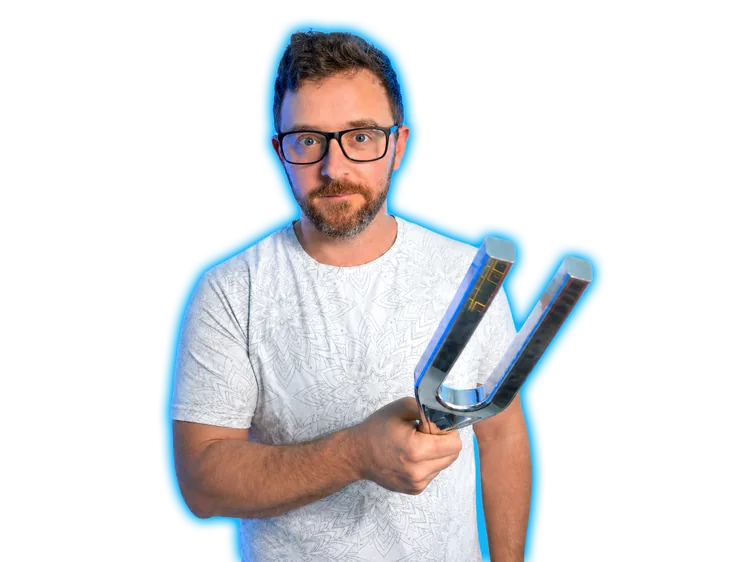
Tuning forks find where energy is stuck in the field around your body and bring it back into flow. Sessions over Zoom, recorded for you to keep.
30 Minute Consultations
Have something to look at, or looking for guidance? We can consult oracular tools, read your chart, or just talk through whatever you choose.
In this episode
Core themes
Refuting Simulation Theory and New Age Gnosticism
Chance described refuting simulation theory as one of his bigger life missions, calling it the materialist version of an old prison-world philosophy that keeps resurfacing. He argued that many conspiracy researchers followed breadcrumbs to the conclusion that the world is illusion, and he blamed lazy research built on secondhand interpretation of texts. The hosts asked him to define his terms, and Chance described transhumanists, programmers, and spiritual seekers who read growing synchronicities as proof of a fake world. He credited Neville Goddard for the view that consciousness comes first and expression follows.
Constellation Writing and the Flood Story
Chance described the Sumerian and Akkadian term Lumashi as constellation writing, and said priest astronomers recorded history in the sky. He offered it as his opinion that conquerors had hostage priests place kings and events among the stars, so the sky became a record. Chance compared Noah with the Sumerian flood hero Atrahasis, then pointed to Orion, the Argo Navis, a dove star, and a raven constellation as the flood story's components. He recommended a planisphere and John McHugh's book The Celestial Code of Scripture.
Etymology, Letter Swaps, and Nag Hammadi
Chance used the name Nag Hammadi to demonstrate his language keys. He read Nag as serpent, Ham as dark, and Mad as mother or maker, and he said letters such as L and R, or D and K, interchange between languages. He applied the same method to Sophia, Pistis, Adonai, and Archon. A host noted that Pistis means belief in modern Greek, and Chance agreed it connected to epistemology. He also said the most popular translation of the texts was prepared by UNESCO, calling that problematic, and stressed he made no claim that the doctrine was accurate.
Victim Posture, Plant Medicine, and the Body
Chance said that believing the world is a prison hands a person the ultimate victim posture, and that escape practices can turn selfish. When the hosts raised plant medicine, he called it a tool that is neither good nor bad, and described psilocybin and Qi Gong as helpful in his own path. A host described sobriety and somatic bodywork as his biggest changes. Chance also said he believed the archons are human, and he separated subjective experience from consensus reality. He described biofield tuning as a language for communicating with the body.
The Trinity, the Destroyer, and the Demiurge
Chance described emanations and the trinity as an ancient doctrine of creator, destroyer, and regenerator, which he linked to the sun's seasons and to the vesica piscis. He offered his opinion that the devil idea arose when people split the destroyer from the regenerator and treated it as a separate being. He read a passage about Eve from the Origin of the World text and traced the name Maya through several mythologies. Yerasimos remarked that the three people on the call formed a trinity, and Chance answered a Tao Te Ching line about three with a statement attributed to Hermes, which he linked to the sun's figure eight path.
Quotes
“Simulation theory is the pure materialist version of this philosophy. And it needs to constantly be refuted, nipped in the bud.”
“They say that there's an oral tradition and things weren't written down. That's not exactly true. It was up there. That was their book.”
“In terms of a religious system, in terms of a system of spirituality, the benefit and the use of it is in how it can help us understand the truth of nature and what nature does. And that's actually a singular truth. There is actually just one nature.”
“If you believe that the world is a false prison, punishment, loosh farm, that's a word they use for it. They say the world is just here to be looshed by higher beings. Then you've given yourself the ultimate victim posture.”
“There is energy harvesting, there is negative forces at work, there are archons, but my claim is that the archons are human.”
“There's a bazillion different languages that we can learn to access the knowing and wisdom contained within the body that is the fractal microcosm of the all. It's really crucial to learn at least one of these languages because it can totally transform your life.”
“Imagine really like your foundational belief is my body's a prison, that it is something that I need to transcend. Are you going to take care of that body?”
“Pretty much every one of our podcasts is a trinity. When you think about Joel, myself and you right now, there's this single trinity that goes on.”