Baal: The Universal Priesthood of Bull, Lord, and Bullion | Bible Etymology Decoded









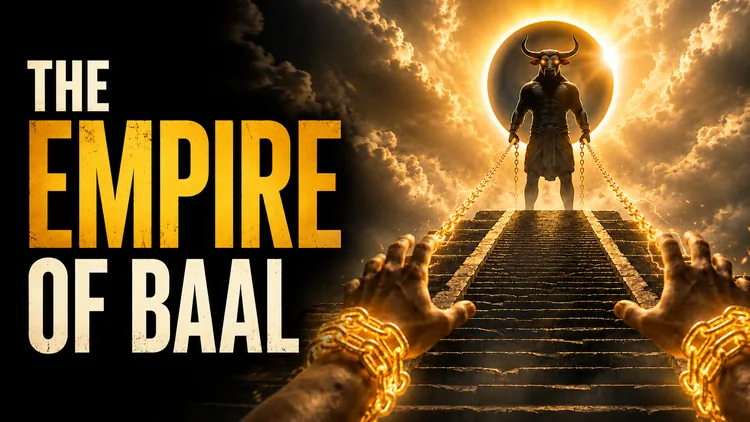
The name Ba’al is feared by Abrahamic religious types, and that aversion has concealed a linguistic key that connects systems of power, priesthood, and rulership across time and history, worldwide.
In this episode of Inner Whirled, we trace the name Ba'al through languages, mythologies, and historical systems, revealing how a single root appears everywhere: Baal, Bel, Bol, Vul, El, Allah, Adonai, Jupiter, Adonis. From ancient temples and pyramidal structures to the gilded cage of modern feudalism, we demonstrate how Ba'al reveals the blackest form of magic practiced by the ruling classes of all ages, not an obscure Old Testament character but a universal pattern of authority embedded in language, religion, and society itself. In Part 2 we move from symbolism into structure. Ba'al begins to appear not just as a god, but as Dharma, justice, and law itself, embodied in the bull that upholds cosmic order. How does that symbol translate into priesthoods, papal power, and the systems that claim authority over all humanity? From the Triple Crown of Ba'al to papal bulls and modern banking, we trace a continuous pattern where religion, law, and debt converge into one system. If currency is debt, and debt is ownership, are we participants in the system, or its property?
 Plus+Full episode · 2h 57m
 InnerVerse Plus+
Hear the full 2h 57m episode
82 more minutes of this conversation, plus the complete Plus+ archive, premium video and a private podcast feed for your app.
Cancel any time.
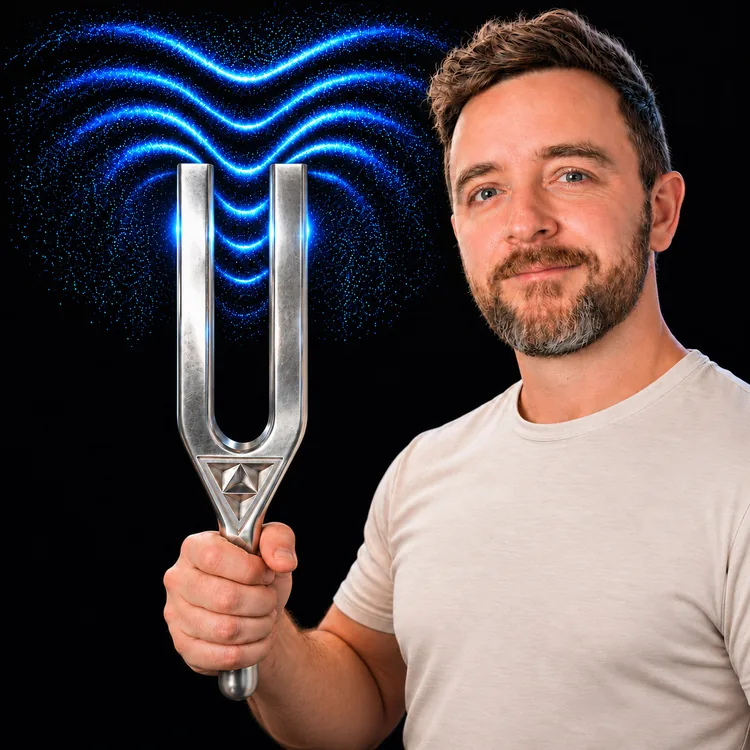
Get tuned with Chance
Tuning forks find where energy is stuck in the field around your body and bring it back into flow. Sessions over Zoom, recorded for you to keep.
30 Minute Consultations
Have something to look at, or looking for guidance? We can consult oracular tools, read your chart, or just talk through whatever you choose.
In this episode
Core themes
The Double Doctrine Unveiled
Chance opens by quoting Bishop Warburton, writing in 1738, on the twofold doctrine running through Greek philosophy, one external and vulgar, one internal and secret, then turns to John Toland, the Irish philosopher who coined the word pantheism and argued in Clidophorus in the 1750s that esotericism is more in use among the moderns than among the ancients. Both hosts treat that admission as a key, noting that it lands within a few decades of the first United States central bank, and that writers who spoke too plainly, Robert Taylor among them, were thrown in jail for it.
Boogeyman Behind the Veil
Chance argues that Baal works in the Old Testament as a catch-all label for every deity outside the God of Israel, freighted with idolatry and child sacrifice until, as he puts it, saying Baal to a modern Christian is the same as saying Satan. He cites Hosea 2:16-17, where the names of the Baalim are taken out of her mouth, and reads the Baphomet figure circulated by Eliphas Levi as a similar screen, one that discouraged anyone from examining Templar banking and trade networks across Europe and the Middle East. Dylan adds that Baphomet is a veiled spelling of Muhammad.
One Letter From God
The core of the episode is philological. Dylan notes that B and V are the same letter in Hebrew and in Greek, so Baal, bull and vul collapse into one word, while Chance builds from baba and abba, the Indian honorific for a holy man or guru, toward Allah, concluding that Baal reads as father God, the Godfather. Together they run Adonai and Adonis, Latin bellum and bellus, Venus and Bellis, rabbi from the root rav meaning master, Arabic Rab, Thor and Taurus, Valhalla, par as a Hebrew word for bull, and bullion, proposing B to L with R, V and P substitutions as the thread.
Mount Meru Encompasses Everything
Chance rehabilitates Colonel Francis Wilford, a contributor to Asiatic Researches whose Wikipedia page calls his work fanciful, sensational and highly unreliable, alongside Sir William Jones, who wrote that either the first eleven chapters of Genesis are true or the whole fabric of our national religion is false. From volume ten, essay six, they read Wilford on Meru with its three peaks and seven steps, on the Zohar passage cited by Basnage in his History of the Jews describing seven earths, and on Mount Moriah, then survey stepped pyramids from the Mesopotamian ziggurat to Mexico, Japan and the Cahokia mounds.
Tombs of Belus
The closing stretch follows Wilford's claim that Buddhist monuments are temples of Bala or Balas, a title of Buddha sounding like bellows in Greek and Bellis in Latin, and that the tomb of Belus at Babylon carried a chapel on its summit according to Herodotus, three according to Diodorus Siculus. Chance links the scattered limbs of Osiris, fourteen pieces that Plutarch read as the moon's fourteen days, to Buddhist relics and to the Shroud of Turin, then to Adam entombed in a vault called Alcanuz, the three crosses of Golgotha, and the papal bulls promised for part two.
Quotes
“Baal is literally the greatest link in the chain for the eternal and universal empire that has shackled humanity in feudalism for thousands of years.”
“That's the problem with all three of these Abrahamic branches of religion and why it's worth exposing is because the world's being constantly brought into war.”
“This is the blackest of all magic that's being used against you and we're trying to give you the tools to defeat it.”
“And indeed God is called Lord, which is the meaning of the word Baal in the Old Testament over 6,000 times.”
“Imagine a puzzle with 10,000 pieces and a lot of them fit with multiple other pieces, not just one other piece. And half the pieces are irretrievably lost.”
“Feudalism is a system which intentionally equates the ruling class with divinity in the eyes of the commoner.”
“I have lost all hope of this work ever penetrating people in our day.”
“Everybody wants the bad stuff to end, but nobody wants to empower themselves with the knowledge to defeat all the presumptions that are being used to enact the bad behavior.”
Dylan Saccoccio is the author of the Spirit Whirled series, The Real Universal Empire, and the Tale of Onora. After chasing language back as far as possible, he now explores other avenues to prove cultural diffusion of the ancient universal empire of priests, navigators, masons, and merchants. Find his latest of many hundreds of articles on Substack.
See all Dylan episodes→Kyle and Serena Denton are community herbalists creating wild-crafted and organic plant medicines out of Milwaukee since 2015. I have used their teas and tinctures on an almost daily basis for years now. Kyle is a great friend of InnerVerse and has appeared on the channel more times than I can count. These products work, not in the allopathic "pharma-medicine" way, but in a terrain-support, consciousness bolstering plant-teacher sort of way.
The Sonic Slider is the flagship tool behind Biofield Tuning itself, a weighted tuning fork hand-tuned to 93.96 Hz, the twelfth harmonic of the Schumann Resonance, Earth's own natural electromagnetic pulse. Its extended handle lets you glide it smoothly across the face, neck, and body, and practitioners and users regularly report support for relaxation, circulation, and nervous system regulation. It's the same fork Chance uses in his own sessions, and a great entry point if you want to bring this work into your own daily routine.
If you ever wondered where I gained my symbolic and linguistic chops, it was the Spirit Whirled series of books, by Dylan Saccoccio. If you want to keep up with us on our show Inner Whirled, you'll need to do the same work. These books are a value and treasure greater than a college education in comparative mythology and religious studies ever could be. Give yourself the keys of discernment. Listen to Spirit Whirled.
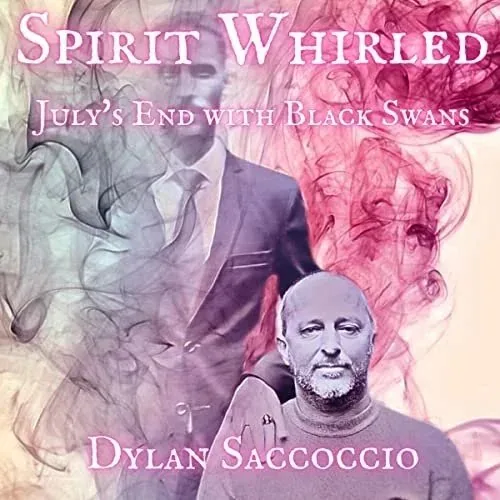
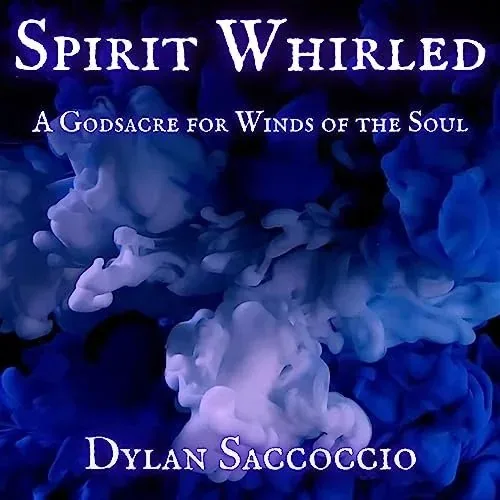
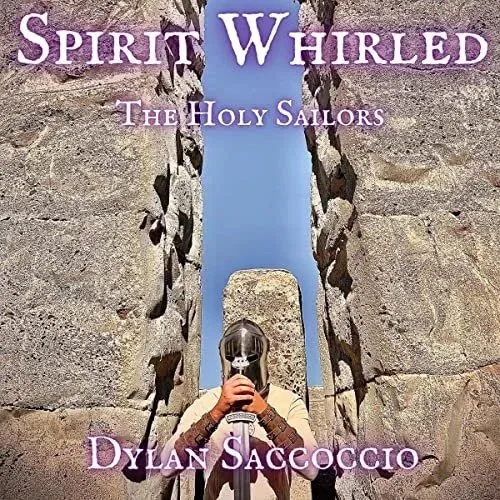
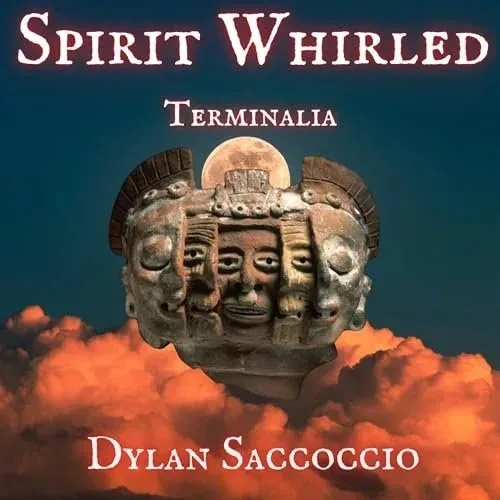
New to Audible? Activate your free trial and use it to listen to one of my audiobooks. Amazon Prime members get 2 free audiobooks during trial. Use your free trial to try Spirit Whirled.
LotusWei provides amazing and transformative plant essence elixirs, using one of nature's most gentle and beautiful elements: the flowers themselves. Led by founder Katie Hess, LotusWei supports customers with diverse products that operate on homeopathic principles and energetic resonances. I use LotusWei Elixirs to give me an edge with psychic & energetic sensitivity, discernment, and life force coherence. In other words, LotusWei Elixirs help me be a better podcaster and Biofield Tuner. Benefits accumulate over long term use!
Clive de Carle has spent decades researching high-quality natural health essentials, from magnesium and fulvic minerals to iodine, selenium, and vegan-sourced vitamin D. His supplements are formulated with a focus on bioavailability, so the body can actually absorb and use what you're taking rather than letting it pass through unused. It's a simple, no-nonsense approach to filling the nutritional gaps most modern diets leave behind.
Melissa Kupsch is the Australian homeopath behind RMDY Collective and RMDY Academy of Homeopathy, and one of the clearest voices I know for homeopathy as true energy medicine. Her remedies work on the resonance principle, like cures like, where a matching frequency from nature is shown to the body so the vital force can recognize the distortion and resolve it. When Melissa joined Kyle Denton and me on InnerVerse, we explored the premise that spirit precedes form, and homeopathy demonstrates that principle as plainly as anything I know. RMDY makes quality remedies and first aid kits accessible, prepared with real care for who makes the medicine and how.
George Wiseman is the inventor of the AquaCure AC50 and founder of Eagle Research, where he has spent decades developing hydrogen and oxygen (Brown's gas) technology for health and home use. He has appeared on InnerVerse multiple times to talk about hydrogen as a macronutrient and EZ water.