Why Herodotus Never Mentioned Rome









The Real Universal Empire by Dylan Saccoccio traces the origins of Western civilization, written language, and ancient priestcraft back to the seafaring Etruscan culture of pre-Roman Italy rather than to Greece, India, or the Levant. This is the first episode of Inner Whirled, a co-hosted deep-dive series on the book and the research behind it.
Topics include the Sanskrit and Indo-European origin debate, the oldest evidence of ancient alphabets and why letter count alone exposes the accepted timeline, the cultural affinity between the Etruscans and the Egyptians, why neither Herodotus nor Thucydides ever wrote about Rome, and the strange absence of ancient Italy from mainstream historical writing. This is a remastered episode originally published March 7th 2024.
 Plus+Full episode · 1h 26m
 InnerVerse Plus+
Hear the full 1h 26m episode
40 more minutes of this conversation, plus the complete Plus+ archive, premium video and a private podcast feed for your app.
Cancel any time.
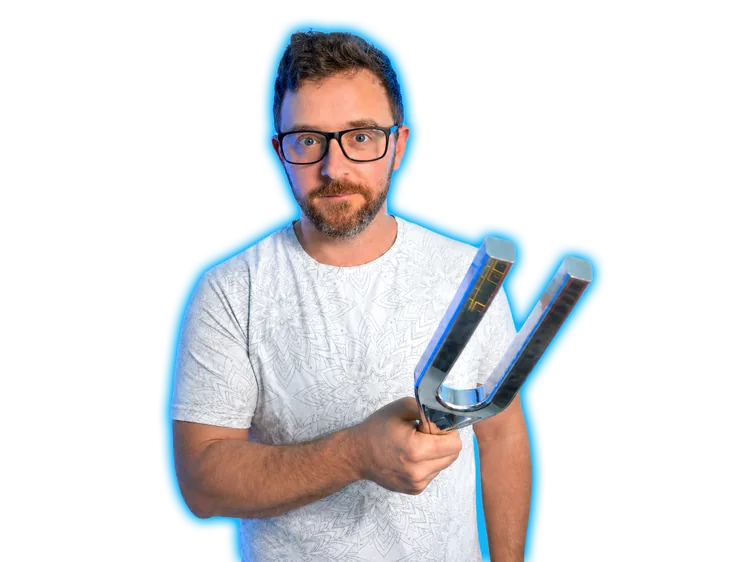
Get tuned with Chance
Tuning forks find where energy is stuck in the field around your body and bring it back into flow. Sessions over Zoom, recorded for you to keep.
30 Minute Consultations
Have something to look at, or looking for guidance? We can consult oracular tools, read your chart, or just talk through whatever you choose.
In this episode
Core themes
A Thalassocracy Built on Receipts
Chance opens by introducing Dylan's new book, The Real Universal Empire, and the two spend the first stretch on method rather than conclusions. Dylan describes crawling through Godfrey Higgins at a page every thirty or forty minutes, taking notes until scattered dots resolve into a picture, and both hosts insist on receipts: if a claim cannot be looked up, it is probably an error. Chance highlights a word he had to look up from the book, thalassocracy, rule by sea power, and Dylan argues the empire they are tracking was exactly that, colonizing coastlines rather than pushing inland.
The Sanskrit Origin Story Inverted
Dylan rejects the standard story that Sanskrit and India sit at the headwaters of European language. He asks how the material traveled when India's priestly classes were barred from crossing those borders, and notes that Sanskrit stayed rule bound rather than corrupted by common use. Chance presses the point with a dating rule the two treat as decisive: alphabets gain letters over time and never shed them, so a script with double the letters cannot be the parent. Dylan adds that India's oldest inscriptions run to roughly 250 BC while Italian artifacts are far older, and calls Indo European a language group nobody can actually produce.
The Third Century Forgery Window
Both hosts argue that the first three centuries of the common era were written backward into place. Dylan points to a marker around 270 AD, roughly when the first Greek writer outside the Jewish mystery schools mentions Moses, and suggests Judea was chosen as the setting precisely because it had no historians, with the Augustan age supplying familiar scenery. Chance credits Reverend Robert Taylor with taking an axe to the whole structure, and Dylan claims the crucified savior already appeared in Italy and Greece long before the Christian era, in artifacts of Ixion that later hands destroyed as supposed Christian forgeries.
Taking Off the Greek Sunglasses
Dylan quotes the Etruscologist Jocelyn Penny Small, who says that once you take off your Greek sunglasses the Etruscans are simply not Greeks, and stacks up the evidence: ninth century biconical and hut shaped urns, painted tombs the Greeks did not make, and what he calls far more affinity with Egypt than with Greece. Chance raises Etruscan script found on Egyptian sarcophagi, though Dylan cautions the text may be allegorical rather than historical. Both note the freer role of women, the thin line between nobles and serfs, and Godfrey Higgins on feudalism arriving in Europe like an exotic plant.
Two Fathers, No Rome
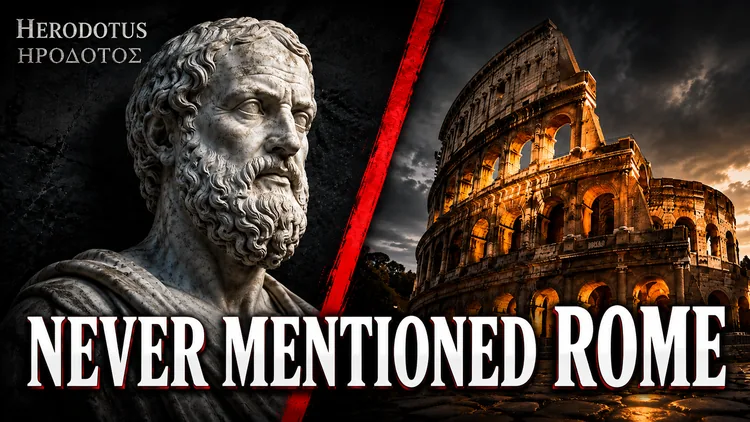
The episode closes on the argument its title advertises. Chance says archaeologists never let their findings build the narrative and instead used old accounts, likely Greek and Roman histories introduced to Europe in the Middle Ages, to explain the artifacts in front of them. Dylan cuts in on the two authorities Chance names, Thucydides and Herodotus, the father of history and the father of scientific history, and points out that neither one mentions Rome. Chance is incredulous, saying it would have been the biggest deal, and Dylan adds that Herodotus never mentions Moses either.
Quotes
“If that's what you're claiming, that, for example, this culture descended from Greece, why is their language nothing like Greek if they got their letters from Greeks?”
“How in the world would Sanskrit be the point of origin for these other languages when it has double the amount of letters? Alphabets do not ever lose letters.”
“It's established fact that the less letters a language has, the older it is. The less vowels it uses, the older it is.”
“What's crazy to me that people aren't talking about is the Etruscans have way more affinity with the Egyptians than they do with the Greeks. Way more.”
“How many people in this space, people that are our friends, have you heard talk about Osiris being cut into 14 pieces?”
“The lack of knowledge about the ancient Italians and their alienness to the rest of the world are marks of their antiquity rather than their youth.”
“If you take off your Greek sunglasses, simply put, the Etruscans are not Greeks.”
“The father of history, the father of scientific history, they don't mention Rome. Not one of them mentions Rome.”
Dylan Saccoccio is the author of the Spirit Whirled series, The Real Universal Empire, and the Tale of Onora. After chasing language back as far as possible, he now explores other avenues to prove cultural diffusion of the ancient universal empire of priests, navigators, masons, and merchants. Find his latest of many hundreds of articles on Substack.
See all Dylan episodes→Kyle and Serena Denton are community herbalists creating wild-crafted and organic plant medicines out of Milwaukee since 2015. I have used their teas and tinctures on an almost daily basis for years now. Kyle is a great friend of InnerVerse and has appeared on the channel more times than I can count. These products work, not in the allopathic "pharma-medicine" way, but in a terrain-support, consciousness bolstering plant-teacher sort of way.