Why Was Tartaria Erased From The Map? Grand Tartary Explained
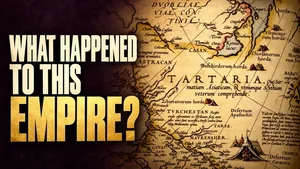









Why was Tartaria erased from the map? Was the Tartarian Empire a lost civilization, a historical cover-up, or something else? Chance Garton and Dylan Saccoccio investigate Grand Tartary through original maps, translated Latin inscriptions, and the sources behind the modern Tartaria conspiracy theory.
In Inner Whirled 30, we examine maps by Ortelius, Hondius, and Blaeu from the golden age of European cartography. These elaborate atlases raise fascinating questions, but what does their fine print actually say? We also follow the erased-empire theory back to Anatoly Fomenko's New Chronology and check the historical evidence cited in his work. What connects Tartary, the Mongol Empire, and Russia? Do the original sources support the story circulating online?
 Plus+Full episode · 2h 29m
 InnerVerse Plus+
Hear the full 2h 29m episode
72 more minutes of this conversation, plus the complete Plus+ archive, premium video and a private podcast feed for your app. Members also get the full research notes for this episode.
Cancel any time.
Get tuned with Chance
Tuning forks find where energy is stuck in the field around your body and bring it back into flow. Sessions over Zoom, recorded for you to keep.
30 Minute Consultations
Have something to look at, or looking for guidance? We can consult oracular tools, read your chart, or just talk through whatever you choose.
In this episode
Core themes
The Empire of the Great Khan on the Grandest Maps
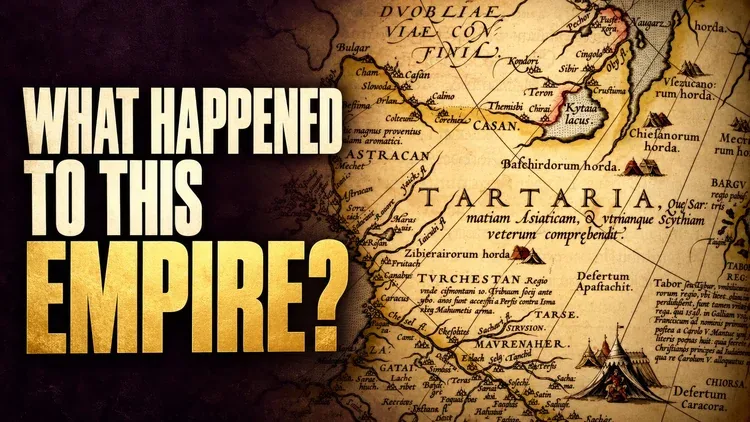
Chance opens with Joan Blaeu's 1662 Atlas Maior, an eleven volume set that cost about as much as a large house and was easily the most expensive book of its century, where the label Tartaria sive Magni Chami Imperium, the empire of the Great Khan, sprawls across Asia above an Oceanus Tartaricus. He grants that maps like this make the conspiracy feel true and calls its questions, who took Tartaria off the map and why, legitimate ones, while tossing out the claim that the Great Wall faces the wrong way, since it was built to be defended from either side.
Fomenko and the New Chronology
Chance traces the modern Tartaria story back to the Russian mathematician Anatoly Fomenko and Gleb Nosovsky, whose new chronology holds that the Horde was simply the regular Russian army, that Khan and Tsar were interchangeable, and that Tartar raids were punitive tax collection. Their deeper thesis is that Russia was the secret origin of modern civilization, which American believers rarely realize. Dylan counters with Friar John's thirteenth century account, where orda means the tent of Guyuk Khan, and with the slaughter of Kiev, and hears in the whole scheme a late Soviet mythology built to restore national pride.
Checking the Source Behind the Claim
Fomenko, leaning on A. A. Gordeev's History of the Cossacks, says a letter from the Hungarian king Bela IV to Pope Innocent IV proves Batu Khan's army was Russian led. Chance went and found the letter itself, and it simply lists Hungary's hostile neighbors, Russians, Cumans, Brodniks, Bulgarians, Bosnians and Germans, after the Tartars had devastated the kingdom. That fabricated support left him suspicious of everything else, though he credits one point: the Chora Monastery mosaic of Maria Palaiologina, Saint Mary of the Mongols, really does render Mongols with a word close to the Greek for great.
Old Maps as Mythology and Geography
Abraham Ortelius in 1570 says his Tartary takes in the Scythias of the ancients and ties Central Asian peoples to the lost tribes of Israel, while labeling Japan as Chryse, the golden island that Pliny and Pomponius Mela placed in the far east and that Mercator repeated in 1569. Marco Polo described a palace roofed in pure gold on an island he never visited. Jodocus Hondius in 1606 confesses that no one could truly describe so vast and unknown a realm, and Chance calls this blend of classical geography, biblical history and the sixteenth century world pure farrago.
A Name That Never Held Still
Dylan reminds listeners that Tartary carries the root of Tartarus, the abyss and a synonym for hell, and that Western chroniclers likened its people to demons and called their leader Satan, so the word became an arbitrary label for whoever threatened Europe. Chance's Tartary Atlas makes the drift visible, gathering travelogues such as Hayton's 1307 Flower of the Histories of the East and nearly ninety maps whose time dial shows the outline of Tartary shifting from map to map, while a 1701 Siberian map commissioned under Peter the Great writes Great Tartary across Russia's own territory.
Quotes
“It's legitimate to be skeptical of history. So let's try to get some answers.”
“It's pretty common that that part of the world was referred to as Tartaria, and people will ignore the fact that the root of it is Tartaros or Tartarus, which is the abyss or darkness or blackness, and it's also an allegory or a synonym for hell.”
“We don't just read a book and take it for granted what they're telling us. We go find the thing that they're referencing.”
“It's important to preface stuff that if you are gonna guess and play around, maybe give yourself some distance from it so it's not like you're claiming it like it's the end all be all. Now if it is and you can demonstrate that, great.”
“Ortelius tells us the name takes in the Scythias of the Ancients and he puts in nonsense about the lost tribes of Israel and a golden island straight out of Pliny. So those maps are mythology as much as geography.”
“It sucks that the Tartarian people are so off base with their claims, but at least they are of a mindset that's not going along that recognizes something is not right, so I'll give credit for that. I just wish they had gone in a different direction.”
“I'm happy for people to be skeptical of the mainstream. I'm happy for people to do their own research. What I don't like seeing is the copy paste template of a genre that gets everything wrong, but is popular because it makes people feel excited about uncovering a mystery or something.”
“A lot of this stuff spreads because people don't take the time to check what they're being told. They just accept it as authoritative.”
Dylan Saccoccio is the author of the Spirit Whirled series, The Real Universal Empire, and the Tale of Onora. After chasing language back as far as possible, he now explores other avenues to prove cultural diffusion of the ancient universal empire of priests, navigators, masons, and merchants. Find his latest of many hundreds of articles on Substack.
See all Dylan episodes→Kyle and Serena Denton are community herbalists creating wild-crafted and organic plant medicines out of Milwaukee since 2015. I have used their teas and tinctures on an almost daily basis for years now. Kyle is a great friend of InnerVerse and has appeared on the channel more times than I can count. These products work, not in the allopathic "pharma-medicine" way, but in a terrain-support, consciousness bolstering plant-teacher sort of way.