Is Fomenko Legit? | Checking the Receipts On New Chronology









Is Fomenko’s New Chronology legit? Chance Garton and Dylan Saccoccio investigate the evidence behind Anatoly Fomenko’s radical claim that much of ancient history actually happened in the Middle Ages. In Inner Whirled 31, we put his astronomical dating arguments to the test and ask what would justify rewriting the historical timeline.
What if the Book of Revelation was written during the Renaissance, and the Four Horsemen of the Apocalypse contain a date hidden in planetary symbolism? We explore Nikolai Morozov’s influence on New Chronology, compare his interpretation with Fomenko’s proposed date of 1486 AD, and follow the argument from biblical passages to astronomical reconstruction. Can these methods uncover a verifiable historical date? How much depends on the assumptions used to interpret the text?
 Plus+Full episode · 2h 56m
 InnerVerse Plus+
Hear the full 2h 56m episode
86 more minutes of this conversation, plus the complete Plus+ archive, premium video and a private podcast feed for your app. Members also get the full research notes for this episode.
Cancel any time.

Get tuned with Chance
Tuning forks find where energy is stuck in the field around your body and bring it back into flow. Sessions over Zoom, recorded for you to keep.
30 Minute Consultations
Have something to look at, or looking for guidance? We can consult oracular tools, read your chart, or just talk through whatever you choose.
In this episode
Core themes
The Revolutionary Behind the Method
New Chronology did not begin with Anatoly Fomenko. The episode traces its astronomical dating, dynastic parallelism and linguistic reinterpretation back to Nikolai Morozov, who in 1880 published a fourteen page pamphlet called The Terrorist Struggle, openly calling himself and his cohorts terrorists and championing political assassination over mass revolution. In the crackdown after Tsar Alexander II was assassinated in 1881, Morozov received a life sentence, spent some twenty five years in solitary confinement, and left Shlisselburg Fortress with twenty six volumes of manuscripts. His seven volume Christos, published between 1924 and 1932, became the blueprint Fomenko adopted, tweaked and pushed toward a far greater compression of history.
Revelation as a Storm and a Horoscope
Morozov reads the Book of Revelation as an eyewitness account of a thunderstorm woven together with astronomical observation, a primitive horoscope calculated by its author for one significant day, and he even reconstructs the hour the thundercloud passed and the rainbow appeared. The episode grants that Revelation is steeped in astrotheology, yet argues that knowing a text is astrological is not the same as knowing exactly what its author intended, since everything in the sky can be read more than one way. Morozov settles on September 30, 395 AD, partly because Revelation mentions the Lord's day, while Fomenko lands on October 1 or 2, 1486.
Do the Four Horsemen Really Mean Planets?
The dating scheme rests on reading the Four Horsemen as planets ridden by constellations: the white horse with a bow as Jupiter in Sagittarius, the red horse with a sword as Mars beneath Perseus, the black horse with scales as Mercury in Libra, and the pale horse of Death as Saturn in Scorpio. The episode points out that Perseus is not on the ecliptic, so Mars could sit anywhere from the end of Aries to the start of Gemini, and weighs a rival zodiacal reading in which wheat, scales, a sting and a bow trace Virgo, Libra, Scorpio and Sagittarius down into winter, the Hell that follows the pale rider.
Following the Evidence Back to Its Source
Morozov's drawing of a coin showing a horse ridden by a crab, offered as proof that ancient astrologers pictured planets as horses, turns up decades earlier in Antoine Fillioux's 1867 study of Gaulish coinage and in J.F. Blake's Astronomical Myths of 1877, and both read the horse as the Sun running between the solstice signs of Cancer and Capricorn, not as Saturn. Fomenko's own illustrations, including Jean Taisnier's 1562 planetary chariots, show deities riding in cars pulled by horses, eagles, doves and peacocks, and he drops in the Auriga constellation without explanation. A planet pulled by horses, the episode argues, is not a planet that is a horse.
Precise Math, Circular Meaning
Fomenko calls his 1486 result an independent astronomical dating, yet the episode argues the proposed date seems to shape the interpretation rather than the other way around, since no outside method of dating corroborates it. Even granting that horses equal planets, nothing in the colors fixes which horse is which planet. Fomenko also writes that Morozov's biblical readings escaped doubt, but in 1907 Vladimir Ern accepted the arithmetic while rejecting the identifications, calling it a question of philology rather than astronomy and asking where even the faintest shadow of proof could be found. A calculation can be precise while the reading fed into it is wrong.
Quotes
“Mainstream historians won't bother, they just dismiss it out of hand with ridicule, and conspiracy theorists that support the idea, they're kind of too lazy to bother.”
“Those four horsemen are the four seasons of the year.”
“Everything in the sky has more than one version of itself in the sky. There's more than one way to read it.”
“It appears to me that these early texts are not as early as they pretend to be.”
“I just don't see how the actual text of Revelation supports going that far into a specific reconstruction.”
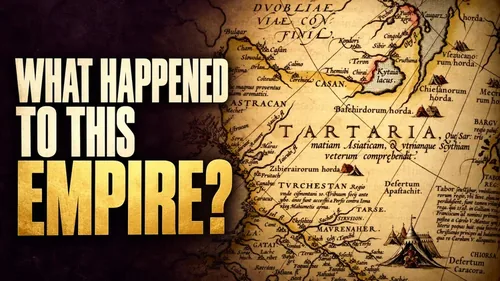
“The Tartaria emerging to the forefront is more of an indication of where the population is at.”
“Showing that the planet is in a chariot pulled by horses is not the same thing as establishing that the planet is the horse.”
“If you're relying on other people being credible, that's an actual limited supply. And you can only have so many people on your show bringing their credibility before they've exhausted everything.”
“You have the interpretation informing a proposed date, or is it a proposed date informing an interpretation?”
“The more effort you have to put into something to decide whether it's talking about something in the historical record or not, that is your answer.”
“I legitimately came into this just wanting to know if new chronology has anything to it.”
“Can you not just make any statistical chart look the way you want it to look based on the parameters that you make the intervals on the chart?”
Dylan Saccoccio is the author of the Spirit Whirled series, The Real Universal Empire, and the Tale of Onora. After chasing language back as far as possible, he now explores other avenues to prove cultural diffusion of the ancient universal empire of priests, navigators, masons, and merchants. Find his latest of many hundreds of articles on Substack.
See all Dylan episodes→Kyle and Serena Denton are community herbalists creating wild-crafted and organic plant medicines out of Milwaukee since 2015. I have used their teas and tinctures on an almost daily basis for years now. Kyle is a great friend of InnerVerse and has appeared on the channel more times than I can count. These products work, not in the allopathic "pharma-medicine" way, but in a terrain-support, consciousness bolstering plant-teacher sort of way.