Exposing the Astrological Errors of Fomenko's New Chronology










Does a Renaissance painting contain evidence that nearly 200 years of history were invented? Chance Garton and Dylan Saccoccio investigate Anatoly Fomenko's New Chronology through the zodiac ceiling of the Sala di Galatea at Rome's Villa Farnesina. The conventional interpretation connects the ceiling's horoscope to Agostino Chigi's birth in 1466, while Fomenko proposes 1656, and that difference leads to much bigger claims: phantom duplicates of historical figures, a powerful pope's family rewriting Italian history, and works attributed to Raphael being reassigned to Carlo Maratta.
In Inner Whirled 32, we examine the artwork panel by panel, compare interpretations of its mythological and planetary symbolism, and check the proposed dates against the sky. What do the sources support? Which planetary placements can we reproduce? And how much depends on the assumptions behind the reading? Whether you support New Chronology or question its conclusions, follow the investigation and examine the evidence with us.
 Plus+Full episode · 2h 31m
 InnerVerse Plus+
Hear the full 2h 31m episode
55 more minutes of this conversation, plus the complete Plus+ archive, premium video and a private podcast feed for your app. Members also get the full research notes for this episode.
Cancel any time.
Get tuned with Chance
Tuning forks find where energy is stuck in the field around your body and bring it back into flow. Sessions over Zoom, recorded for you to keep.
30 Minute Consultations
Have something to look at, or looking for guidance? We can consult oracular tools, read your chart, or just talk through whatever you choose.
In this episode
Core themes
A Ceiling That Already Holds a Horoscope
The test case is the Sala di Galatea in Rome's Villa Farnesina, the vaulted loggia attributed to Baldassare Peruzzi around 1510 and 1511, where mainstream historians already read a horoscope for the villa's builder, the banker Agostino Chigi, whose baptismal record from Siena gives a birth on November 29, 1466. In his 2019 book Roxolana, Anatoly Fomenko argues the same vault actually encodes December 31, 1656, which would mean any challenger must not only reread the painted sky but also dismiss a surviving paper trail as forgery.
Phantom Duplicates and a Pope's Rewritten Family
Fomenko contends that the famous Renaissance banker is merely a phantom reflection of a later Agostino Chigi, the nephew of Fabio Chigi, who reigned as Pope Alexander VII and, in his telling, steered a family rewrite of Italian history that slid events 150 to 200 years into the past, turning Carlo Maratta's frescoes into Raphael's. Chance counters that a powerful family naming a son after its most celebrated forefather is hardly suspicious, notes that portraits Fomenko said he could not find sat on Wikipedia years before his book, and stresses that every downstream claim hangs on one disputed date.
Reading the Zodiac Panel by Panel
Walking the ten hexagonal panels from Aries to Pisces, Chance matches each figure to a planet or a constellation myth: Jupiter's bull garlanded by Europa from Ovid's Metamorphoses, Leda and her swan for Gemini, Hercules and the crab for Cancer, Erigone and her faithful dog for a Virgo moon, Mars and Mercury beside the scales and scorpion. Fomenko, by contrast, recasts the swan as the moon to manufacture a lunar eclipse, swaps Erigone for Procris while excusing the very missing details he holds against her, and reads Saturn's sheaf of grain as Spica, scattering the signs out of their painted order.
Tropical, Sidereal, and a Five Degree Cushion
Because Fomenko keeps the sun in Sagittarius for a December 31 date, his chart only works on a sidereal reckoning built from unequal constellation divisions plus a self granted five degree tolerance, a system Chance could not reproduce on any mainstream astrology site and could find no sign of among Renaissance Italians, who cast charts tropically. Dylan explains why the tropical frame tracks the seasons while precession drifts the stars. Running both readings through the Swiss Ephemeris, Chance found the conventional placements, with Mars read in Scorpio, land on November 29, 1466, while Fomenko's date never matched cleanly.
Selective Skepticism and the Faith of Truthers
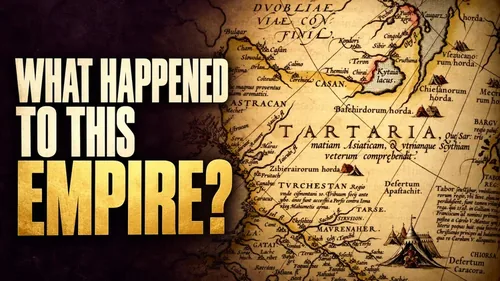
The hosts frame Fomenko's habit as heads I win, tails you lose: evidence that fits is reliable, while a baptismal record that contradicts him becomes forgery, the same selective skepticism they see in Tartaria and old world reset videos that unknowingly post their own rebuttals, like the Florentine picture chronicle on Fomenko's own website naming the grain as Saturn's emblem. Replacing a lie with a lie leaves nobody better off, they argue, and astronomical dating itself, practiced long before Nikolai Morozov, remains a sound method; it is Fomenko's interpretations, not the idea, that collapse under replication.
Quotes
“Just because you can point out one thing is wrong or incorrectly dated or fraud, that doesn't give you the right to then fill in the void of what actually did happen.”
“We have almost nothing interesting of value regarding written works from the ancient Roman Empire and the ancient Etruscan Empire and all that stuff. And it's very suspicious to me.”
“What makes our analysis on this show different is that we're completely skeptical of replacement ideas from truthers too. Because if you replace a lie with a lie, are you any better off?”
“What's more likely, a powerful family would name a son after a famous forefather, or that there's two Agostino Chigis in history, therefore one is a fake duplication?”
“There's no myths about Leda, this queen, being the earth. There's no myths about the swan that impregnates her being the moon. None of that exists.”
“Fomenko accepts all of those just fine, except the ones he needs to be different. And then he makes giant leaps of logic without support.”
“All this stuff is just man's way of trying to keep track of an imperfect system that doesn't precisely correspond with the mathematical concepts that they've created to measure it.”
“This is exactly what we've seen in the Tartaria videos all the time. They themselves put forward the evidence that debunks their idea and they don't even know that they did it.”
“The fact that I could not find a way to match his version of the calculation using modern astrology websites means that it's a unique method of calculating the sky to him.”
“This is what Fomenko does. Anything that he can twist to support himself, he says it's reliable. Anything that breaks his theory, he says it's a forgery.”
“I have gone through so much and I have yet to find one detail emerging from the twelve hundreds of any of these things that would have led up to the empire of Tartaria.”
“When you all offer an alternative that is not founded on anything, that's where you get in trouble.”
Dylan Saccoccio is the author of the Spirit Whirled series, The Real Universal Empire, and the Tale of Onora. After chasing language back as far as possible, he now explores other avenues to prove cultural diffusion of the ancient universal empire of priests, navigators, masons, and merchants. Find his latest of many hundreds of articles on Substack.
See all Dylan episodes→Kyle and Serena Denton are community herbalists creating wild-crafted and organic plant medicines out of Milwaukee since 2015. I have used their teas and tinctures on an almost daily basis for years now. Kyle is a great friend of InnerVerse and has appeared on the channel more times than I can count. These products work, not in the allopathic "pharma-medicine" way, but in a terrain-support, consciousness bolstering plant-teacher sort of way.