Is The Water Inside You Alive, or Dormant? | Isabel Friend of the Water Is Life Podcast
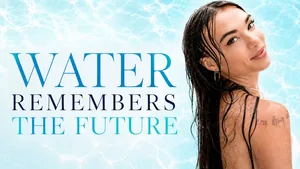









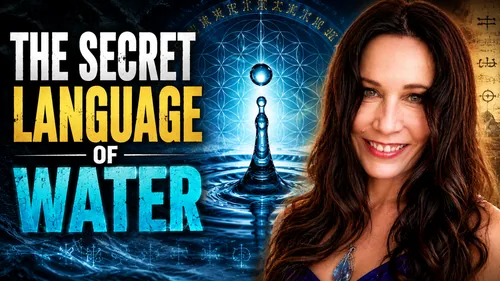
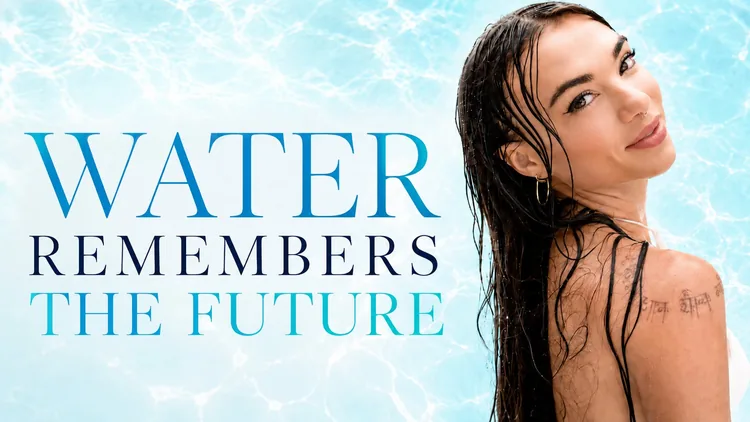
You don't taste water, water tastes you. Could water be the sensory organ of God? Isabel Friend, water researcher and president of the American Water Trust, makes the case for water as a living, conscious being.
Isabel Friend, water advocate, researcher, and educator, joins InnerVerse to explore water as a conscious living being. The conversation covers Viktor Schauberger's naturalist hydrology, water as the sensory organ of God with 440,000 senses per memory cell, the body being 99.95% water molecules, dark fluid theory and hydrogen as 99% of the universe, the proton as a black hole and water's transdimensional communication, water as the mediator between the physical and divine in every holy water tradition, water's memory of past and future through hydromancy, the transition from the Age of Pisces to the Age of Aquarius, the life cycle of water from spring birth to evaporation, the six steps of ennobling water, the miracle healing springs of Lourdes and beyond, and hydrogen devices like the Aqua Cure.
 Plus+Full episode · 2h 33m
 InnerVerse Plus+
Hear the full 2h 33m episode
72 more minutes of this conversation, plus the complete Plus+ archive, premium video and a private podcast feed for your app.
Cancel any time.
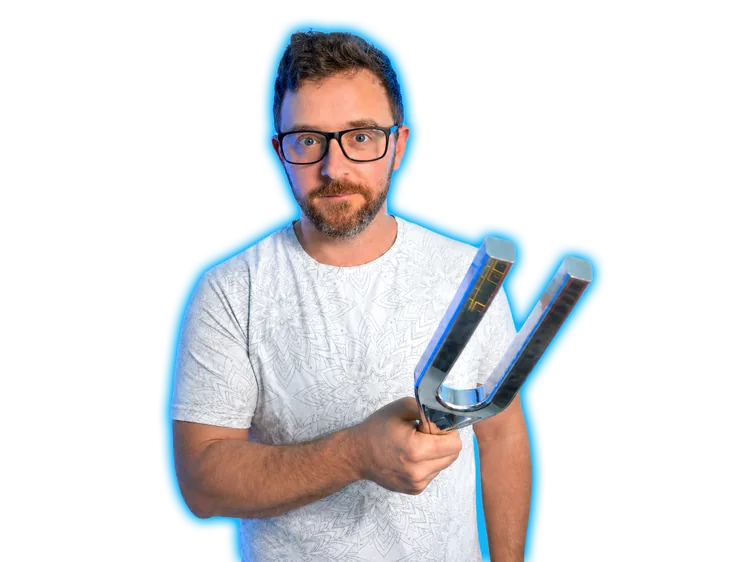
Get tuned with Chance
Tuning forks find where energy is stuck in the field around your body and bring it back into flow. Sessions over Zoom, recorded for you to keep.
30 Minute Consultations
Have something to look at, or looking for guidance? We can consult oracular tools, read your chart, or just talk through whatever you choose.
In this episode
Core themes
Asking Who Water Is
Chance opens by asking who water is rather than what, and Isabel, a nutritionist who moved from nutrigenomics into water research after discovering Viktor Schauberger, answers that he is echoing Thales, the first philosopher, who called water the ground of all being. She calls water the sensory organ of God, says each of its memory cells holds at least 440,000 sensing panels, and insists that when you taste water it is tasting you. She gives water a body, mind and spirit, the liquid as body, hydrogen as spirit and the ether as mind, and argues most tap and bottled water sits comatose until we wake it.
Taking The Ocean In A Drop Literally
Isabel takes the old line about being the ocean in a drop literally. She says cells, bodies and the Earth's surface each come to about 70 percent water, and that hydrogen, which she calls the spirit of water, makes up about 70 percent of the visible universe. Leaning on dark fluid theory, she suggests dark matter and dark energy may be a non-measurable hydrogen, which she says would explain redshift without a Big Bang. Chance says he does not buy the astrophysicists' math but hears them echoing the ancients' waters above, and in his closing he treats every cosmology, scientific or ancient, as allegory, fingers pointing at the moon.
Hesse's River And The Age Of Aquarius
Isabel borrows Hermann Hesse's river, conscious of being spring, flow and mouth all at once, to argue that water is not separately aware of being rain, the water inside the sun or a long-dead ancestor's bloodstream, so her memory reaches toward the future as well as the past. She points to labs she says use water to anticipate solar flares and earthquakes, and credits Nostradamus's predictions to scrying into a black bowl of water. We embody the age of Pisces, she says, fish unaware of the water they swim in, while Chance hears the Deluge as delusion and pictures Aquarius as an age of circulation and flow.
Born At The Spring, Aged By The River
Isabel gives water a life cycle like our own. It gestates in the aquifer, the womb of the Earth, and is born at a spring, where she describes hydrogen rising to meet oxygen falling in a toroid that makes new water, tying it to Schauberger's view that water reproduces itself like any living being. Downstream it matures, meandering and vortexing while it takes in minerals, birdsong, moonlight and starlight, which is why she says one ecosystem's water is not equally medicinal in another. It ages in the lake, evaporates and rains back down, and she says the springs famed for healing, Lourdes among them, share unusually high hydrogen.
Isabel's Six Steps To Ennoble Water
Asked for something listeners can use, Isabel lays out how to ennoble water by copying what a spring does: forage wild spring water where you can, then filter, structure, balance, energize and embody it. She warns that reverse osmosis and distillation can create an aggressive solvent that leaches minerals, likens structuring to the bonds that separate coal from diamond, and treats balance as feeding water minerals, letting it breathe dissolved gases and keeping its microbiome alive. Chance recalls her line about treating water like a beautiful woman, which she credits to the Kogi of Colombia. Embodiment matters most, she argues, because hydration depends on the water we are made of.
Quotes
“Water itself could be considered the glove on the hand of consciousness. I like to consider water as being the sensory organ of God.”
“When you taste water, water is tasting you. When you see water, water is seeing you.”
“We are seeing, I think, a heightened degree of awareness and consciousness about the interconnectivity of all things everywhere at once, and that's demonstrated through the fractality.”
“When water awakens, we awaken. What we do to water, we do to ourselves.”
“We're swimming in water as bodies of water living on a body of water, completely unaware of how pervasive this liquid consciousness is.”
“I look at everybody's cosmology, whether it's scientific based or not, as a mythology. It's all mythology. Using language to describe reality is always fingers pointing at the moon.”
“What is a community of humans except a community of bodies of water? What is a cluster of water molecules except a community of bodies of water?”
“You cannot take water from one ecosystem and expect it to be equally medicinal in another ecosystem, because the way that she matures is what determines the medicine that she has.”
Isabel Friend is an international water advocate and president of the American Water Trust who explores water through both scientific and consciousness-centered lenses, drawing on figures like Viktor Schauberger; she appeared on InnerVerse discussing water's "life cycle" and consciousness.
See all Isabel episodes→Kyle and Serena Denton are community herbalists creating wild-crafted and organic plant medicines out of Milwaukee since 2015. I have used their teas and tinctures on an almost daily basis for years now. Kyle is a great friend of InnerVerse and has appeared on the channel more times than I can count. These products work, not in the allopathic "pharma-medicine" way, but in a terrain-support, consciousness bolstering plant-teacher sort of way.