John McHugh | Maps of Human Consciousness: Southwest American Rock Art Through the Ages
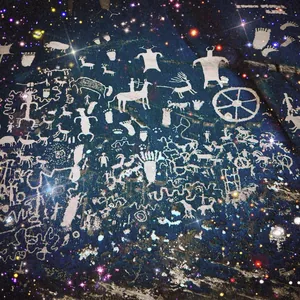









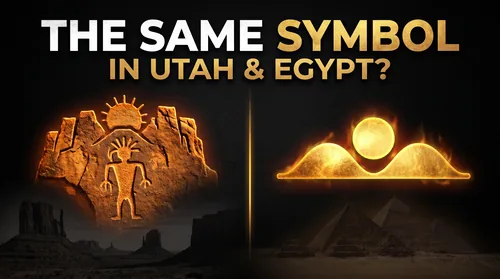
The brilliant archeoastronomy analyst John McHugh returns to InnerVerse to share his field work and research on the ancient cultures of the American Southwest. In this video presentation John presents a comprehensive catalogue of petroglyphs and rock art through the ages and a crash course in the academic understanding of their cultural chronology. Dancing with live snakes? Check. Symbolic signatures of the universal monomyth and its archetypes? Got that too! Tune in for a shamanic synthesis of John's many years of investigation.
In the Plus+ Extension, we continue John's presentation, with artifacts and evidence of thunder rattles, face scalping, decapitated maize gods, kachina spirits, and a summary roundup of what all these strange and fascinating relics might mean about human nature and our deep past.
 Plus+Full episode · 2h 26m
 InnerVerse Plus+
Hear the full 2h 26m episode
52 more minutes of this conversation, plus the complete Plus+ archive, premium video and a private podcast feed for your app.
Cancel any time.

Get tuned with Chance
Tuning forks find where energy is stuck in the field around your body and bring it back into flow. Sessions over Zoom, recorded for you to keep.
30 Minute Consultations
Have something to look at, or looking for guidance? We can consult oracular tools, read your chart, or just talk through whatever you choose.
In this episode
Core themes
An archaeologist who lives in two worlds
John McHugh returns to tell Chance Garton that his research splits cleanly in half. One half is the linguistic archaeoastronomy of The Celestial Code of Scripture, his book decoding the astral cipher behind miracle stories in the Bible and the Quran. The other half is entirely pre-literate: Southwest Native American rock art in the Four Corners region of Utah, Arizona, Colorado and New Mexico. He is a licensed archaeologist with the Utah Rock Art Research Association and the Utah Cultural Astronomy Project, and he leads a youth archaeology club called the Shovel Bums that documents undiscovered petroglyphs for the Bureau of Land Management.
How you actually date a petroglyph
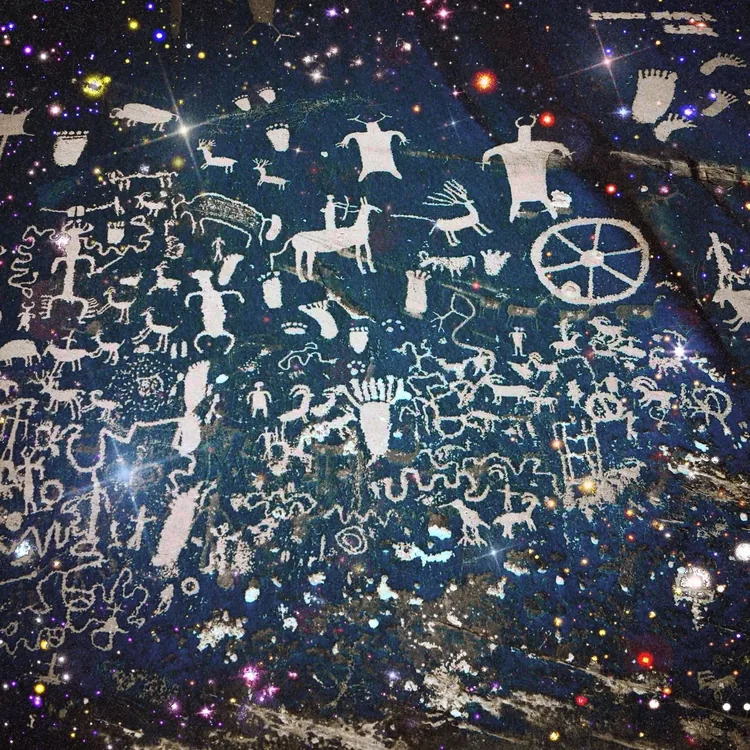
Much of the episode is a practical lesson in reading time off a rock face. Stratigraphy is the excavator's tool, but rock art needs different rules. McHugh explains patina, also called desert varnish, the dark mineral coating that leaches back over a carving: the closer a petroglyph is to the surrounding rock color, the older it is, and the brighter it is, the younger. Superimposition marks where one image was pecked over another. At Newspaper Rock the oldest work sits at the bottom, and any Native American shown on a horse has to postdate 1500 AD.
Mammoth hunters and the end of the ice age
Walking backward through the Puebloan, Basketmaker, Archaic and Paleoindian periods, McHugh describes people arriving perhaps 25,000 years before present by land bridge or by rafting the coast, then hunting Columbian mammoth, bison antiquus and bison latifrons with hafted Clovis and Folsom fluted points thrown by atlatl. He argues the ice age ended around 6000 BC through the Milankovitch cycle of obliquity, eccentricity, precession and albedo. Chance Garton reads the spiritual consequence: in a world that dangerous, shamans who conferred with spirits about where and when to hunt were survival infrastructure, not decoration.
Barrier Canyon ghosts and the snake that brings rain
The strangest material is the Barrier Canyon style, ghostly armless and legless figures that follow clay figurines appearing around 5000 BC. McHugh relays the theory that eyeless figures mark a portal, with spirits passing into and out of the rock. Native elders say a figure without arms and legs is a deity, which reminds Chance Garton of the seraphim and of energy bodies stripped of flesh. Rakes mean rain, and snakes mean flash floods, which is why the Hopi snake dance controls serpents to control water. He also notes hunter gatherer panels show no shields, scalps or warfare until agriculture and land ownership arrive.
Kachinas, the eternal return, and the open question
McHugh says what strikes him most is that kachinas are not merely like Christian angels, they function identically as intermediaries between deities and mankind, going home in July and returning at winter solstice in the cycle Mircea Eliade called the eternal return. Sun priests tracked the sunrise along the horizon, and the solstice rituals turned the sun so no one froze or burned. McHugh declines the ancient aliens framing, preferring shamanic explanation. Chance Garton closes still undecided whether these shared symbols are innate Jungian archetypes, cultural diffusion, or both, and he shares a butterfly story about the pregnancy he and his wife lost.
Quotes
“From looking extensively into alternate opinions on the good old days, it's my opinion that chronological cover-ups and lies agreed upon that comprise most authorized textbook teachings on antiquity seem mostly concerned with pinning society's evolutionary processes on the great men and their wars that fill most of our school days' notebooks on the subject.”
“It's much different than the linguistic stuff I do. I almost live in two worlds. One of my worlds is archaeoastronomy and astrology embedded in the Bible and the Quran and the other one is non-linguistic at all. It's pre-literate and it's dealing with Native American rock”
“a Christian would think of as statuary of Mary and Joseph in a church or the stained glass that you see in a Christian church a Jewish synagogue or an Islamic mosque so you never touch it your the oils on your finger can cause it to erode faster and you should never”
“it basically demonstrates the importance of the spiritual realm and the shamanic practitioners of their tribes because part of their role would have been to confer with the spirits and find out when and where to look for the hunt to make sure that the hunt goes successfully or”
“hunter-gatherers there's no violence you don't see any violence there's no idea of land ownership you never see shields and war scenes and scalps being taken and heads being cut off as you see when agriculture starts to show up and land ownership ownership starts to occur”
“just the eucharist jesus saying this is my body and this wine is my blood when you take that in you own a concept of how bread and wine nourishes your body and jesus is just saying now take that idea but apply it to your spirit it's the same thing it's thinking by analogy”
“this picture writing is sacred stories on stone they're really sacred stories they're they're they're spiritual they're talking about migrations they're talking about sacred cycles you had to go to a certain place you had to exploit a certain food source at a certain time”
“some of the fingerprints of the universal priest system here and you know the question is still open in my book are these symbols and archetypes innate to human consciousness and we just find them and pull them out of nature because that's what they actually mean and the meaning is”
John McHugh is a scholar of Middle Eastern and Native American archaeoastronomy and author of The Celestial Code of Scripture, which traces celestial and linguistic origins of biblical miracle stories; he has appeared on InnerVerse multiple times (Star of Bethlehem, Rock Art, Pegasus/Ark, Celestial Code).
See all John episodes→Kyle and Serena Denton are community herbalists creating wild-crafted and organic plant medicines out of Milwaukee since 2015. I have used their teas and tinctures on an almost daily basis for years now. Kyle is a great friend of InnerVerse and has appeared on the channel more times than I can count. These products work, not in the allopathic "pharma-medicine" way, but in a terrain-support, consciousness bolstering plant-teacher sort of way.