The Mem-ory Pallas of Moon Knight episode 5, "Asylum" | Marvelous DeMystifiers ep. 9









The dream team returns for a trip down the memory stream with Disney/Marvel's Moon Knight, episode 5: "Asylum." As we explore the fractured recollections of the collective mother-wound inflicted on humanity by pseudo-gnostic culture vultures, the symbolism will surely surprise you with its dark depths. The Marvelous Demystifiers are: Chance Garton, Gabriel (Slick Dissident), Gordan Hamil.
 Plus+InnerVerse Plus+
 InnerVerse Plus+
Hear every full episode
Every extended episode, the complete Plus+ archive, premium video and a private podcast feed for your app.
Cancel any time.
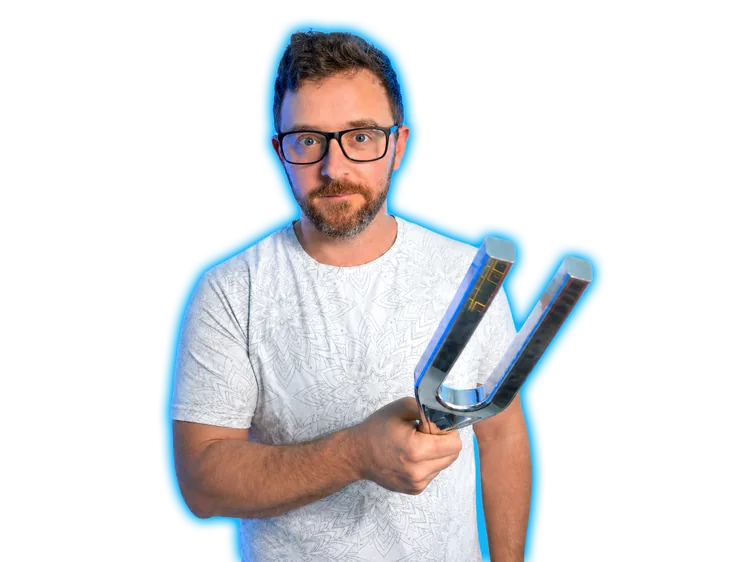
Get tuned with Chance
Tuning forks find where energy is stuck in the field around your body and bring it back into flow. Sessions over Zoom, recorded for you to keep.
30 Minute Consultations
Have something to look at, or looking for guidance? We can consult oracular tools, read your chart, or just talk through whatever you choose.
In this episode
Core themes
Water, Memory, and the Dark Mother
Chance framed the episode around water, memory, trauma and the dark mother, and read the opening cave as a yoni, a womb and a solar tomb. He noted that Tefnut was said to cause the annual flood by releasing water from her womb, and he pointed to the word fault as a crack or opening. He read an Egyptian opening of the mouth spell aloud and argued that the Hebrew letter mem links water, memory and mom. One of the hosts added that an open mouth in dream interpretation often means telling secrets.
Taweret, Anubis, and the Weighing of Hearts
Chance observed that the show's hippo goddess departed from her traditional lion paws and crocodile tail, and that weighing hearts is normally the work of Anubis or Thoth. He read Plutarch as calling her a consort of Seth, which he argued made her a feminine version of the savior figure. One of the hosts argued that Anubis and Saturn share the same numbers through ordinal reduction, and the hosts then spun the Greek word for heart into car, core and chair, ending with the idea that the true throne sits in the heart.
The Memory Palace and Ego States
Chance said he named the episode for the memory palace because Dr. Harrow described the struggling mind building places of shelter for different parts of the self. He described ego states as fractured parts of a person that hold energy in the bio field and carry skills that return when integrated, and compared this to shamanic soul retrieval. Gordy argued the sense or nonsense question worked as a mind control trigger, while Gabe argued the office was a mental construct because the scar had vanished and suggested looking at your hands as a dream check.
Placenta, Birthday Candles, and Unfinished Ritual
Chance argued that the birthday scene showed the series was built on placenta symbolism, noting that the mother's absence cut the boy off from her nourishment. Gordy pointed out that the boy blew out all but one candle, which he read as an unfinished ritual in the manner of Crowley, and added that the Greek word placenta means cake. Chance praised the catch. Chance also argued that water holds memory while alcohol dilutes it, linking the mother's drinking to forgetting.
Pseudo-Gnosticism, Integration, and the Ending
Chance argued that the show carried a pseudo-Gnostic allegory that blamed the mother for the fall, and he separated it from what he called true gnosis, which reads the demiurge story as allegory and finds beauty in the pattern. Gabe noticed a blanket over the corner mirror in Harrow's office and linked it to a Shiva. One of the hosts heard the opening line, this is all your fault, being undone as self-forgiveness, and the hosts read Steven's fall as a pillar of salt while Marc reached the field of reeds. Gordy tied the integration to people accepting their mistakes and moving forward.
Quotes
“Symbolism hiding in the details is just crazy. So I took more screenshots for this episode than any of our streams yet.”
“It's very fascinating how later in this episode, Marc and Steven are going through the different rooms of this psych ward castle labyrinth maze and discovering lost buried traumatic memories. That's why I named the episode the memory palace, because this is very much like a memory palace.”
“There's something that happens that is so difficult that we want to push it down and never remember it. It fractures and creates an ego state in our psyche that lives in our psychic space. Literally, it has energy that's held in our bio field.”
“The left side of the body is the maternal side, mother side, feminine side. And it also is where our history, it's more of the history, the past side. And the right side is more future oriented.”
“When you integrate that ego state, you also integrate the skills, aptitudes, enthusiasm, and care about whatever that version of you at that time period cared about and had aptitude towards.”
“This is a blade in the chalice that are separated and inverted, putting the chalice above the blade, so to speak. You're supposed to bring these together. And so this represents the separation of the mother and father or the masculine, the feminine, the pain of separation, the schism.”
“The name Harrow, Harrow as a word means tribulation. Tribulation means this separating wheat from chaff, threshing. And at this moment of the threshing of the harrowing, the tribulation, the truth that he's rejecting in this threshing is that his mama gave him a thrashing.”
“Now somehow he is not scarred. His nose is not bleeding. So this is kind of an indication to us that this office is a mental construct, that this office is part of the organizing principle, because it can be so easily altered that he's no longer rocking that scar that Jake was rocking the last time he was in this room.”
“The mirror in the corner is covered just like a Shiva. There's a blanket over the mirror, which as he's talking about memories, being so painful, there is a bit of a harkening to the Shiva that he couldn't even attend to.”
“The room that he's in when he's getting the psychological evaluation, it's the exact same room they used in episode, I think two, where they go into a room full of cadavers. And these are all the dead bodies. This is harkening to the body count, to Marc's body count. And that is the same room.”
“This right here is one of those separation memetic devices that they use in mind control to trigger somebody into, like, when they're focusing on one thing, and they do this. This is something he's already set up in Marc or Steven or whoever, Marc essentially. But that's the point where he sets him off. Is it sense or nonsense? He makes him break it.”
“This had a very Crowley thing to it, because when he blows out the candles he blows them out all but one, meaning he didn't finish the ritual.”
“And you know, you chose a mistake, but this is part of life's process, admitting our wrongs and moving, and forgiving ourselves and moving forward from it.”
Gabriel, known on air as Slick Dissident, co-hosts InnerVerse's Vibe Rant show and is a longtime recurring guest on the podcast. He teaches occult symbolism and tarot on his YouTube channel, ranging across the Major Arcana, the esoteric Enneagram, mythology and archetype, mystic linguistics, and the symbolism hidden in popular film. He is best known for Tarot-tories, his own system mapping the 22 Major Arcana and zodiac archetypes onto the geography of the United States.
See all Gabe episodes→Kyle and Serena Denton are community herbalists creating wild-crafted and organic plant medicines out of Milwaukee since 2015. I have used their teas and tinctures on an almost daily basis for years now. Kyle is a great friend of InnerVerse and has appeared on the channel more times than I can count. These products work, not in the allopathic "pharma-medicine" way, but in a terrain-support, consciousness bolstering plant-teacher sort of way.