World Age Doctrine, The Aeon, and Practical Philology | Chance Garton on My Family Thinks I'm Crazy









Great to catch up with Mystic Mark on My Family Thinks I'm Crazy. Enjoy!
 Plus+InnerVerse Plus+
 InnerVerse Plus+
Hear every full episode
Every extended episode, the complete Plus+ archive, premium video and a private podcast feed for your app.
Cancel any time.
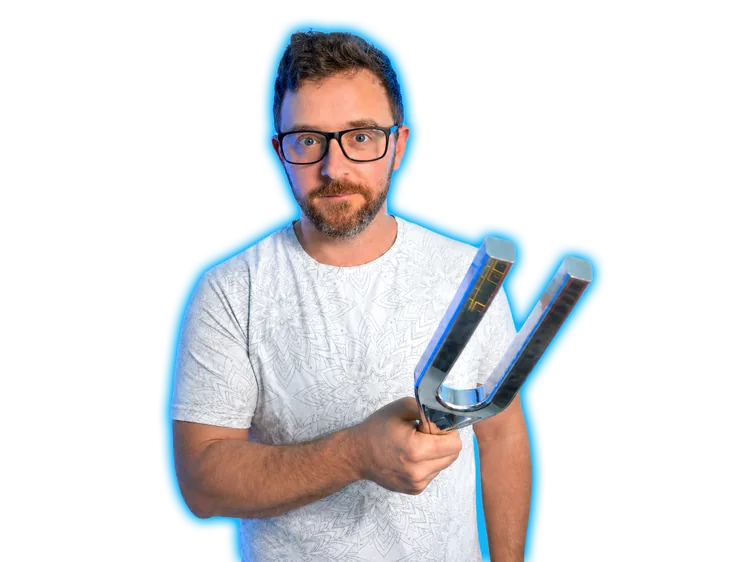
Get tuned with Chance
Tuning forks find where energy is stuck in the field around your body and bring it back into flow. Sessions over Zoom, recorded for you to keep.
30 Minute Consultations
Have something to look at, or looking for guidance? We can consult oracular tools, read your chart, or just talk through whatever you choose.
In this episode
Core themes
From syncretism to centrism
Chance described how the Zeitgeist film pushed him into full atheism as a teenager, because its claim that many deities told one story made him feel Christianity must be a trick. He said he later met René Guénon's critique of Theosophical syncretism and moved toward what he called centrism, the view that symbols radiate outward from an inner center. Chance said he did not rule out cultural diffusion or a man-made priestcraft, and credited his Inner World co-host Dylan Saccoccio with chasing the historical trail. Mark asked how syncretism differed from that approach.
Noah, Kronos, and the world ages doctrine
Chance described Noah as an archetype of Kronos and said the King James word world usually translates the Greek aeon, meaning an age. He summarized the world ages doctrine as a cycle in which the world is destroyed and regenerated while its matter stays eternal, and he argued that figures such as Adam, Noah, Lot, and Abraham fit that pattern. Chance leaned toward reading the flood as an astrological metaphor while holding space for a real age of cataclysms. Mark raised the Kali Yuga, and Chance said no one has observed such cycles.
Philology and the letter swap lockpick
Chance described letter swaps as a natural feature of speech, pointing to the Greek exchange of B, P, and V and to toddlers saying boo boo for poo poo. He argued that the Chaldean figure Bellis becomes the Greek Pallas this way, and linked severed heads, the cosmic egg, Noah's ark, and goddesses who give birth to the cosmos. He also offered his reading of Genesis 1:1, saying the Hebrew ras means head and wisdom and that Elohim carries a feminine ending. Chance presented these as his own interpretations.
Higgins and the fourteen generations
Chance read Matthew 1:17, which lists three sets of fourteen generations, and then read Godfrey Higgins, who tied the repeated fourteens to a precession figure of about 71.5 years and to a six thousand year mythic span. Chance said this showed the world ages doctrine hiding in the Bible, with Adam, Noah, and Jesus read as one figure returning on a cycle. Mark calculated that the Hebrew year 6000 falls in 2239. Chance said he put no stock in any one version of the cycle but liked the cosmic egg idea.
Hierarchy, blame, and personal coherence
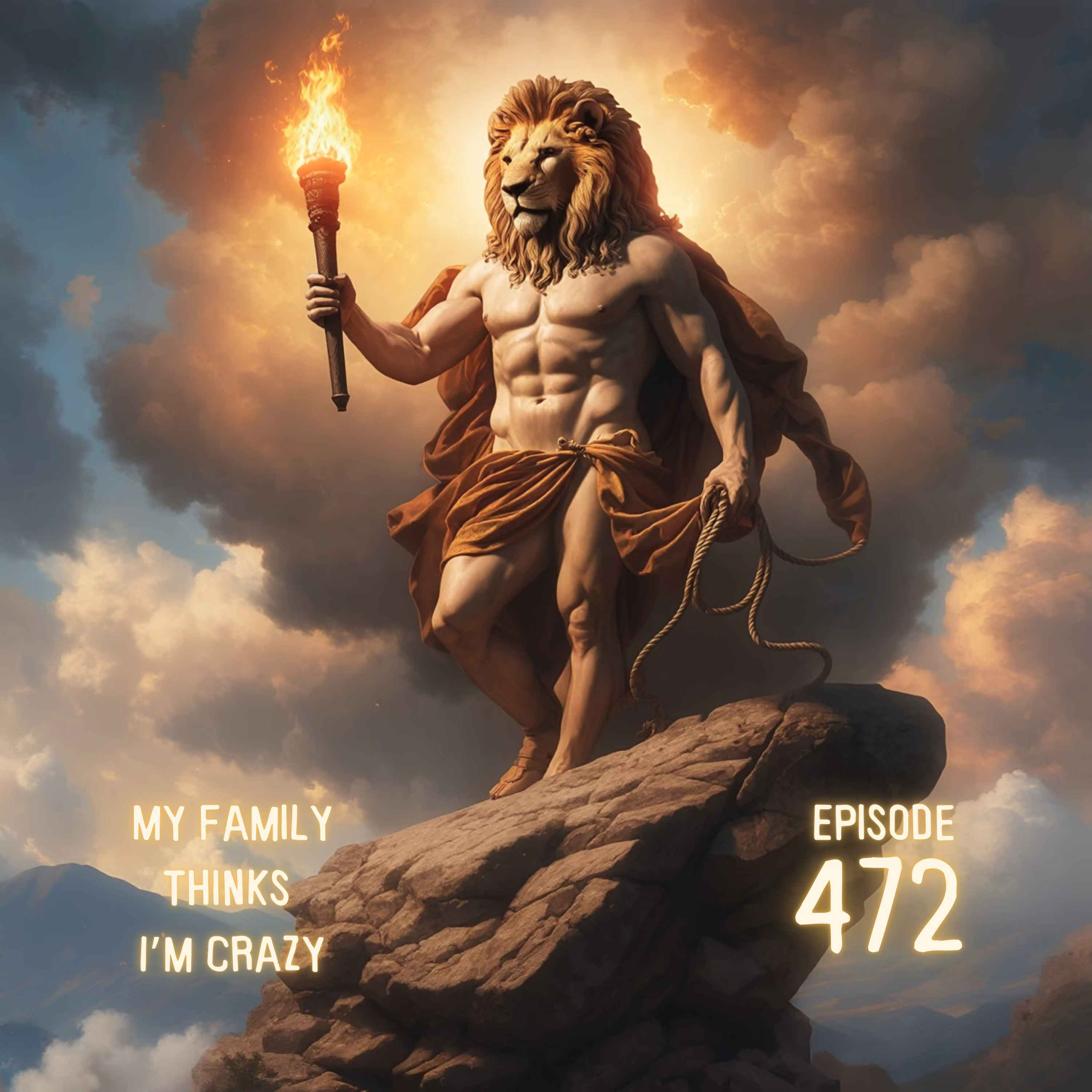
Mark asked whether the priesthood Chance described was a conspiracy or the way a species forms a head. Chance said becoming a father had shown him a natural hierarchy, that he saw priesthoods co-opting authority, and that blame was the main flaw of conspiracy entertainment. Mark offered an analogy of lions seen up close and from the couch. Chance argued that softening rigid views of so-called archonic forces and raising one's own coherence could change how they returned. He closed with the sun's death and rebirth at Christmas, and the Yule and Helios link.
Quotes
“One thing that people might not know when they're reading the King James version of the Bible is that almost every instance where you see the word world, the term used in the Greek is Aeon.”
“The basic premise of all psychosomatic healing is that your body is in your mind, not the other way around. So when it comes to looking at symptoms, you've got to look at them as symbols.”
“The one thing that the priesthoods of Earth have been consistent about when it comes to making predictions with cycles is that they're wrong and they change their mind about what the length of times of the cycles are.”
“It's just much more healthy to appreciate the divinity in all the stuff rather than look at it as like dirty or fallen or lesser or base. Because you're made out of this stuff, man.”
“Regardless of what is going on anywhere, anytime in the world, you always have the ability to create a good life for yourself. You don't get to decide how long that life is, but you get to decide how good it is in the time that you have.”
“We talk a lot about the fractal nature of our reality. So why wouldn't the organization of things be fractal in this sort of super biological way, where just like we have many different organisms that comprise our single organism?”
“We don't think of lions as evil for doing the things that they do to survive. But if you film them and watch all the gory bloody details and only saw it for that, you might start to think that lions are just this brutal, awful creature.”
“One of the most disagreeable interpretations of the Bible that I've ever met with was this whole idea of dominion, that oh, well, God gave us the Earth to dominate it.”
Mark Steeves hosts the podcast 'My Family Thinks I'm Crazy' and related projects (Esoteric America, S.E.E.E.N.), exploring synchromysticism, conspiracy, and alternative spirituality.
See all Mark episodes→Kyle and Serena Denton are community herbalists creating wild-crafted and organic plant medicines out of Milwaukee since 2015. I have used their teas and tinctures on an almost daily basis for years now. Kyle is a great friend of InnerVerse and has appeared on the channel more times than I can count. These products work, not in the allopathic "pharma-medicine" way, but in a terrain-support, consciousness bolstering plant-teacher sort of way.