Noah's Ark Decoded: Why Every Flood Myth in World Mythology Is the Same Story









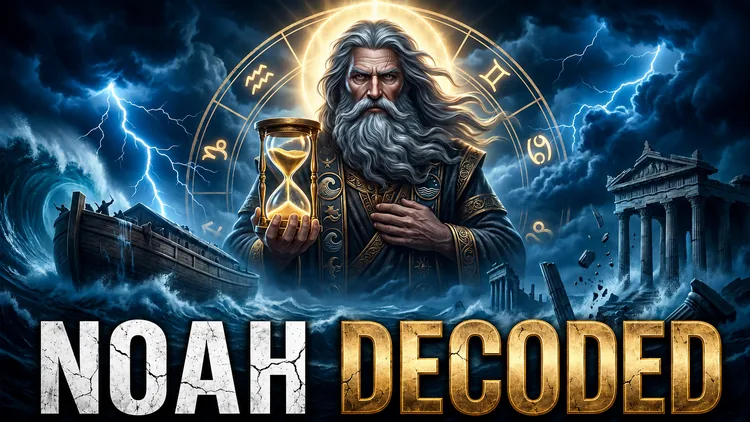
Every flood story across ancient mythology might be the same story told in different languages. Noah's ark, Kronos, Atlantis, the Hindu deluge, the Babylonian flood. Chance and co-host Dylan Saccoccio walk through the case that they all point to the same archetype and the same hidden meaning.
In this Inner Whirled session: the hidden meaning of Noah's ark, why so many flood heroes share the same traits across unrelated cultures, what Atlantis actually represents in Plato's writing, and the patterns that link the great father figures of world mythology.
 Plus+Full episode · 3h 49m
 InnerVerse Plus+
Hear the full 3h 49m episode
160 more minutes of this conversation, plus the complete Plus+ archive, premium video and a private podcast feed for your app.
Cancel any time.
Get tuned with Chance
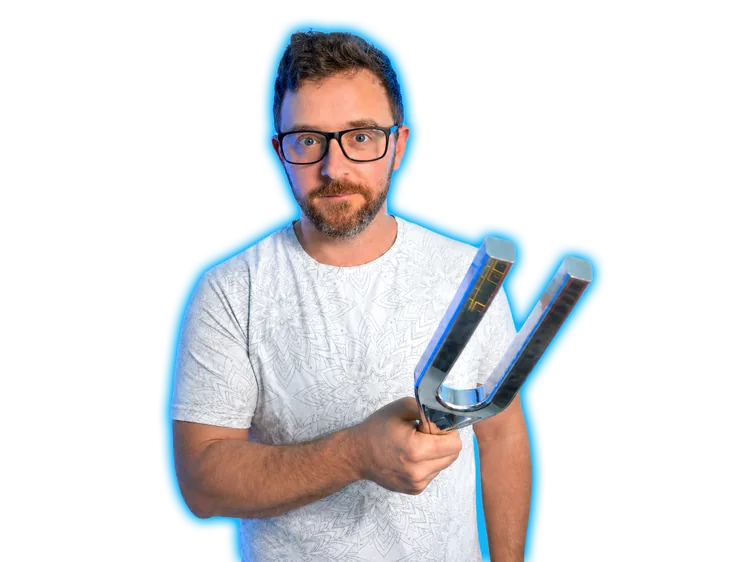
Tuning forks find where energy is stuck in the field around your body and bring it back into flow. Sessions over Zoom, recorded for you to keep.
30 Minute Consultations
Have something to look at, or looking for guidance? We can consult oracular tools, read your chart, or just talk through whatever you choose.
In this episode
Core themes
Every Flood Story Is Also a Creation Story
The premise the hosts build on is that deluge myths and cosmogonies are the same narrative told from opposite ends. Chance Garton leans on George Faber's Origin of Pagan Idolatry, which argues that ancient accounts blend creation and flood so tightly that neither can be told without the other, and reads that through Faber's doctrine of a succession of similar worlds, where each deluge marks the hinge between one age and the next. Garton points to the Greek aeon, translated in scripture as world but meaning age, as the linguistic tell that the Bible is describing cycles rather than a single beginning.
The Two Sources: A Renegade Reverend and a Reluctant Apologist
The episode runs on two nineteenth century authors. Robert Taylor was a reverend who walked away from the church and turned a scathing wit on scriptural literalism, and his astronomical theological lectures supply the astro theology side. George Faber was a genuine scholar but also a Christian apologist, and Garton notes he conceded that Gentile cosmogonies could not have been borrowed from Moses, that the Egyptian and Hindu systems predate the Israelite exodus, yet still insisted his own tradition stood apart. Garton describes him as ninety nine percent of the way there, with the last piece locked behind belief. Thomas Astle and Edward Lhuyd fill out the reading list.
The Etruscan Thread: Selvans, Salvation, and Baalbek
Dylan Saccoccio's central argument runs through Italy rather than the Near East. He cites Astle, who held that Saturn, Silenus and Herakles were all names of Noah, and that the Saxons called Hercules Erco. He traces the Latin Silvanus back to the Etruscan Selvans, notes Lhuyd's lexicon glossing the root as salvation and savior, and links Selvans to the caduceus, which he says also appears beside the temple on a Roman coin of Baalbek, the Heliopolis whose inscriptions name a Heliopolitan Jove. On his reading of the abecedaria, Etruscan looks older than Greek, and the Phoenician world's hub sits in Italy.
Reading Myths as Star Maps
Saccoccio treats the fables as encoded astronomy rather than history. He walks through the Welsh Dylan, son of the wave, born as a lump of flesh and hidden in a chest, which he equates with the ark and with the infant Moses, then ties him to Oannes, the Babylonian fish man whose name he derives toward Johannes and John. Math, whose feet must rest in a virgin's lap when not at war, becomes Virgo opposite Aquarius, and Saint Matthew becomes the royal star Fomalhaut in the southern fish. The sun then passes from man to fish to Aries, the lamb of God.
Plato's Chaos, Seven Sages, and the Divine Right of Kings
Garton brings in Plato's Timaeus, where the demiurge shapes the cosmos from a pre existing chaos rather than from nothing, and argues that this matches Noah floating the materials of the new world on the deluge before opening the door as the god of gates. He notes Solon among the seven sages, the seven rishis preserved in a boat with Menu in the Ordinances of Menu, the Babylonian Apkallu, and the seven aboard the ark, all pointing at one template. Saccoccio adds the political payoff: the divine right of kings was a chain of custody traced back to Noah as owner of the world.
Quotes
“We're going to really account for who is Noah anyway? What is the story of the Deluge representative of?”
“The fact that nobody ever talks about Atlantis being the island of Atlas, which is God, that is, in my opinion, the most important detail to the Atlantis mythos”
“The status quo thought Hercules was Noah. So what does that make Noah, right? It's this Jovian archetype”
“That's like the most extreme cognitive dissonance imaginable, that you're going to pretend the validity of this very supposed rational materialism, scientism, but then also you're going to believe this fable of the deluge”
“So the year was reckoned at four different times by four significant cultures, and that's what my work has shown”
“The sun moving through them goes from taking on the characteristic of a man to the characteristic of a fish, after which he will become the lamb of God, Aries”
“Noah's got the materials of the new world floating on the chaos of the deluge, and he comes out, he opens the door, god of doors, god of gates”
“The Hindu system more explicitly states that each deluge hero is the reincarnation of the original man, who is the great father reborn. So Adam and Noah are the same guy”
Dylan Saccoccio is the author of the Spirit Whirled series, The Real Universal Empire, and the Tale of Onora. After chasing language back as far as possible, he now explores other avenues to prove cultural diffusion of the ancient universal empire of priests, navigators, masons, and merchants. Find his latest of many hundreds of articles on Substack.
See all Dylan episodes→Kyle and Serena Denton are community herbalists creating wild-crafted and organic plant medicines out of Milwaukee since 2015. I have used their teas and tinctures on an almost daily basis for years now. Kyle is a great friend of InnerVerse and has appeared on the channel more times than I can count. These products work, not in the allopathic "pharma-medicine" way, but in a terrain-support, consciousness bolstering plant-teacher sort of way.