Rachel Fulton Brown | Mystic Christianity, Tolkien's Cosmogony, & The Logos of Created Worlds
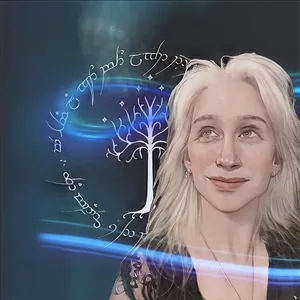









Professor Rachel Fulton Brown joins InnerVerse to talk Tolkien! In this lively discussion we explore Tolkien's mytho-mystic Christian convictions as allegorized in his great works, the Lord of the Rings and its massive legendarium. Topics include the Logos, Eros, the Gods & planets, and the purpose of evil and dissonance. What does it mean to be a creator in a created world?
In the Plus+ Extension, we examine world mountain and axis mundi symbolism, Earendil and Anglo Saxon literature, strategic philology, the unfinished sequel to the LOTR story, why civilizations fall, and the mystery of cryptid creatures and alternate humanoids of folklore.
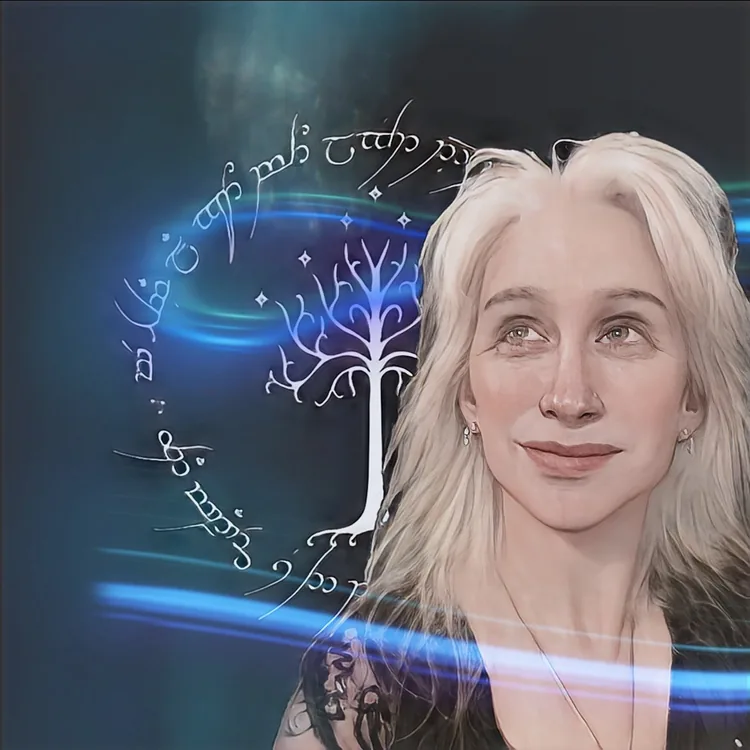 Plus+Full episode · 2h 36m
 InnerVerse Plus+
Hear the full 2h 36m episode
72 more minutes of this conversation, plus the complete Plus+ archive, premium video and a private podcast feed for your app.
Cancel any time.

Get tuned with Chance
Tuning forks find where energy is stuck in the field around your body and bring it back into flow. Sessions over Zoom, recorded for you to keep.
30 Minute Consultations
Have something to look at, or looking for guidance? We can consult oracular tools, read your chart, or just talk through whatever you choose.
In this episode
Core themes
Tolkien's Catholicism Was Not a Label
Chance opens by asking whether Tolkien's faith might be Catholic only in the sense of universal, older and wider than the church. Rachel Fulton Brown pushes back hard. He was Roman Catholic and he meant it. She walks through the cost: his mother Mabel converting from Anglicanism and being abandoned by her family, dying and leaving Ronald and Hilary orphaned under Father Francis Morgan, and Tolkien obeying that guardian for years before writing to Edith at midnight and telling her she had to become Catholic first. Conviction, she argues, is measured by what a person sacrificed for it.
Mythopoeia and the Argument With Lewis
The centerpiece of the first half is Tolkien's poem Mythopoeia, published in Tree and Leaf alongside On Fairy Stories and Leaf by Niggle. Rachel reads a long passage aloud, including the lines about man as sub-creator, the refracted light splintered from a single white, and the closing claim that we make still by the law in which we're made. She explains that Tolkien wrote it in the early 1930s to answer C.S. Lewis, who held that myths were lies breathed through silver. Tolkien answered in verse rather than argument, and Lewis eventually became a Christian.
Why Creation Happens Through Music
Rachel connects the Ainulindale to the medieval quadrivium and the discarded image of the cosmos. Arithmetic is number, geometry is space, music is time, and astronomy puts them together. Both Tolkien and Lewis worked inside the old Ptolemaic picture of rotating spheres whose movement makes music we can no longer hear. She points to Michael Ward's book Planet Narnia, which reads each Narnia volume as governed by a planet, and to the Space Trilogy, where Earth is the silent planet. Eru proposes a pattern, and the pattern he proposes is inevitably a song.
Melkor, Dissonance, and Misused Free Will
Chance frames Melkor as a fallen demiurge who seeks the secret of the eternal fire and imposes his own theme on the music. Rachel reframes it as Tolkien's meditation on why anyone turns away from harmony at all. In her Tolkien class at the University of Chicago she plays Beethoven, plainchant, Hildegard, Smetana and a Blind Guardian track to make students hear the difference. Her key point is that Melkor's theme resembles the sorrowful third theme, which is exactly why humanity finds it attractive. Tolkien wanted the effects of sin and misused free will made visible and physical.
Makers Devoured by What They Make
The conversation turns to possession. Feanor makes the Silmarils, gems holding the blended light of the Two Trees, and falls because he will not let them be broken to save the Trees, which leads to the first kinslaying. Rachel calls the general problem idolatry, the thing we grow so attached to that we cannot let go, the precious. She extends it to writing itself as an early Enochian gift from fallen angels, and to artificial intelligence, which she says is made entirely out of writing. Chance adds that Mordor reads as an allegory for industrialization.
Quotes
“People come to Tolkien wanting to be inside that story and one of the things I do in the course is sort of say, well, what he thought he was doing was showing you the way in which, as he says in Mythopoeia, we make still by the law in which we're made”
“And the question is like, are those keys there because we're looking at a system, a craft that had a common origin and then spread out or are those keys there of consistency because we're talking about true events?”
“And understanding that this desire to see the single truth in all of these mythologies, I'm sorry, but it is a Christian desire.”
“The main character goes out, outside of the influence of the Earth and out of the silent planet. Earth is silent because we can't hear the music of the spheres anymore.”
“And so with Melkor's ability to know somewhat of what the other gods are gonna do, he then starts to try to impose his own creation outside of the intended music, thus birthing dissonance or evil into the world.”
“The obverse of we are made still by the law, we make still by the law in which we're made, is that we can become so attached to the things that we've made that they destroy us.”
“So never be afraid of the end of one story and the beginning of another, because that's really, in my opinion, all the transition probably is. You exist, you will always exist.”
“To be able to hold contradictory conclusions, but still have a helpful conversation is, it's enlightening, it's really wonderful.”
Rachel Fulton Brown is a medieval historian and professor at the University of Chicago and author of "Mary and the Art of Prayer," who discussed Tolkien's Christian cosmology and mystic Christianity on InnerVerse.
See all Rachel episodes→Kyle and Serena Denton are community herbalists creating wild-crafted and organic plant medicines out of Milwaukee since 2015. I have used their teas and tinctures on an almost daily basis for years now. Kyle is a great friend of InnerVerse and has appeared on the channel more times than I can count. These products work, not in the allopathic "pharma-medicine" way, but in a terrain-support, consciousness bolstering plant-teacher sort of way.